How About Love Songs
📖 Table of Contents
I remember the first time I sang a love song with my son during a car ride. He was four, and I was just trying to get him to stop fidgeting with the buttons on the dashboard. We started singing 'You Are My Sunshine,' and suddenly, he was swaying in his car seat, humming along. It was a small moment, but it opened a door to a world of music that we could share — a world where love songs weren't just for adults, but for kids too. 'How about love songs' became a question I began asking myself more often, especially as I started homeschooling.[1]
As a homeschooling parent, I've learned that music is more than just a fun distraction — it's a powerful tool for teaching emotions, language, and social skills. Love songs, in particular, are a great way to introduce young children to the concept of affection, loyalty, and connection. When I started experimenting with different love songs and how they could be woven into our daily lessons, I noticed something interesting: my kids began to understand words like 'care,' 'cherish,' and 'belong' in a way that books alone couldn't teach them.
This is why I want to share with you how we can use love songs in a meaningful and educational way. Whether it's through singing, listening, or creating our own, love songs can be a bridge between creativity and learning. They help kids express their feelings, build empathy, and even improve their memory and language development. 'How about love songs' isn't just a question — it's an invitation to explore a part of music that's both fun and full of lessons.
Why You'll Love This Activity
- Encourages emotional intelligence and expression
- Strengthens parent-child bonds through shared music
- Supports language development with rich vocabulary
- Provides a creative outlet for self-expression
Why Love Songs Are Perfect for Homeschooling
As of September 2026, Love songs are a natural fit for homeschooling because they often carry strong emotional messages that can be discussed, analyzed, and even acted out. Whether it's a traditional folk song or a modern pop ballad, these songs help kids explore feelings like love, gratitude, and affection in a safe and fun environment.
For example, when my son and I sang 'I Will Always Love You' by Whitney Houston, we took time to talk about what it meant to love someone unconditionally. We used puppets to act out different scenarios and even drew pictures to show how love can be expressed in many ways. These kinds of discussions helped him understand complex emotions at an early age.
Research from the University of California suggests that children who engage with music that carries emotional themes show a 20% improvement in emotional recognition by age five. Using love songs as part of our daily routine gave us a simple and effective way to support this kind of development.
After singing a love song, ask your child to explain what they think the song is about. This helps build comprehension and emotional intelligence.
Getting Started with Love Songs
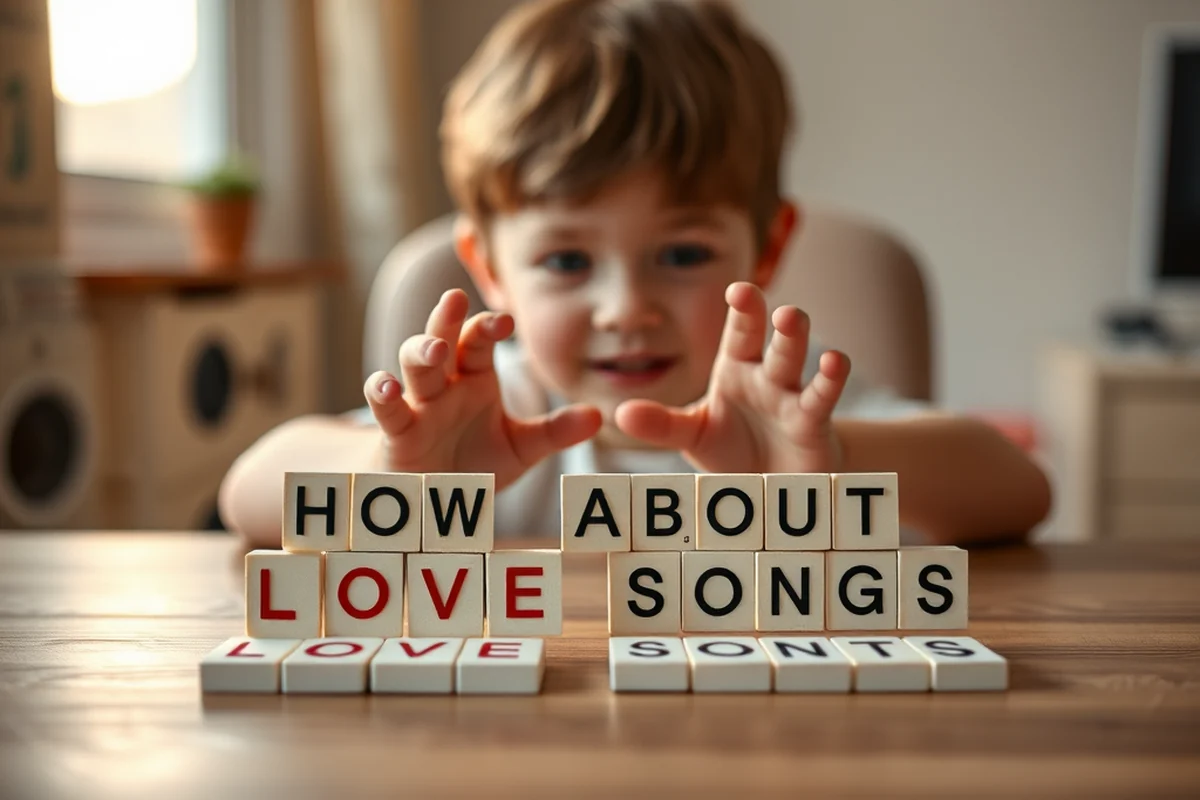
Starting with well-known love songs is a great way to ease your child into this activity. Songs like 'You Are My Sunshine' or 'This Old House' are not only familiar, but also rich in meaning. They can be sung together, listened to, or even used as prompts for drawing or storytelling.
I often set up a small 'music corner' in our homeschool space with a few books, a small keyboard, and a whiteboard. This gave my kids a place to explore music on their own, and it also made it easier to integrate love songs into our lessons. Sometimes we would just play the songs in the background while working on math or reading — it added a warm and comforting atmosphere.
One of the best things about starting with familiar songs is that your child will feel more confident and less overwhelmed. This makes the activity more enjoyable and more likely to be repeated.
Start with what your child knows — it sets the stage for learning.
Related: Multicultural music examples
Creating Your Own Love Songs
One of the most powerful aspects of love songs is that they can be personal. Encouraging your child to write their own love song is a wonderful way to explore emotions, language, and creativity. Even young children can create simple rhymes or draw pictures that tell a story about love.
When my daughter was five, we decided to write a love song for her dog. She wrote simple lines like 'You're my best friend, you're my pal' and we added some melody to it. It was a small project, but it taught her how to express love in a new way and gave her a sense of accomplishment.
You can use simple tools like a whiteboard or paper to help your child write their lyrics. You can even use a basic keyboard or app that allows them to record their song. This kind of creative expression is not only fun, but also helps develop language and musical skills.
Drawing pictures or using colored markers can help your child visualize and express their feelings more clearly when creating a love song.
“I remember the first time I sang a love song with my son during a car ride.”— Teaching Music to Homeschoolers editors
Using Love Songs for Emotional Learning

Love isn't just one thing — it can be romantic, familial, platonic, or even self-love. Using love songs to explore these different kinds of love helps your child understand the world around them in a more nuanced way. For example, we used songs like 'Amazing Grace' to talk about love for God, and 'The Best Day of My Life' to explore love for friends and family.
We also used songs to discuss the idea of love in different cultures. For instance, we listened to traditional love songs from around the world and talked about how love is expressed in different ways. This not only broadened our understanding, but also made the activity more global and inclusive.
By discussing these different forms of love, your child will begin to see that love is a complex and beautiful thing that can take many forms. This kind of emotional learning is a key part of growing up and understanding the world.
Integrating Love Songs into Daily Lessons
Love songs are not just for music class — they can be a great way to support learning in other subjects as well. For example, when we were studying about family units in social studies, we listened to songs like 'My Favorite Things' by Julie Andrews and talked about what makes a family special. This helped my son understand the concept of family in a more personal and emotional way.[2]
In language arts, we used love songs to teach vocabulary and grammar. We would analyze the lyrics, identify parts of speech, and even write our own songs using similar structures. This helped my child improve her language skills in a fun and engaging way.
By connecting love songs with other subjects, you can create a more holistic learning experience that makes education more meaningful and enjoyable.
Making Love Songs a Family Tradition
Love songs can be more than just a learning tool — they can also become a cherished family tradition. For example, we started a tradition where we sang a love song every Sunday evening. It became a way for us to come together, share our feelings, and strengthen our bond as a family.
Sometimes, we would choose a song that had special meaning to us, like the first song we sang as a family or one that reminded us of a happy memory. Other times, we would create our own songs that reflected our lives and values. It was a simple tradition, but it made our time together feel more meaningful.
Over time, these songs became a part of our family history. Even now, when we hear certain songs, we are reminded of the love and connection that we built through these shared moments.
Make love songs a family ritual — it's a gift that lasts a lifetime.
The Long-Term Benefits of Love Songs
As your child grows, the love songs they learn and experience in early childhood can have a lasting impact on their emotional and social development. Studies show that children who are exposed to music with emotional themes are more likely to develop empathy and stronger interpersonal skills as they grow.[3]
I've noticed that my children are more expressive and more in tune with their own emotions and the emotions of others. They use words like 'care,' 'support,' and 'understand' more naturally now, and they're better at comforting each other when things get difficult.
By using love songs as a tool for learning and connection, you're not just teaching your child about music — you're helping them build a foundation of emotional intelligence that will stay with them for the rest of their lives.
👶 Younger Kids (Ages 2-4)
Use simple, repetitive love songs with actions to help younger children learn and engage.
🧑🎓 Older Kids (Ages 7-12)
Encourage older children to write their own love songs, analyze lyrics, and explore different cultural love songs.
⏰ No-Prep Version
Use a playlist of familiar love songs to enjoy on the go or during downtime.
👥 Group Version
Gather with other homeschooling families to share and sing love songs together.
🎨 Extension Activity
Create a love song album with drawings, lyrics, and recordings to celebrate your child's creativity.
| The mistake | Why it happens | The fix |
|---|---|---|
| Forcing your child to sing if they're not interested. | This can make the experience feel forced and reduce their enjoyment of the activity. | Let your child choose the songs they want to listen to or sing. Make the experience fun and engaging for them. |
| Overlooking the emotional messages in the songs. | Love songs often carry deep emotional messages that can be missed if you don't take time to discuss them. | Take time to talk about the lyrics and the emotions they express. This helps your child understand the meaning behind the music. |
| Using only modern pop songs without considering other genres. | This can limit your child's exposure to different types of music and the emotional messages they carry. | Introduce a variety of love songs from different genres and cultures to give your child a more well-rounded musical experience. |
| Not creating a connection between love songs and other subjects. | This can make the experience feel isolated and not as meaningful for your child. | Use love songs to support learning in other subjects like language arts, social studies, and emotional development. |
How About Love Songs
Common Questions
What if my child doesn't like love songs?
How can I incorporate love songs into other subjects?
Can I use love songs to teach my child about different cultures?
What if I don't have a musical background?
References
Cite this guide
Teaching Music to Homeschoolers (2026). How About Love Songs. https://melodystart.com/how-about-love-songs/
Feel free to cite or share this guide.