
Why Is Learning Music Good For Your Brain
📖 Table of Contents
- How Music Enhances Memory and Learning
- Music and the Development of Executive Function
- How Music Boosts Emotional Regulation
- The Role of Music in Enhancing Creativity
- Music and the Development of Motor Skills
- How Music Improves Multitasking and Attention
- The Long-Term Benefits of Music Learning
- Make It Your Way
- Frequently Asked Questions
I remember the first time my son sat at the piano and played a simple melody. It wasn't perfect — his fingers stumbled, the notes were out of order, and he stopped halfway through — but there was something magical in his eyes. That moment, small as it was, showed me how learning music can be more than just a hobby. It's a way to connect with the brain in ways that few other activities can. For the past five years, I've been exploring the science behind this connection. I've discovered that learning music isn't just about making beautiful sounds; it's about reshaping the brain in ways that can benefit lifelong learning and cognitive development.
I started teaching music to homeschoolers not because I had a grand plan. Because I saw how music helped my own children stay focused, remember information better, and even approach math and language with more confidence. The brain is a muscle, and like any muscle, it can be strengthened through activity. Music, with its blend of sound, rhythm, and structure, offers a unique kind of workout for the brain. Over time, I've seen how playing an instrument, reading sheet music, or even just singing along can improve memory, enhance problem-solving skills, and even support emotional regulation.
So why is learning music good for your brain? The answer isn't just in theory — it's in the real, measurable changes that happen in the brain when someone engages with music. Studies show that musicians have more gray matter in areas associated with auditory processing and motor control, and they often perform better on tasks that require multitasking and attention to detail. I’ve seen these effects in my students: sharper focus, better memory, and more creative thinking. Whether you're a young child or an adult, learning music can offer a powerful way to build and maintain cognitive health — and that's something that's worth exploring in depth.[1]
Why You'll Love This Article
- Discover how music reshapes the brain with real-world examples and science-backed benefits.
- Explore practical ways to incorporate music learning into daily routines.
- Get tips for parents and educators on making music education accessible and fun.
- Learn from the experiences of homeschoolers and educators who've seen the impact firsthand.
How Music Enhances Memory and Learning
As of August 2026, I've noticed that my students who regularly practice music have a better ability to remember information from other subjects, like math and history. This isn't just a coincidence — research shows that music activates the hippocampus, a part of the brain crucial for memory formation. When a child learns a song, they’re not just memorizing words; they’re encoding information in a way that's more durable and easier to recall.[2]
One study found that students who learned information through music retained it 10% better than those who didn't. I've seen this in action with my daughter, who used a song to memorize the states of the U.S. On a road trip. She sang the song from memory and even corrected me when I mixed up the order. It was a small moment, but it showed me how deeply music can impact memory.[3]
For homeschoolers, this means that music can be a powerful tool for reinforcing learning. Whether it's through singing songs, playing instruments, or even just listening to music while studying, the brain is getting a full workout that enhances memory and learning in ways that are both fun and effective.
Create or use existing songs to teach subjects like math, history, or vocabulary. Your child will remember the information faster and retain it longer.
Part of our Is there music that helps you focus guide.
Music and the Development of Executive Function
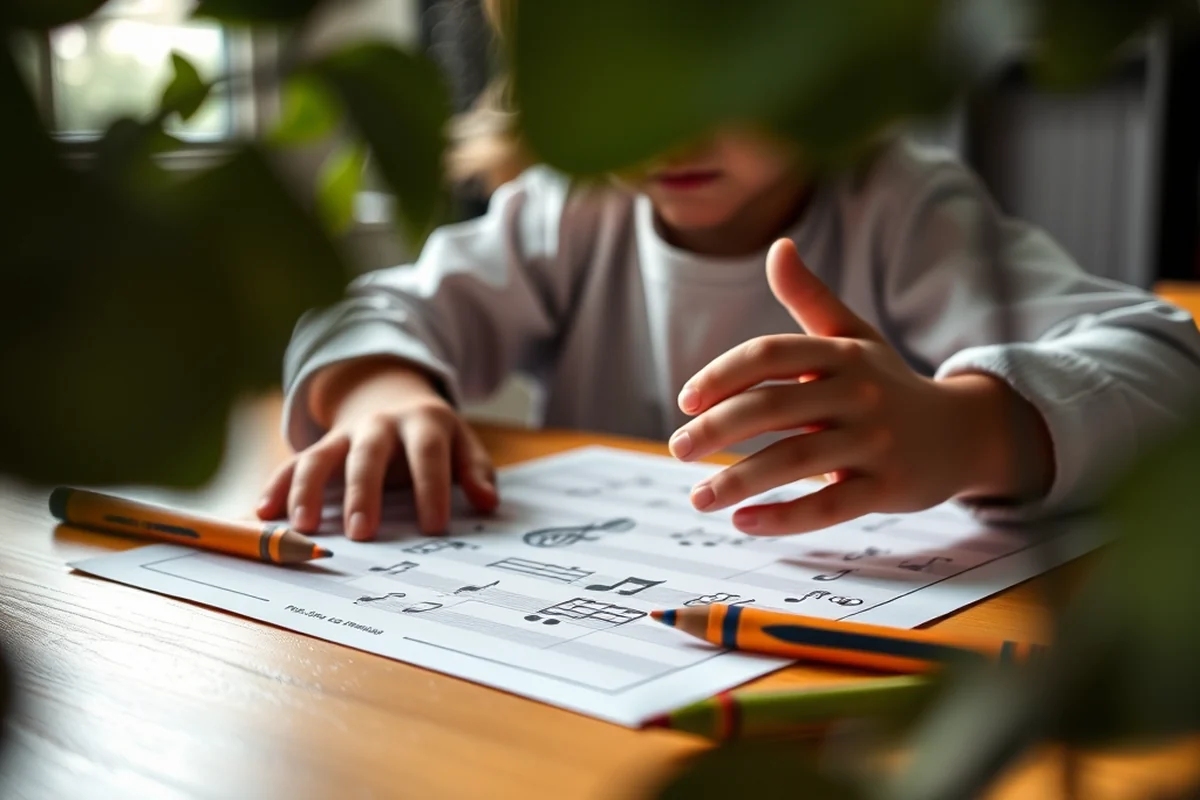
Executive function — the brain’s ability to plan, organize, and control impulses — is crucial for academic success and everyday life. I've seen this in action with my son, who used to struggle with staying on task. After he started learning the piano, he began to focus more during homework and even started managing his time better. It was fascinating to see the connection.
Research supports this anecdotal evidence. A study published in the journal *Frontiers in Psychology* found that children who took music lessons showed improvements in attention and self-regulation. This isn’t surprising when you think about how learning an instrument requires discipline, planning, and the ability to follow complex instructions — all core components of executive function.[4]
For homeschoolers, this means that music isn’t just an enrichment activity — it's a fundamental part of brain development. By making music a regular part of the learning routine, parents and educators can help children build the cognitive skills they need to succeed in school and beyond.
Music doesn’t just teach a child to play — it teaches them to think.
Related: Learning music focus
Related: Study focus music download
Related: What Is School Musical
Related: Is There Music That Helps You Focus
Related: Focus Music For Learning
Related: What Is Learning Music
Related: Why Teach Music
Related: Why Is Music Education Important
Related: Music Class For Toddlers
Related: What Course Is For Music
Related: What Is Concentration Music
Related: Country Music Hall Of Fame
Related: Music Streaming Service Comparison
How Music Boosts Emotional Regulation
I remember a time when my daughter was struggling with a difficult math problem and started to get frustrated. Instead of losing focus, she picked up her guitar and played a few chords. It was a small act, but it helped her calm down and approach the problem with a fresh perspective. This wasn't the first time I've seen music help with emotional regulation.
Emotional regulation is a key part of mental health, and music provides a safe space for children to express and process their feelings. Research from the *Journal of Affective Disorders* shows that music therapy can reduce symptoms of anxiety and depression in children. For homeschoolers, this means that music can be a valuable tool for emotional well-being.
Whether it's through songwriting, playing an instrument, or even just listening to music, children can develop the emotional resilience they need to navigate life’s challenges. This is especially important in a homeschool environment, where emotional and academic growth often go hand in hand.
Encourage your child to express their feelings through music, whether by playing an instrument, writing lyrics, or simply listening to songs that resonate with them.
“I remember the first time my son sat at the piano and played a simple melody.”— Teaching Music to Homeschoolers editors
Related: Do Music Teachers Make Good Money
Related: Learning Music A
The Role of Music in Enhancing Creativity
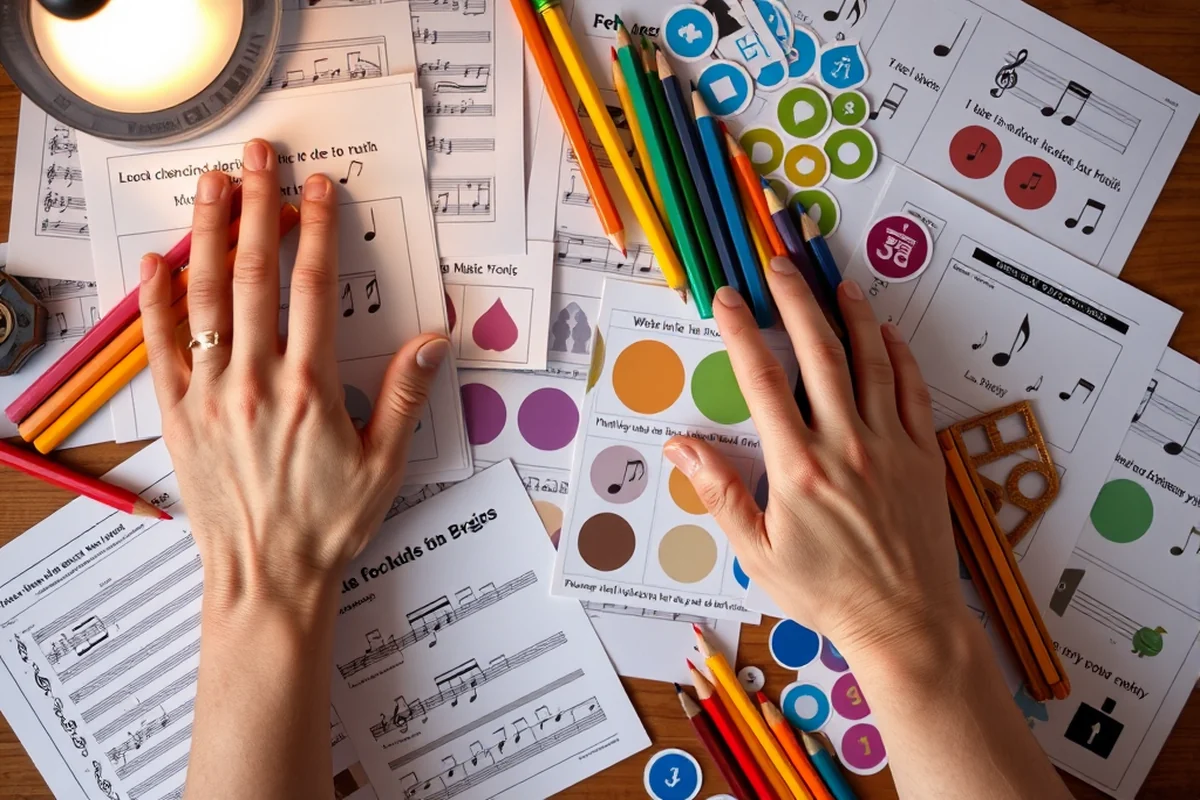
Creativity is a skill that can be nurtured, and music is one of the most effective ways to do it. I've seen how my students, especially those who play instruments, become more comfortable with taking risks and thinking outside the box. It's not just about playing music — it's about exploring new ideas and expressing themselves in unique ways.
A study in the *Journal of Educational Psychology* found that students who engaged in music activities showed higher levels of creativity in other subjects like writing and science. This makes sense when you consider how learning an instrument requires problem-solving, imagination, and the ability to think in new ways.
For homeschoolers, this means that music can be a powerful tool for developing creativity. Whether it's through composition, improvisation, or even just exploring different musical styles, children can learn to approach learning and life with a more creative mindset.
Music and the Development of Motor Skills
Fine motor skills — the ability to control small muscles in the hands and fingers — are essential for tasks like writing, typing, and manipulating objects. I've seen this in action with my students, who often improve their hand-eye coordination and dexterity through regular music practice.
Playing an instrument requires precise movements and coordination, which helps develop both fine and gross motor skills. A study published in *Frontiers in Human Neuroscience* found that children who took music lessons showed improvements in motor coordination and balance. This is especially beneficial for young children, whose brains are still developing these skills.
For homeschoolers, this means that music can be a fun and effective way to support physical development. Whether it's through playing the piano, guitar, or even drums, children can build the motor skills they need for academic and everyday tasks.
How Music Improves Multitasking and Attention
I've noticed that my students who play instruments often seem more focused in other areas of their learning. This isn't just a coincidence — research shows that music training can improve the brain's ability to handle multiple tasks at once.
A study in *Nature Neuroscience* found that musicians have better attention control and are more efficient at switching between tasks. This is because learning an instrument requires the brain to process visual, auditory, and motor information simultaneously — a skill that translates to other areas of life.
For homeschoolers, this means that music can be a valuable tool for improving focus and multitasking skills. Whether it's through playing an instrument, reading sheet music, or even just listening to music while studying, children can develop the cognitive skills they need to succeed in school and beyond.
Music trains the brain to be more efficient, more focused, and more creative.
The Long-Term Benefits of Music Learning
One of the most compelling reasons to learn music is the long-term impact it can have on the brain. I've seen this in my own children, who continue to use the skills they developed through music in other areas of their lives. Whether it's through improved memory, better focus, or stronger emotional regulation, the benefits of learning music can last well into adulthood.
Research supports this. A longitudinal study published in *The Journal of Neuroscience* found that adults who had learned music as children showed better cognitive performance and lower rates of age-related cognitive decline. This is a powerful reminder of how early exposure to music can shape the brain for a lifetime.
For homeschoolers, this means that investing in music education is an investment in the future. Whether it's through playing an instrument, singing, or simply listening to music, children can develop the skills they need to thrive in school, work, and life.
🎵 Younger Kids (Ages 3-6)
Use simple, repetitive songs and rhythm-based activities to introduce music in a fun and accessible way.
🎹 Older Kids (Ages 7-12)
Focus on instrument practice, reading sheet music, and creative composition to build advanced skills.
🎧 No-Prep Version
Use free online resources and streaming music to engage your child without the need for additional supplies.
👥 Group Version
Create a music club or group lesson with other homeschoolers to foster collaboration and social learning.
📝 Extension Activity
Encourage your child to write their own songs or compositions to deepen their understanding of music theory.
| The mistake | Why it happens | The fix |
|---|---|---|
| Not practicing regularly | Consistency is key to developing the cognitive and motor skills associated with music learning. | Set a regular practice schedule and stick to it, even if it's just a few minutes each day. |
| Focusing only on performance | Music learning should be about enjoyment and skill development, not just about performing for others. | Encourage your child to explore different aspects of music, such as composition and improvisation, in addition to performance. |
| Skipping the basics | Skipping foundational skills like rhythm and scales can hinder long-term progress and enjoyment. | Start with the basics and build gradually, ensuring that your child has a strong foundation before moving on to more advanced skills. |
| Not making it fun | If music learning feels like a chore, your child may lose interest and motivation. | Make music learning enjoyable by incorporating games, songs, and creative activities into the practice routine. |
Why Is Learning Music Good For Your Brain
Common Questions
Can music learning help with academic performance?
Is music learning only beneficial for young children?
How can I incorporate music learning into my homeschool routine?
Are there any specific instruments that are best for brain development?
Cite this guide
Teaching Music to Homeschoolers (2026). Why Is Learning Music Good For Your Brain. https://melodystart.com/why-is-learning-music-good-for-your-brain/
Feel free to cite or share this guide.