Rate Your Music
📖 Table of Contents
- What Is 'Rate Your Music'?
- How to Set Up the Activity
- Why This Activity Works for Homeschoolers
- The Educational Benefits of 'Rate Your Music'
- How to Adapt the Activity for Different Ages
- Tips for Making the Activity More Engaging
- How to Use 'Rate Your Music' in Your Homeschool Routine
- Make It Your Way
- Frequently Asked Questions
I remember the first time my daughter asked me, 'Why do some songs make me happy and others make me sad?' It was a simple question. It opened the door to a deeper conversation about music — one that led me to develop a simple, hands-on way to help kids explore their emotional connection to music. That's how 'Rate Your Music' was born. It's not just about rating songs on a scale; it's about giving children the language and tools to talk about what they feel when they listen to music.
As a homeschooling parent, I've always believed that music should be more than just a background noise in the house. It's a powerful tool for emotional development, critical thinking, and creativity. 'Rate Your Music' became a way to make that connection explicit. By rating songs, kids learn to articulate their feelings, compare different pieces of music, and even begin to think about the purpose of music in various contexts.[1]
The activity didn't start as a structured lesson. It was a casual, late-afternoon game during a rainy day that turned into something meaningful. My daughter picked out a few songs she loved and a few she didn't, and we talked about why. That simple exercise sparked her curiosity, and it's now a favorite part of our homeschooling routine. It's also become a favorite of other homeschooling families I've shared it with — and I've made sure to document every step of the way.
Why You'll Love This Music Activity
- It helps kids connect music with their emotions in a tangible way.
- It's adaptable for any age and learning level.
- It encourages critical thinking and self-expression.
- It can be done with just a few simple materials or no materials at all.
What Is 'Rate Your Music'?
As of September 2026, 'Rate Your Music' is a way for kids to think about music in a new, meaningful way. It's not about right or wrong — it's about what they like and why. The activity starts with a short discussion about what makes music 'good' or 'bad' to them, and then they rate a selection of songs. The scale is flexible, but we usually use a 1 to 5 system where 1 means 'I don't like it at all' and 5 means 'I love it!'
I've used this activity with kids as young as 3 and as old as 10, and it's always been a hit. The discussion part is especially powerful — it helps kids think about rhythm, melody, lyrics, and even how a song makes them feel physically. It's not just about music; it's about self-expression and communication.[2]
One of the most surprising results from using this activity was how quickly my daughter began to notice patterns in her own preferences. She started asking why certain songs made her feel calm or excited, and she even began suggesting new songs she wanted to rate. It was a small but meaningful shift in how she viewed music.
Before rating songs, create a 'mood board' of emotions like 'excited,' 'calm,' or 'sad.' Kids can use these words to explain their ratings and connect music to feelings.
How to Set Up the Activity
I usually start by preparing a list of 5–10 songs that are familiar to the child. They can be from different genres or eras, as long as they're age-appropriate. I make sure to choose a variety of songs — some that are upbeat, some that are slow, and some that have different instruments or lyrics.
Next, I explain the rating system. I always use a 1 to 5 scale, with 1 being 'I don't like it at all' and 5 being 'I love it!' It's important to let the child explain their rating. Sometimes they'll say, 'It made me feel happy,' or 'I didn't like the singing.' Encouraging them to describe their thoughts is the most valuable part of the activity.
Once we've rated a few songs, I like to have a short discussion about what they noticed. Did they find any patterns in their ratings? Did they discover a new favorite song? These reflections help them think more deeply about music and their own preferences.
Rating music is like rating a movie — it's all about what you think and feel.
Related: Music education best schools
Why This Activity Works for Homeschoolers
Homeschooling is about finding activities that are both learning-rich and child-led. 'Rate Your Music' fits that perfectly. It allows kids to take the lead in choosing songs, which keeps them engaged. It also gives them the chance to explore their own thoughts and feelings in a safe, structured way.
This activity helps develop critical thinking skills by asking kids to evaluate and compare different pieces of music. It also supports emotional literacy by giving them the vocabulary to talk about how they feel when they listen to different songs. Plus, it's a great way to introduce them to different genres and styles of music in a fun, non-pressured environment.
I've found that even when I'm not the one leading the activity — like when my daughter is doing it with her younger brother — the learning continues. They argue over their ratings, explain their reasoning, and even start making their own music playlists. It's a natural extension of the activity that keeps them engaged.
For kids under 6, use a visual scale with pictures instead of numbers — like a happy face (5) to a sad face (1). This makes it easier for them to understand the concept of rating.
“I remember the first time my daughter asked me, 'Why do some songs make me happy and others make me sad?' It was a simple…”— Teaching Music to Homeschoolers editors
Related: What is education in music
The Educational Benefits of 'Rate Your Music'
This activity is more than just fun — it's packed with learning opportunities. Kids learn to think critically by evaluating songs and making decisions about their preferences. They also develop emotional literacy by discussing how certain songs make them feel. This is especially valuable for younger kids who are just learning how to express their emotions.
Another key benefit is that it supports listening skills. When kids rate songs, they're not just reacting to the music — they're listening carefully to the melody, rhythm, and lyrics. This helps them become more attentive listeners, which is a valuable skill in both music and everyday life.
I've also noticed that this activity encourages creativity. After rating songs, my daughter started writing her own lyrics to match the emotions she felt during the activity. It's a natural extension of the learning that takes place when they're engaged in the process.
Related: Teachers music association
How to Adapt the Activity for Different Ages
For younger kids, focus on the emotional connection to music. Use simple language, visual aids, and short discussions. For older kids, you can introduce more complex questions — like 'Why do you think this song was written?' or 'How does this song compare to others in the same genre?'
One of the best ways to adapt the activity is to let the child take the lead. If they're interested in a particular genre of music, like rock or classical, you can tailor the song list around that. This keeps the activity relevant and engaging for them.
I've also used this activity as a way to introduce different cultures and musical traditions. By rating songs from different parts of the world, kids learn about the diversity of music and how it's used in different ways in different societies. It's a powerful learning tool that's both fun and educational.
Related: Music education course
Tips for Making the Activity More Engaging
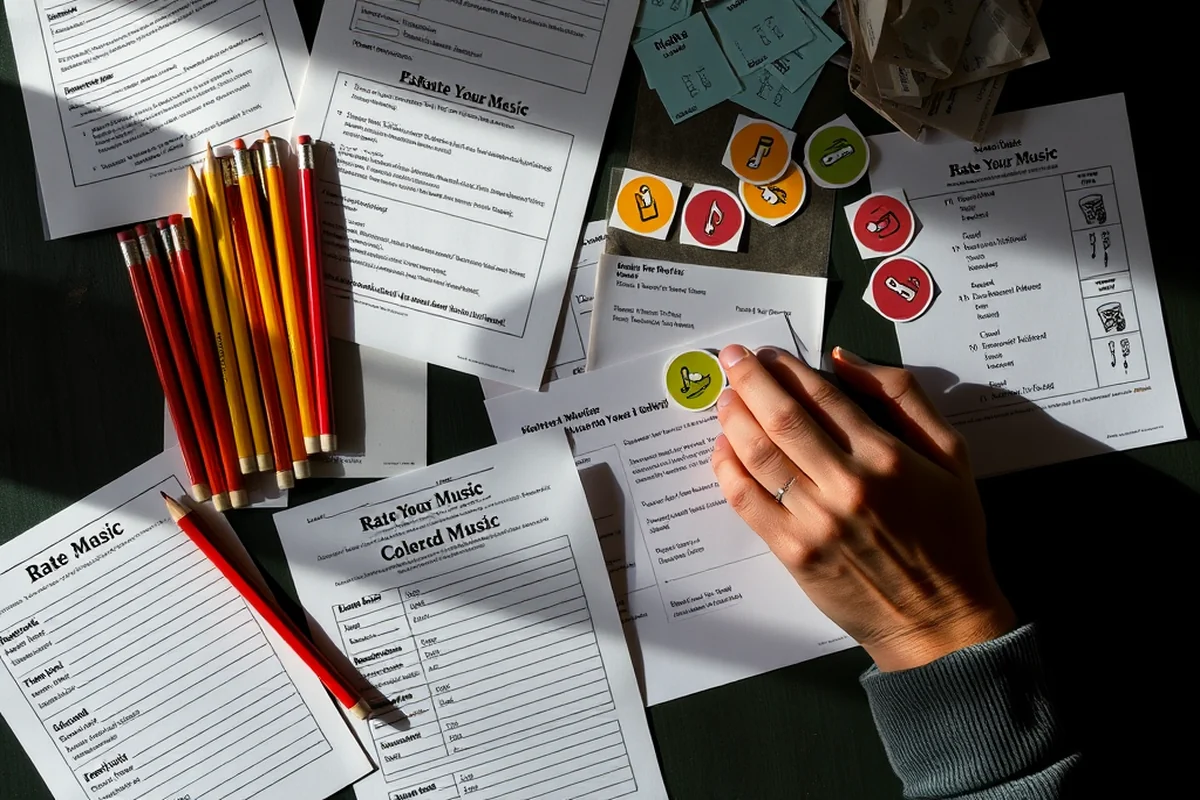
One of the easiest ways to make this activity more engaging is to create a 'music rating chart' that they can fill out with stickers, drawings, or colored pencils. This makes the activity feel more like a game and more like a learning tool. I've also used a 1 to 5 scale with smiley faces and frowny faces, which is especially effective with younger kids.
Another fun idea is to turn the activity into a family challenge. We play a game where each person rates a song and then explains their rating to the group. This creates a great opportunity for discussion and helps everyone get to know each other's music preferences better.
I've also found that adding a small reward system helps keep the activity fun. For example, if a child rates a certain number of songs, they get a small prize or a new song they can listen to. This keeps them motivated and excited to participate.
Making music rating a game can turn a simple activity into a family favorite.
Related: Famous music teachers
How to Use 'Rate Your Music' in Your Homeschool Routine
This activity can be a weekly or monthly event — it doesn't need to be done every day. I like to use it as a way to break up the routine and add a little creativity to our homeschool day. It's also a great way to introduce new music and discuss how it fits into our lives.
Another way to use it is as part of a larger music unit. If you're exploring a particular genre or time period in music, you can use 'Rate Your Music' to help kids compare and contrast different pieces. This makes the activity more focused and educational.
I've also used this activity as a way to teach kids about the purpose of music. After rating songs, we often have a discussion about why people create music and how it's used in different contexts — from storytelling to celebration. This helps them see music as more than just entertainment.
🎼 Younger Kids Version
For children under 6, use visual scales and simple songs to help them express their feelings about music.
🧠 Older Kids Version
For kids 7 and up, introduce more complex questions and encourage them to analyze the structure and purpose of music.
⚡ No-Prep Version
Use any available music and a quick rating system to get started without any extra materials or planning.
🤝 Group Version
Encourage teamwork by having kids rate songs together and discuss their thoughts as a group.
📈 Extension Version
Use this activity as a foundation for a larger music unit that explores different genres, composers, and musical styles.
| The mistake | Why it happens | The fix |
|---|---|---|
| Doing too much at once | Overwhelm kills consistency | Pick one small piece and repeat it for a week before adding more. |
| Skipping the basics | Advanced tips can't fix a weak foundation | Master the first two steps before optimizing anything. |
Rate Your Music
Common Questions
Can I use this activity with very young children?
How long does the activity usually take?
Do I need any special materials for this activity?
Can I use this activity for more than one child?
References
- Parental Perspectives on the Role of Music as a Core Subject (digitalcommons.liberty.edu)
- Music Associate Degree | Aims Community College (aims.edu)
Cite this guide
Teaching Music to Homeschoolers (2026). Rate Your Music. https://melodystart.com/rate-your-music/
Feel free to cite or share this guide.