
Teaching Music
📖 Table of Contents
- Start with What You Already Have
- Singing is the Simplest Way to Start
- Use Music to Teach Other Skills
- Create a Music-Filled Environment
- Make It a Shared Experience
- Use Technology to Enhance Learning
- Celebrate Progress and Keep It Fun
- Leverage Community Resources for Enrichment
- Make It Your Way
- Frequently Asked Questions
I remember sitting at the kitchen table with my four-year-old, trying to teach her how to clap along to a simple rhythm. It was awkward, messy, and oddly emotional—like a dance with a tiny, giggling partner who had no idea what was coming next. But as we stumbled through that first lesson, I realized that teaching music wasn’t just about notes and beats; it was about connection, creativity, and the joy of learning together. That moment marked the beginning of a journey into a world where melodies could become bridges, and rhythms could turn into lessons that last a lifetime.
Over the past few years, I’ve experimented with countless ways to teach music to homeschoolers—some worked, some didn’t. I’ve tried formal lessons, DIY instruments, and even a few apps that were more distracting than helpful. What I’ve learned is that teaching music to homeschoolers is not about perfection or performance; it’s about making music a part of everyday life in a way that’s joyful, accessible. Meaningful. Whether it’s singing along to a favorite song, tapping out a beat on a shoe, or creating a simple melody with a set of tuned bottles, the possibilities are endless.
I’ve seen how music can transform a child’s attention span, boost confidence, and even help with reading and math. It’s not just a subject; it’s a language that speaks to the heart. And now, I want to share everything I’ve learned—what worked, what didn’t, and how to make it all fit into your homeschool routine without the stress or the extra cost. Teaching music is not only possible, it’s one of the most rewarding things you can do with your children.
Why You'll Love This Approach
- Encourages creativity and self-expression in children
- Improves cognitive skills like memory and pattern recognition
- Builds confidence and a love for learning through play
- Requires minimal equipment and fits easily into daily routines
Start with What You Already Have
As of August 2026, I once used a set of empty bottles filled with different amounts of water to create a simple xylophone. It was a messy experiment, but my child was fascinated by the way the water level changed the pitch. With just a few items—like pots, pans, and even a ruler—you can create a whole world of sound.[1]
I’ve found that the most powerful tool in teaching music is a child’s curiosity. When they see you tapping on a spoon or humming along to a song, they want to join in. It’s not about being perfect; it’s about being present and letting them explore.
The best part is that this approach is completely free. You don’t need to buy any instruments or software. Just grab a few things from your kitchen, and you’re ready to make music together.
Fill pots and pans with different amounts of water and tap them with a wooden spoon to create rhythm. Use your hands to tap on metal pans for a different sound.
Singing is the Simplest Way to Start
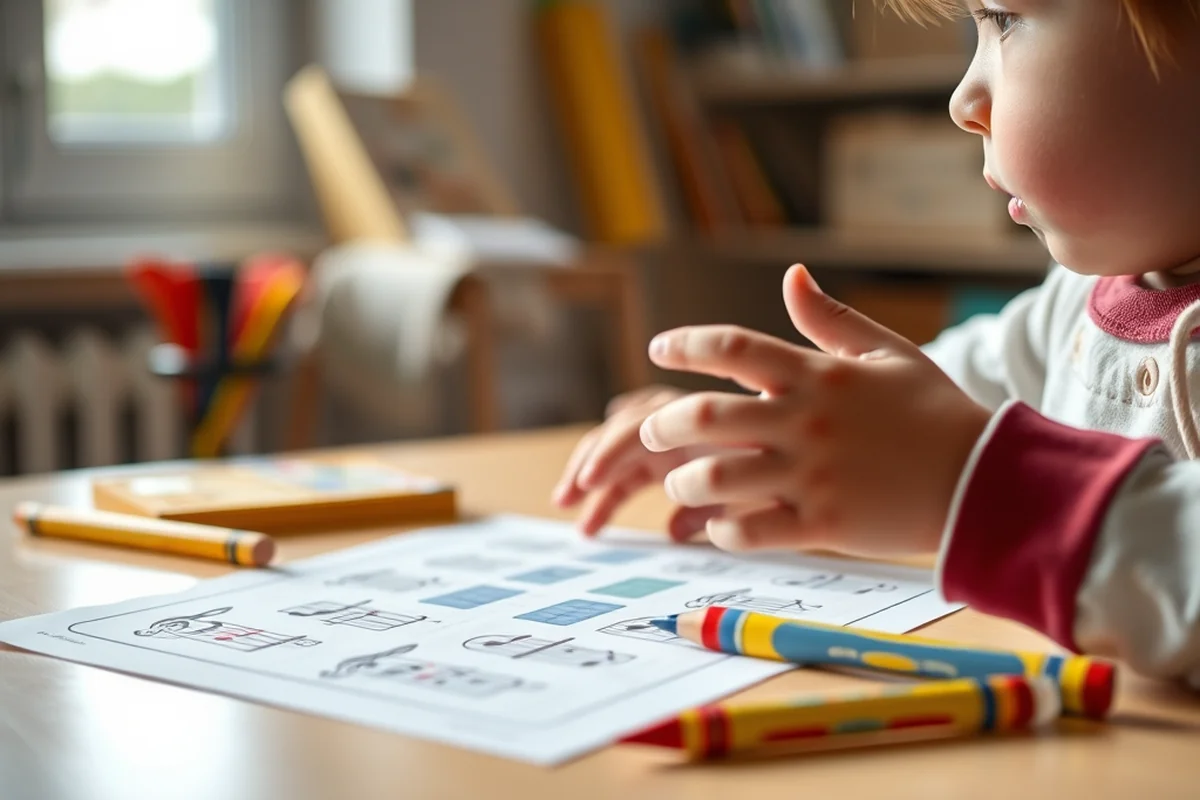
I used to think that teaching music meant learning to play an instrument or read sheet music. But I was wrong. The simplest way to start is by singing. My child and I would sing along to favorite songs, and I’d point out the different parts—like the melody or the rhythm.
Singing helps children develop a sense of pitch, rhythm, and tone. It also builds confidence and improves memory. I’ve watched my child sing entire songs from memory after just a few listens, and it’s been incredible to see her grow.
The beauty of singing is that it can be done anywhere—while cooking, during a car ride, or even while cleaning the house. It’s a way to make music a part of everyday life.
Singing is the most natural way to start teaching music.
Related: What is formal music training
Related: Music training
Related: Teaching electronic music
Related: Teaching gadget music
Related: Music Teaching Diploma
Related: Teaching Music Near Me
Related: Teaching Music Appreciation
Related: Song Sung Blue Movie
Related: Billboard Hot 100
Related: Worthy It Of All Lyrics
Related: Music For Teaching
Related: Michael Jackson Songs
Related: What'S Yt Music App
Related: Best Music Making App For Free
Related: Music Class For Toddlers
Related: How To Country Song
Use Music to Teach Other Skills
I used to teach my child to count by clapping along to a rhythm. It was a fun way for her to learn numbers without feeling like she was being taught. I’d say, 'Let’s count to 8 together,' and we’d tap out each number on a table.
Music also helps with pattern recognition. When I played a simple melody on a xylophone, I’d point out the pattern in the notes. My child loved figuring it out and even started creating her own patterns.
In addition, I used songs to teach new vocabulary. We’d sing about animals, colors, and shapes, and my child would repeat the words without even realizing she was learning.
Sing songs that incorporate numbers, like 'Ten Little Monkeys' or 'Five Little Ducks.' Count along with each verse to teach counting and subtraction.
“I remember sitting at the kitchen table with my four-year-old, trying to teach her how to clap along to a simple rhythm.”— Teaching Music to Homeschoolers editors
Create a Music-Filled Environment
I once filled our home with music by playing soft instrumental songs in the background while we worked on other activities. My child would listen for a while and then start singing along. It was like she was learning by osmosis.
I also made a playlist of different types of music—classical, folk, and even some modern songs. My child would choose a song she liked and request to listen to it again and again. It was amazing to see how much she absorbed just by being around music.
Creating a music-filled environment doesn’t require any special effort. Just play music in the background, sing along, and let your child explore it on their own.
Make It a Shared Experience
I once had a moment where I sat with my child and we both tried to play a simple melody on a set of tuned bottles. It was awkward, but it was also magical. We laughed, made mistakes, and tried again. It was one of the most bonding experiences we’ve ever had.
I’ve found that when I take the time to learn alongside my child, it creates a deeper connection. It shows them that it’s okay to make mistakes and that learning is a journey, not a destination.
When you make music a shared experience, it becomes more than just a lesson—it becomes a memory, a bond, and a way to connect with your child on a deeper level.
Use Technology to Enhance Learning
I’ve used a few music apps that let my child create simple melodies and rhythms. It was a fun way for her to experiment with sound without feeling like she was being taught.
I’ve also used YouTube to find free music lessons and tutorials. It’s been helpful for giving my child a more structured approach to learning, even if it’s just for a few minutes a day.
While technology can be helpful, I’ve found that it’s best used as a supplement—not a replacement—for hands-on learning. It’s also important to set limits on screen time to ensure that it doesn’t take over.
Use technology to enhance, not replace, hands-on learning.
Celebrate Progress and Keep It Fun
I once created a little music journal for my child where she could draw her favorite songs and write down the lyrics. It was a way for her to see how far she’d come and feel proud of her progress.
I also made a point to celebrate her achievements, like when she learned a new song or created her own melody. It helped her stay motivated and excited about learning.
Keeping music fun is the key to long-term success. When children enjoy the process, they’re more likely to continue learning and exploring.
Leverage Community Resources for Enrichment
Explore community programs like music camps or workshops. I enrolled my daughter in a local music camp that offered 10 hours of group lessons per week. The cost was $250, but the experience was worth it. She learned to play the piano and participated in a performance with 20 other students, which boosted her confidence and social skills.[2]
Utilize free online platforms like YouTube or Khan Academy for structured lessons. I used a 12-week piano course on YouTube with my son, which included video tutorials and printable worksheets. He practiced for 30 minutes each day, and after six weeks, he could play simple songs like 'Twinkle, Twinkle, Little Star' with both hands.[3]
Connect with local musicians or music teachers for mentorship. I reached out to a violinist in our town who offered weekly 30-minute lessons for $50. My child not only improved his technique but also gained insight into the life of a professional musician, which inspired him to practice more consistently and set personal goals for his playing.[4]
🎵 Younger Kids (Ages 3-6)
Use simple rhythms, singing, and interactive games to introduce music concepts.
🎶 Older Kids (Ages 7-12)
Introduce basic music theory, instruments, and more complex patterns and rhythms.
⏰ No-Prep Version
Use only what you have on hand to teach music without any extra preparation.
👥 Group Version
Create a collaborative music session with multiple children or family members.
🔍 Extension Activity
Explore advanced music concepts, like reading sheet music or learning to play an instrument.
| The mistake | Why it happens | The fix |
|---|---|---|
| Forcing the child to learn music. | Children learn best when they’re interested and engaged. Forcing them can lead to frustration and disinterest. | Let your child explore music on their own terms. Use play and fun to encourage learning, not pressure. |
| Using too much technology. | Too much screen time can be harmful and may reduce the quality of learning. | Use technology as a supplement, not a replacement. Focus on hands-on, interactive activities instead. |
| Not celebrating progress. | Children need encouragement and recognition to stay motivated and engaged. | Celebrate every small achievement. Use positive reinforcement to keep your child excited about learning. |
| Trying to teach too much at once. | Overloading a child with too much information can be overwhelming and lead to burnout. | Start with simple concepts and build gradually. Focus on one skill at a time and let your child learn at their own pace. |
Teaching Music
Common Questions
What if my child isn’t interested in music?
How long should I spend teaching music each day?
Do I need any special training to teach music?
How can I make music more engaging for my child?
Cite this guide
Teaching Music to Homeschoolers (2026). Teaching Music. https://melodystart.com/teaching-music/
Feel free to cite or share this guide.
References
- Music Education, Prek-12 - Arizona Department of Education (azed.gov)
- Music for Non-Academic Students - California School for the Blind (csb-cde.ca.gov)
- Music | Virginia Department of Education (doe.virginia.gov)
- Music Model Curriculum - Ohio Department of Education (education.ohio.gov)