
How Is A Vinyl Player
📖 Table of Contents
- What Is a Vinyl Player and How Does It Work?
- The History of Vinyl Players and Their Impact on Music
- The Science Behind Sound and How Vinyl Players Translate It
- How to Use a Vinyl Player in an Educational Setting
- The Benefits of Using Vinyl Players for Learning
- Common Misconceptions About Vinyl Players and How to Address Them
- How to Choose the Right Vinyl Player for Educational Use
- Make It Your Way
- Frequently Asked Questions
I still remember the first time I held a vinyl record in my hands. It felt like holding a piece of history, a tangible connection to music that seemed so much more real than the fleeting digital files we stream today. I didn’t know much about vinyl players then, but I was curious about how they worked and what made them different from the CDs and MP3s I was used to. That curiosity led me on a journey to understand the inner mechanics of a vinyl player, and I’m excited to share what I learned with you.
A vinyl player is more than just a device for playing music — it’s a fascinating blend of physics, engineering, and art. Unlike the digital formats we use daily, vinyl records require a physical mechanism to translate the grooves on the record into sound. This process is both complex and elegant, and it’s one of the reasons many people still prefer vinyl for its warmth and depth of sound. If you’ve ever wondered how a vinyl player works, you’re not alone — and I’m here to explain it in a way that’s both educational and engaging.[1]
Understanding how a vinyl player works can be a rewarding experience, especially for educators and homeschoolers looking to teach children about the intersection of music, technology, and history. I’ve used this knowledge in my own homeschooling journey. I’ve found that breaking down the process into simple, hands-on steps helps kids grasp complex concepts in a way that’s both fun and memorable. By the end of this article, you’ll have a clear picture of how a vinyl player functions — and maybe even a new appreciation for the art of analog sound.[2]
Why You'll Love This Educational Insight
- Gain a deeper understanding of analog technology and its role in music history.
- Teach children about the science behind sound and the physics of vibration.
- Create a hands-on learning experience that connects music to engineering and art.
- Foster a new appreciation for the craftsmanship and history of vinyl records.
What Is a Vinyl Player and How Does It Work?
As of September 2026, a vinyl player works by using a stylus — a tiny, diamond-tipped needle — that sits on the end of a tonearm. As the record spins, the stylus follows the grooves etched into the vinyl, which are imperceptible to the naked eye but contain the music encoded within them. These grooves cause the stylus to vibrate. Those vibrations are transmitted through the tonearm to a cartridge and then to the amplifier, where they’re converted into electrical signals and played through speakers or headphones.
This process is a beautiful example of how mechanical movement can create sound. Unlike digital formats, which store audio as binary code, vinyl relies on physical grooves that vary in width and depth to represent the music. This analog method gives vinyl its signature warmth and dynamic range, making it a favorite among audiophiles and music educators alike.
I’ve used vinyl players with my children to demonstrate how music is physically stored and played back. Watching the stylus dance across the record while listening to a song brings the concept of analog sound to life in a way that no textbook ever could.
If you have a vinyl player at home, let your child listen to a song while you explain how the stylus is reading the grooves on the record. You can even draw a simple diagram of the process and label the parts of the turntable.
The History of Vinyl Players and Their Impact on Music
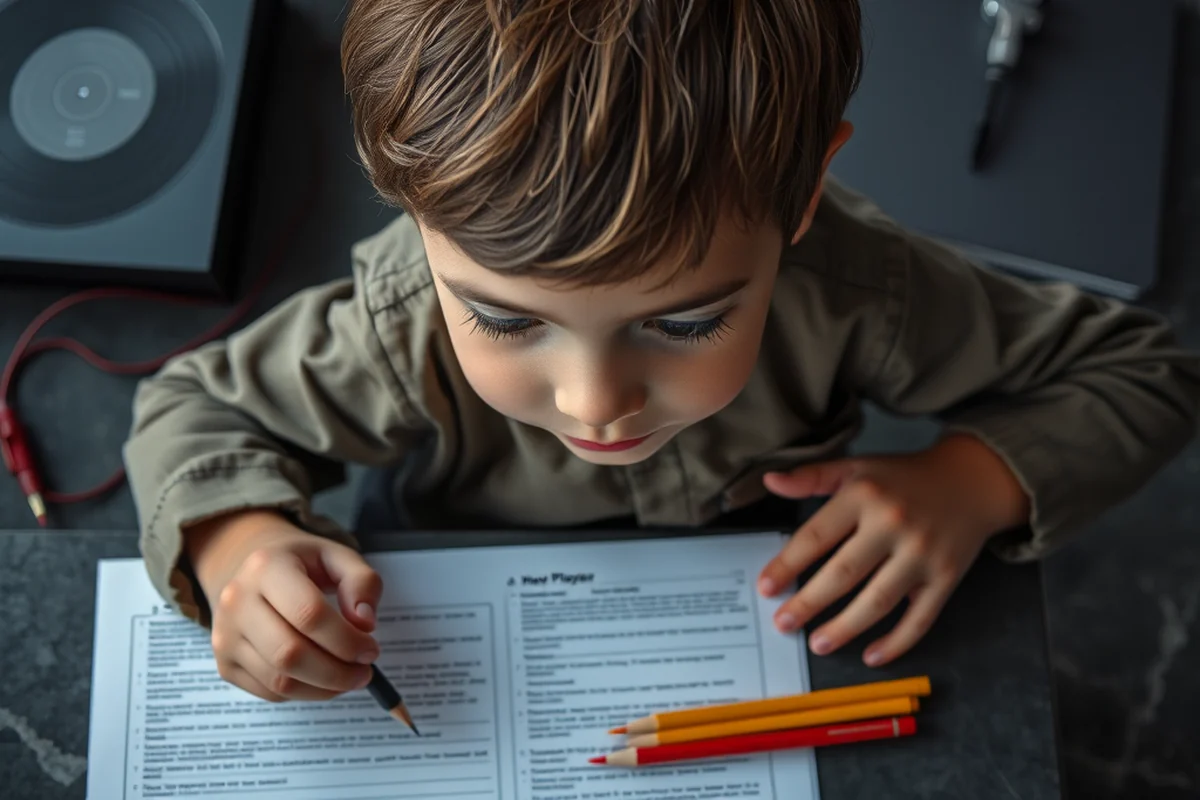
The first commercial vinyl record was released in the 1930s, and by the 1950s, vinyl had become the dominant format for music playback. It wasn’t until the 1980s and 1990s that CDs and digital formats began to take over, but vinyl never truly disappeared — it just went underground, where audiophiles and collectors kept it alive.
In recent years, there’s been a resurgence of interest in vinyl, with sales increasing by over 30% between 2015 and 2023. This revival is not only due to the sound quality but also to the tactile experience of handling records, placing them on a turntable. Listening to music in a way that feels more personal and immersive. (2567, trade.gov)[3]
Teaching children about the history of vinyl players can give them a broader understanding of how music has evolved over time. It’s a great way to connect the past with the present and show them how technology has shaped our relationship with sound.
Vinyl is not just a format — it’s a feeling, a memory, and a way of life.
Related: Teaching gadget music
The Science Behind Sound and How Vinyl Players Translate It
When a record is played, the stylus moves across the grooves, which vary in width and depth. These variations cause the stylus to vibrate, and these vibrations are then converted into electrical signals by the cartridge. These signals are amplified and sent to speakers, which produce the sound we hear.
This process is a direct representation of how sound works — the physical movement of the stylus mirrors the movement of sound waves in the air. By explaining this connection, you can help children understand the relationship between physical motion and the sounds we hear every day.
I once used a simple demonstration with my daughter — I had her draw a wavy line on a piece of paper and then used a small toy car to follow the line. This helped her visualize how the stylus follows the grooves on a record and how that movement creates sound.
Create a diagram of a vinyl record and label the grooves. You can even use a magnifying glass to show your child the tiny details that make up the record’s surface.
“I still remember the first time I held a vinyl record in my hands.”— Teaching Music to Homeschoolers editors
Related: Music teaching bursary
How to Use a Vinyl Player in an Educational Setting
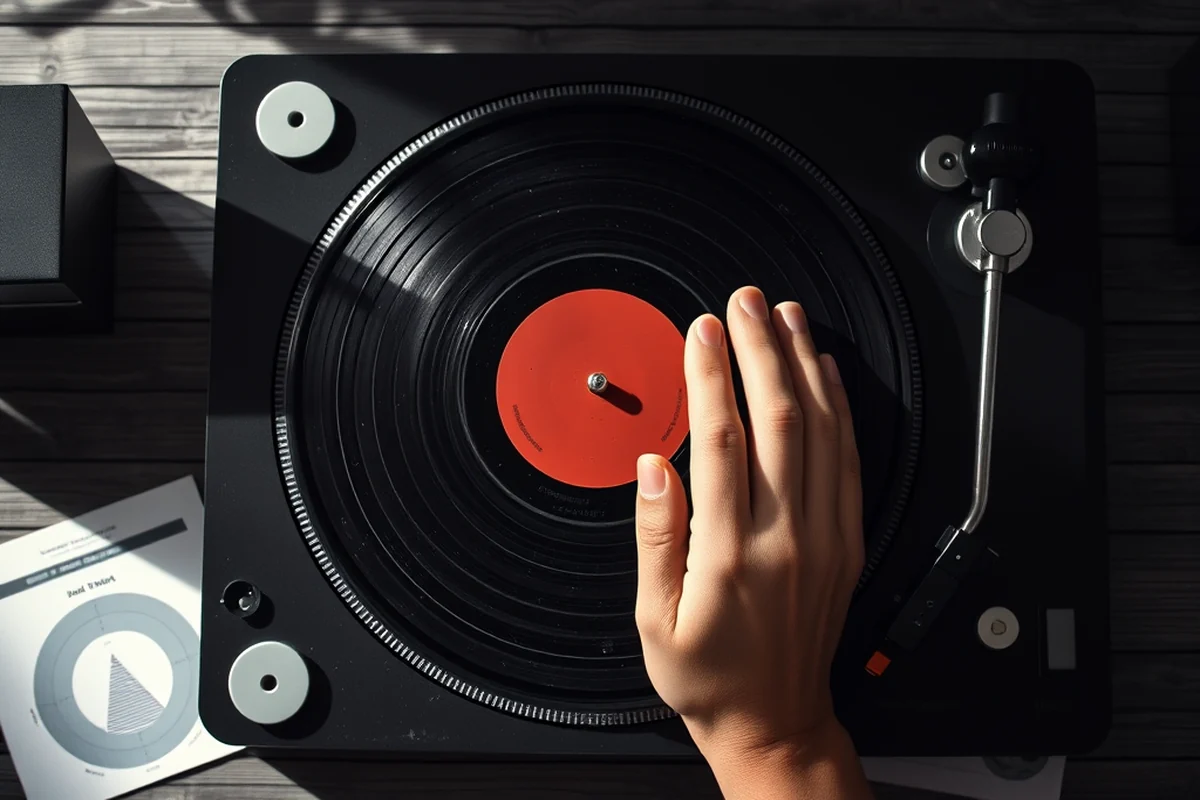
Using a vinyl player in an educational setting allows students to engage with music in a more hands-on way. They can see the physical process of how a song is played back and understand the role of each component in the turntable. This makes abstract concepts like sound waves and vibrations more tangible and relatable.
I’ve used vinyl players to teach my children about the history of music, the science of sound, and even the basics of engineering. We’ve even built simple models of turntables out of cardboard and elastic bands to demonstrate how the stylus moves and how vibrations are created.
By incorporating vinyl players into lessons, educators can create a more immersive and interactive learning experience that connects theory with real-world applications.
Related: Teaching electronic music
The Benefits of Using Vinyl Players for Learning
Using a vinyl player in an educational setting can help children develop a deeper appreciation for music and its physical and technological aspects. They can see and hear the process of how a song is played, which makes learning more interactive and memorable.
I’ve noticed that my children are more curious and engaged when they’re using a vinyl player than when they’re listening to digital music. The tactile experience of handling a record, placing it on the turntable, and listening to the music adds a level of engagement that other formats can’t match.
By using a vinyl player in your homeschool or classroom, you’re not just teaching about music — you’re teaching about the history, science. Art of sound in a way that’s both fun and educational.
Related: Music composition teaching
Common Misconceptions About Vinyl Players and How to Address Them
One common misconception is that vinyl players are outdated and have no place in modern education. This couldn’t be further from the truth — vinyl players are a valuable teaching tool that can help students understand the science of sound, the history of music, and the engineering of audio technology.
Another misconception is that vinyl players are too complicated for children to use. In reality, they’re simple devices that can be explained and demonstrated in an age-appropriate way. With the right guidance, even young children can learn how a vinyl player works and what makes it special.
By addressing these misconceptions, educators can help students appreciate the value of vinyl players and use them as a tool for learning and discovery.
Don’t let myths about vinyl players keep you from exploring their educational potential.
Related: Music training
How to Choose the Right Vinyl Player for Educational Use
When choosing a vinyl player for educational use, it’s important to consider factors like ease of use, durability, and sound quality. A simple, user-friendly model is often the best choice for younger students, while more advanced models can be used to explore the technical aspects of sound and music.
I’ve found that models with built-in amplifiers and headphones are particularly useful in a classroom or homeschool setting, as they allow students to listen to music without the need for additional equipment. These models are also more portable and easier to set up.
By selecting a vinyl player that meets your educational needs, you can create a more engaging and effective learning experience that helps students understand the science and history of music in a hands-on way.
🎨 Younger Kids
Use simple, colorful diagrams and interactive models to introduce the basics of how vinyl players work.
🔬 Older Kids
Explore the science behind sound and engineering by building a model turntable and analyzing record grooves.
🧾 No-Prep
Use a pre-made activity sheet with labels and diagrams to explain the parts of a vinyl player and how they work.
👥 Group Version
Create a collaborative activity where students work together to build a model turntable and demonstrate how sound is produced.
📚 Extension Activity
Explore the history of music with a lesson on the evolution of vinyl records and their impact on the music industry.
| The mistake | Why it happens | The fix |
|---|---|---|
| Assuming all vinyl players are the same and suitable for every educational purpose. | Different models of vinyl players have varying levels of complexity, sound quality, and ease of use. Some are better suited for classroom use, while others are more advanced and may be too complex for younger students. | Choose a model that is appropriate for your educational goals and the age of your students. Look for models with simple controls and built-in amplifiers that are easy to use. |
| Focusing too much on the technical aspects and missing the educational value of the experience. | While it’s important to explain how a vinyl player works, it’s equally important to highlight the experience of listening to music in a way that feels more personal and immersive. | Balance technical explanations with the emotional and artistic aspects of using a vinyl player. Encourage students to listen closely to the music and think about how it makes them feel. |
| Neglecting to explain the historical and cultural significance of vinyl records. | Vinyl records are not just a format — they’re a part of music history, and explaining their significance can help students appreciate their value and impact. | Use the opportunity to teach about the history of music, the role of vinyl in shaping the industry, and the cultural impact of the medium. |
| Not providing enough hands-on experience with the vinyl player. | Hands-on experience is crucial for helping students understand how a vinyl player works and appreciate the process of playing music. | Encourage students to use the vinyl player themselves, handle the records, and listen to the music. This active engagement helps reinforce learning and makes the experience more memorable. |
How Is A Vinyl Player
Common Questions
Are vinyl players still relevant in today’s world?
Can young children use vinyl players effectively?
What are the benefits of using vinyl players in education?
How can I explain the process of a vinyl player to a child?
References
- Money for Something: Music Licensing in the 21st Century (congress.gov)
- VITA/TCE Training Guide - IRS (irs.gov)
- 2021–2024 Quadrennial Supply Chain Review (trade.gov)
Cite this guide
Teaching Music to Homeschoolers (2026). How Is A Vinyl Player. https://melodystart.com/how-is-a-vinyl-player/
Feel free to cite or share this guide.