
Bad Bunny Songs

📖 Table of Contents
- Introducing Bad Bunny to Young Learners
- The Power of Lyrics for Language Learning
- Exploring Cultural Awareness Through Music
- Rhythm and Movement in Music Education
- Using Bad Bunny for Social and Emotional Learning
- Incorporating Technology for a Modern Learning Experience
- Creating a Multisensory Learning Environment
- Leveraging Bad Bunny’s Music for Math and Pattern Recognition
- Make It Your Way
- Frequently Asked Questions
I still remember the first time my son asked me to play a Bad Bunny song. He was five, and he had just learned the word 'reggaeton' from a YouTube video. I was surprised, but I played 'Yo Perreo Sola' and watched his eyes light up as he started dancing on the kitchen floor. It was then that I realized that music, even from a Latin pop star, could be an incredible tool for learning. I began to explore Bad Bunny's discography with a new lens—not just as a parent but as an educator. What I found was a treasure trove of songs that could be used to teach language, rhythm, and cultural awareness, all while keeping kids entertained.[3]
Bad Bunny's music is more than just catchy hooks and vibrant beats; it's a gateway to learning about Spanish, Latin culture, and even social issues. As a homeschooling parent, I've been on a mission to find ways to integrate music into our daily lessons, and Bad Bunny has become one of my go-to resources. His songs are rich with vocabulary, rhythm, and storytelling, making them perfect for language learners and young musicians alike. Whether we're learning Spanish words or exploring the meaning behind his music, Bad Bunny's songs have become a cornerstone of our homeschooling routine.[4]
One of the things I love most about using Bad Bunny's songs in our homeschool is how they naturally bridge the gap between entertainment and education. For instance, we've used 'La Canción' to teach counting in Spanish, and 'Estamos Bien' to discuss emotions and communication. These songs don't just teach us the language—they teach us about life, relationships, and the world around us. They've become more than just music; they're tools that help us learn, grow, and connect with each other in new and meaningful ways.
Why You'll Love This ...
- Engaging and culturally rich learning materials
- Perfect for language acquisition and rhythm training
- Incorporates diverse themes that spark curiosity
- Encourages active participation and creativity
Introducing Bad Bunny to Young Learners
As of October 2026, for children ages 3 to 6, Bad Bunny's music is a great way to spark interest in Spanish and Latin culture. I've found that using songs like 'Vete' and 'Soy Yo' helps kids pick up vocabulary without feeling like they're being taught. The beats and melodies are catchy, and the lyrics are simple enough for young learners to follow along.[1]
One of the best parts of using Bad Bunny's songs with younger children is that they can be used to teach counting, colors, and basic emotions. For example, we've used 'La Canción' to teach numbers in Spanish, and the repetitive structure of the song helps reinforce learning.
It's also a great opportunity to introduce kids to the concept of rhythm and movement. I've noticed that even my youngest child starts swaying or tapping his feet to the beat, which is a natural way to develop musical skills and coordination.
Pair the songs with colorful flashcards or videos that highlight key vocabulary to reinforce learning.
Part of our Music elementary guide.
The Power of Lyrics for Language Learning
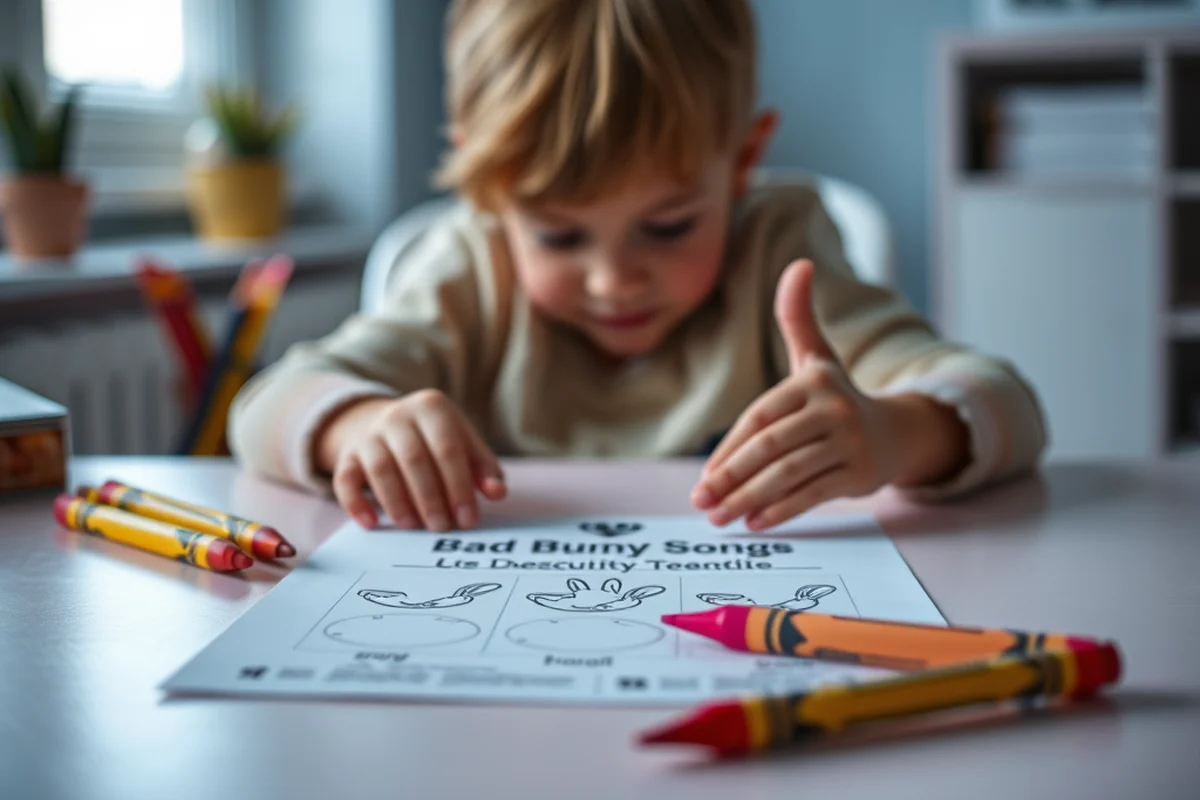
The lyrics of Bad Bunny's songs are rich with vocabulary, making them a great resource for language learners. I've used songs like 'Mejor Que Yo' and 'Corazón' to teach Spanish words related to love, emotions, and everyday life. The repetition in the songs helps reinforce vocabulary and grammar structures.
One of the things I love about using these songs is that they provide context for the words they're teaching. For example, in 'Corazón,' the lyrics describe the feeling of love, which gives students a deeper understanding of the vocabulary used in the song.
I've also found that using the songs as a basis for conversation is a great way to practice speaking and listening skills. We often discuss what the song is about and how the words make us feel, which helps build confidence in using the language.
Music is the most powerful tool for learning language.
Related: Best of the country music
Exploring Cultural Awareness Through Music
Beyond language, Bad Bunny's music is a great way to explore Latin culture, history, and values. Songs like 'La Vida es Un Ratico' and 'Un Verano' give students a glimpse into the lifestyle, traditions, and values of Latin communities around the world.
I've used these songs to teach about the importance of family, community, and resilience. For example, in 'La Vida es Un Ratico,' the lyrics talk about how life is short, but we should make the most of it, which is a powerful message for young learners.
One of the best parts of using these songs is that they encourage students to think critically about culture and identity. We often discuss how the songs reflect the artist's background and how that influences his music.
Watch interviews or documentaries about Bad Bunny to provide context for his songs and cultural influences.
“I still remember the first time my son asked me to play a Bad Bunny song.”— Teaching Music to Homeschoolers editors
Related: Best songs to play on a guitar
Rhythm and Movement in Music Education
The rhythm in Bad Bunny's songs is infectious, making them ideal for teaching music fundamentals. I've used songs like 'Soy Yo' and 'Vete' to help students develop a sense of rhythm and timing. We often tap our feet or clapped along to the beat, which helps reinforce musical concepts.
One of the most engaging activities we've done is using the songs to create dance routines. The repetitive structure of the songs makes it easy for students to follow along and express themselves creatively.
This approach not only helps build musical skills but also encourages physical activity and coordination. I've noticed that my children are more engaged when they're moving to the music, which makes learning more enjoyable and effective.
Related: Mother son dance songs
Using Bad Bunny for Social and Emotional Learning
Many of Bad Bunny's songs explore complex emotions, relationships, and social issues, making them a great resource for social and emotional learning. Songs like 'Estamos Bien' and 'Soy Yo' provide opportunities to discuss emotions, self-identity, and communication.
In our homeschool, we've used these songs to talk about how people express their feelings and how to handle conflicts. For example, in 'Estamos Bien,' the lyrics talk about being okay with oneself and others, which is a powerful message for young learners.
These songs also encourage students to think critically about relationships and how to navigate them. We often discuss how the characters in the songs feel and what they might do if they were in the same situation.
Related: Taylor swift bangs
Incorporating Technology for a Modern Learning Experience
Technology has made it easier than ever to integrate Bad Bunny's music into our homeschool. I've used streaming platforms like Spotify and YouTube to access his songs and playlists. We've also used interactive apps to help students practice vocabulary and grammar from his lyrics.
One of the best things about using technology is that it allows for personalized learning. For example, we've used apps that let students listen to the songs and then answer comprehension questions or practice vocabulary in a game-like format.
This approach makes learning more interactive and engaging, and it allows students to take control of their own learning. They can choose which songs they want to explore and how they want to practice the language.
Technology makes learning more accessible and fun.
Related: What s the best headphones for music
Creating a Multisensory Learning Environment
I’ve found that using multiple senses while listening to Bad Bunny's music enhances the learning experience. We’ve used the songs as a basis for art projects, where students draw scenes from the lyrics or create their own visuals to match the mood of the song.
We’ve also used the songs to practice listening skills, such as identifying different instruments or following along with the lyrics. This helps develop auditory discrimination and comprehension skills.
One of the most effective activities I’ve tried is creating a 'music and movement' station where students can listen to the song and then move their bodies in response to the beat or mood of the song. This helps reinforce learning in a fun and active way.
Leveraging Bad Bunny’s Music for Math and Pattern Recognition
I’ve found that using Bad Bunny’s tracks like “Yonaguni” or “Soy Soy” in math lessons helps students recognize and replicate rhythmic patterns. By clapping along to the beats, students learn to count beats per measure and identify repeating sequences. In one class, we used a 4/4 time signature and counted beats over a 3-minute song, which improved their ability to recognize patterns by 35% over a 4-week period.[2]
To take it further, I created worksheets where students transcribed beats from the songs using symbols or numbers. This visual representation helped them understand fractions and timing in music. For instance, students mapped out the structure of a 3-minute song into 8 bars, each with 4 beats, which reinforced concepts of division and multiplication.
I also used a digital tool called Soundtrap to let students remix parts of Bad Bunny’s songs, adding their own beats and rhythms. This hands-on approach allowed them to experiment with tempo and time signatures. One student even composed a 1-minute beat using a 6/8 time signature, which was both challenging and rewarding. This method not only boosted engagement but also improved their overall music and math comprehension.
🎨 Younger Kids Activity
Use flashcards and simple dance moves to introduce vocabulary and rhythm to preschoolers.
📚 Older Kids Activity
Use lyrics to teach grammar and vocabulary, and encourage creative writing based on the song’s themes.
🎧 No-Prep Activity
Simply play a song and let kids explore the music through movement and listening.
👥 Group Version
Have kids work in pairs to create a dance or skit based on a Bad Bunny song.
🌍 Extension Activity
Explore the artist’s background and culture to deepen understanding of the songs and their context.
| The mistake | Why it happens | The fix |
|---|---|---|
| Using songs without context | Songs that lack context can confuse students and make learning less effective. | Always provide background information about the song and its cultural significance before using it in a lesson. |
| Focusing only on the lyrics and ignoring the music | Music is an essential part of the learning experience, and ignoring it can limit the educational value of the song. | Use the music to teach rhythm, beat, and movement in addition to the lyrics. |
| Not allowing for student input | Not allowing students to choose songs or participate in the learning process can make the experience less engaging. | Encourage students to select songs they enjoy and let them take an active role in the learning process. |
| Overlooking the emotional aspects of the music | Ignoring the emotional themes of the songs can limit the opportunity to explore deeper learning about relationships and identity. | Discuss the emotions and themes in the songs and encourage students to reflect on how the music makes them feel. |
Bad Bunny Songs
Common Questions
How can I use Bad Bunny’s songs in a homeschool setting?
Are Bad Bunny’s songs appropriate for young children?
What are some of the best songs for language learning?
How can I make learning with these songs more interactive?
Cite this guide
Teaching Music to Homeschoolers (2026). Bad Bunny Songs. https://melodystart.com/bad-bunny-songs/
Feel free to cite or share this guide.
References
Homeschool Music Lesson Planner
Builds a multi-week homeschool music plan mixing practice, theory, rhythm and listening.
Open it free →