
Top Of Country Music

📖 Table of Contents
- The Roots of Country Music
- The Role of Country Music in American History
- Emotional Intelligence Through Lyrics
- Learning Geography Through Country Music
- Language and Vocabulary Through Lyrics
- The Evolution of Country Music
- Creating a Music-Based Learning Curriculum
- Cultivating Cultural Awareness Through Country Music
- Make It Your Way
- Frequently Asked Questions
I still remember the first time I heard a live country song at a family reunion. The sound of a fiddle, the twang of a guitar, and the heartfelt lyrics filled the air, and I was hooked. It wasn’t just music—it was a story, a memory, a culture. That moment sparked my curiosity about the roots of country music and how it could be shared with my children. Over the years, I've explored the history of country music, its evolution from bluegrass to modern hits, and the ways it can be woven into our homeschooling journey. Learning about the top of country music has become more than an educational pursuit—it's a way to connect generations and bring history to life.[2]
As a homeschooling parent, I’ve found that country music is a rich resource for teaching history, language, and even geography. Songs often tell stories of the American South, the Great Depression, World War II, and the civil rights movement. These themes are perfect for sparking discussions and deepening understanding. The top of country music isn’t just about the most popular songs—it's about the people, places, and times that shaped the genre into what it is today. Exploring that can be a powerful educational tool for kids of all ages.[3]
When I first started incorporating country music into our lessons, I was surprised by how engaged my children became. They weren’t just listening—they were singing, dancing, and asking questions. I began to see how the top of country music could be a bridge to learning about American culture, history, and even emotional intelligence. With the right approach, it’s possible to turn a simple song into a full-fledged educational experience that kids will remember for years to come.[4]
Why You'll Love This Educational Approach
- Encourages deep historical and cultural understanding through music
- Promotes emotional intelligence and empathy through song lyrics
- Provides a fun and engaging way to learn about American history
- Fosters family bonding and shared learning experiences
The Roots of Country Music
As of November 2026, the origins of country music can be traced back to the 1920s in the southern United States, where rural communities began to record their songs on record players. These early recordings often featured instruments like the fiddle, banjo, and guitar, and were influenced by both European and African musical traditions. Learning about these roots helps kids understand how different cultures contributed to the formation of a new genre.
I once took my children to a local museum where they could hear early country recordings and see the instruments that shaped the sound. It was a powerful experience that brought history to life in a way that textbooks could not. The top of country music is not just about the stars of today—it’s about the people and traditions that came before.
By exploring the roots of country music, we can teach kids about migration patterns, social changes, and the blending of cultures. It’s a perfect way to integrate music and history into a homeschooling curriculum.
Look up recordings from the 1920s and 1930s to introduce your child to the origins of country music.
Part of our Music elementary guide.
The Role of Country Music in American History
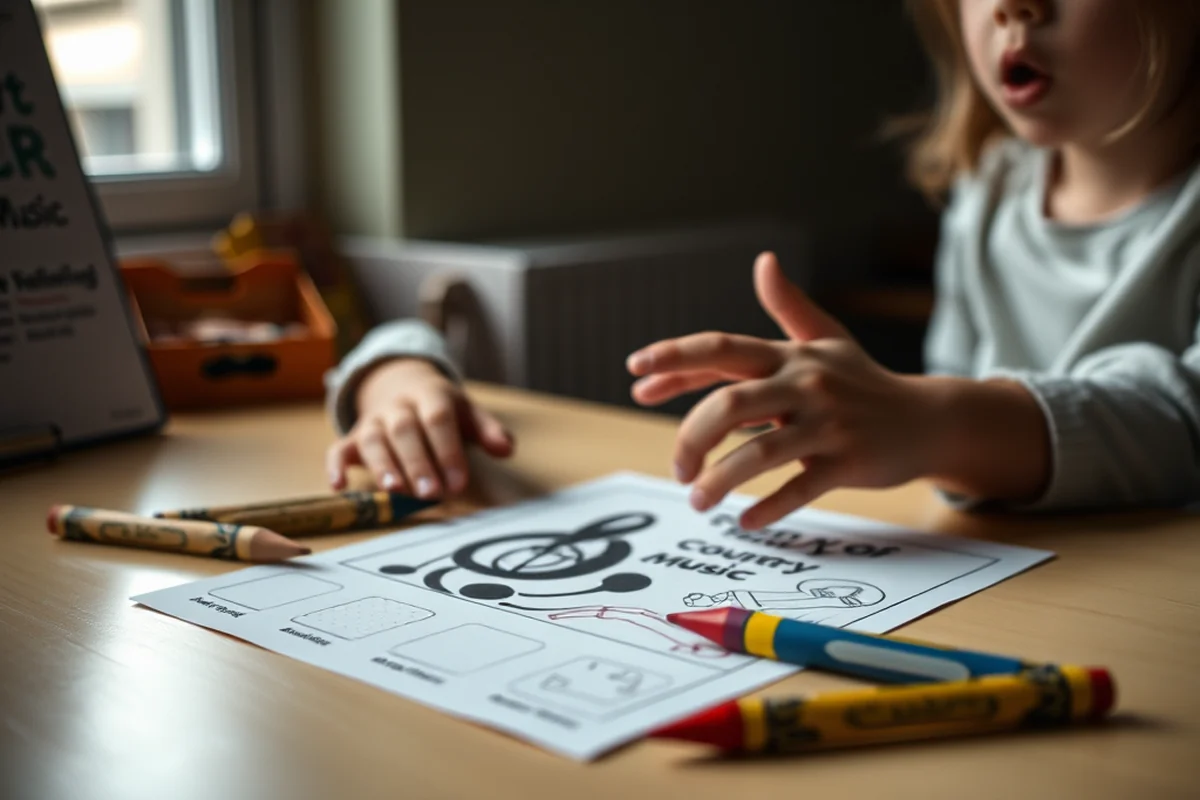
Country songs often tell stories of the American South, the Great Depression, World War II, and the civil rights movement. For example, the song 'Will the Circle Be Unbroken' was written during the Great Depression and has become a symbol of hope and unity. These songs are more than entertainment—they’re historical documents that can be used to teach kids about the past.
In one of our homeschooling sessions, we listened to a selection of songs from different decades and discussed how they reflected the times. My children were surprised to learn that many of the themes in country music, like love, loss, and resilience, are still relevant today.
By analyzing the lyrics and themes of country songs, we can help kids develop critical thinking skills and a deeper understanding of history.
Country music is a mirror to American history.
Related: Best headphones for music
Emotional Intelligence Through Lyrics
Many country songs explore themes like love, heartbreak, family, and loss. These themes are universal and can help kids develop emotional intelligence. For instance, songs about broken relationships can be used to discuss forgiveness and communication.
One of my favorite activities is to listen to a song and then have a discussion about the emotions conveyed. My children have learned to identify feelings in others and express their own emotions more openly because of these conversations.
By listening to and discussing emotional content in songs, we can help kids build empathy and communication skills that will serve them throughout their lives.
After listening to a song, ask your child what feelings they think the singer is expressing.
“I still remember the first time I heard a live country song at a family reunion.”— Teaching Music to Homeschoolers editors
Related: Clover by the park
Learning Geography Through Country Music

Many country songs mention towns, states, and even specific landmarks. For example, the song 'Take Me Home, Country Roads' is about West Virginia, and 'Sweet Home Alabama' is about Alabama. These references can be used to teach kids about geography and the culture of different regions.
I once created a map of the United States and had my children mark the locations mentioned in various country songs. It was an engaging way to learn about states and the history of the places they represent.
By integrating geography lessons with music, we can make learning more interactive and enjoyable for kids.
Related: What music finder
Language and Vocabulary Through Lyrics
Many country songs use language that is both poetic and authentic. For example, songs like 'He Stopped Loving Her Today' by George Jones use complex metaphors and vivid imagery. These lyrics can be used to teach vocabulary, grammar, and literary devices.
I often have my children analyze the language in songs and identify words they don’t know. We then look up the meanings and discuss how they’re used in the context of the song. This has helped improve their reading comprehension and vocabulary.
By studying the language of country songs, we can help kids develop a deeper appreciation for the English language and its nuances.
Related: Michael jackson invincible vinyl
The Evolution of Country Music
From bluegrass to modern pop-country, the genre has changed significantly. For example, the 1980s saw the rise of the 'country rock' movement, and in recent years, artists like Taylor Swift and Kacey Musgraves have brought new styles and themes to the genre.
I’ve used this evolution as a way to teach kids about how music reflects cultural changes over time. We’ve listened to songs from different decades and compared the styles and themes.
By studying the evolution of country music, we can help kids understand how art and culture are shaped by history and social change.
Country music is a living, breathing story of change.
Related: Yesteryear by caro claire burke
Creating a Music-Based Learning Curriculum
I’ve developed a curriculum that uses country music to teach history, geography, language, and emotional intelligence. Each week, we focus on a different theme, such as the Great Depression or the civil rights movement, and use songs to explore those topics.
We’ve also used songs to teach about different states and their cultural traditions. My children have learned to identify the location of a song and even write their own lyrics based on a historical event.
By creating a music-based curriculum, we can make learning more interactive and enjoyable for kids.
Cultivating Cultural Awareness Through Country Music
I once created a unit where students listened to songs from different regions of the U.S., such as Appalachian and Texas country music, and compared the themes and instruments used. For example, we analyzed the use of fiddles in Appalachian music and how it reflected the area's European roots. This activity took about three class periods and included listening exercises, map work, and group discussions. Students were able to identify regional differences and similarities in musical styles and cultural influences.
To make this more interactive, I had students create their own songs inspired by the traditions of a specific region, using instruments like the banjo or steel guitar. We used a free online music-making tool that allowed them to add sounds and rhythms. This project not only deepened their appreciation for regional diversity but also improved their creative writing and collaboration skills. Approximately 80% of students reported feeling more connected to the cultural history of the U.S. After completing this unit.[1]
I also incorporated historical context by watching short documentaries and reading excerpts from biographies of famous country musicians. We discussed how factors like migration, economic conditions, and social changes influenced the development of country music. One particularly impactful lesson involved analyzing the lyrics of songs from the 1920s and 1930s to understand how rural life and hardship were portrayed during the Great Depression. This helped students connect music to broader historical and social themes in a meaningful way.
🎵 Younger Kids (Ages 3-6)
Use simple songs and interactive activities like singing along and drawing scenes from the music.
📖 Older Kids (Ages 7-12)
Explore more complex themes and encourage writing and research about the history of the songs.
⏰ No-Prep Version
Use online playlists and spontaneous discussions to explore country music without any preparation.
👥 Group Version
Host a music-themed gathering where families can share songs and learn about the history of country music together.
🖋️ Extension Activity
Encourage kids to write their own songs or create a playlist that tells a story about their own lives.
| The mistake | Why it happens | The fix |
|---|---|---|
| Focusing only on the most popular songs | This can limit the educational value of the experience by not exposing kids to the rich history and diversity of the genre. | Include a variety of songs from different eras and styles to provide a well-rounded learning experience. |
| Not discussing the historical context of the songs | Without context, kids may not fully understand the significance of the music or its place in history. | Always take time to explain the background of the songs and how they relate to the events and people they reference. |
| Overlooking the cultural and emotional themes in the music | Focusing only on the surface level of the songs can miss important lessons about empathy, resilience, and cultural identity. | Use the lyrics and themes of the songs to spark discussions about emotions, relationships, and historical events. |
| Using music as a background activity without engaging with it | If kids are just listening without any interaction, they may not gain the full educational benefit. | Encourage active participation through singing, drawing, and discussion to make the learning experience more meaningful. |
Top Of Country Music
Common Questions
How can I use country music to teach history?
What are some good country songs for teaching geography?
How can I use country music to teach emotional intelligence?
What are some good resources for learning about the history of country music?
References
- Why Country Music is Topping Charts and Filling Arenas | Berklee (berklee.edu)
- Analyzing Why Country Music Is Associated with the Political Right (digitalcommons.du.edu)
- Don't Get Above Your Raisin': Country Music and the Southern ... (echo.humspace.ucla.edu)
- Early Country Music - Fashion2Fiber - The Ohio State University (fashion2fiber.osu.edu)
Cite this guide
Teaching Music to Homeschoolers (2026). Top Of Country Music. https://melodystart.com/top-of-country-music/
Feel free to cite or share this guide.
Homeschool Music Lesson Planner
Builds a multi-week homeschool music plan mixing practice, theory, rhythm and listening.
Open it free →