
What Is Flow In Music

📖 Table of Contents
I remember the first time I sat down with my son to listen to a piece of music and watched his eyes light up as the melody unfolded. It wasn't just a song — it was a journey, and I realized that moment was about more than just sound. It was about something deeper, something called 'flow.' That term, 'flow in music,' was new to me, but the feeling was familiar. It was the kind of moment that made me want to understand it better, so I could help my children — and maybe even myself — experience it more often.
Flow in music is a concept that might seem abstract at first, but it's one that every music lover, teacher, and parent should know. It's the feeling of being completely immersed in a musical piece, where time slips away and you're left with only the sound, the rhythm, and the emotion. For young learners, flow can be a gateway to deeper engagement with music. It's not just about technical skill — it's about connection, about letting the music guide you and allowing you to guide it in return.
What I’ve learned is that flow in music is a powerful tool for education. When you understand it, you can create lessons and environments that help students not only learn music but also love it. Whether you're a teacher, a homeschooling parent, or a music enthusiast, knowing how to cultivate flow can transform the way you and your students experience music. It's not just a theory — it's a practice, and it's something you can bring into your home or classroom today.
Why You'll Love This Article
- Learn how flow in music can deepen your child's connection to music and learning.
- Discover practical ways to help your child experience flow at home or in the classroom.
- Understand the science behind flow and how it enhances creativity and focus.
- Get tips on creating an environment that supports musical flow and learning.
What Is Flow In Music?
As of November 2026, Flow in music is a concept that has been studied by psychologists and music theorists for decades. It's that feeling of being so deeply involved in a musical piece that you forget about everything else — your surroundings, your schedule, even your own thoughts. It's a state of complete focus and enjoyment that can be achieved by both listeners and performers.
I’ve noticed that when my son is in the middle of a song, especially one he loves, he stops talking, stops moving, and just listens. His face shows a kind of peaceful concentration that I’ve never seen in him before. That’s flow. It’s not just a feeling — it’s a measurable psychological state that can enhance learning, creativity, and emotional development.
Research shows that people who experience flow in music report higher levels of happiness, better memory retention, and greater emotional intelligence. For children, this can mean a more enriched learning experience that goes beyond just mastering notes or rhythms. It’s about connecting with the music on a deeper level.[1]
Set up a quiet, comfortable space in your home where your child can listen to music without distractions. Use soft lighting and comfortable seating to encourage deep listening and immersion.
Part of our Music elementary guide.
How Flow Enhances Learning
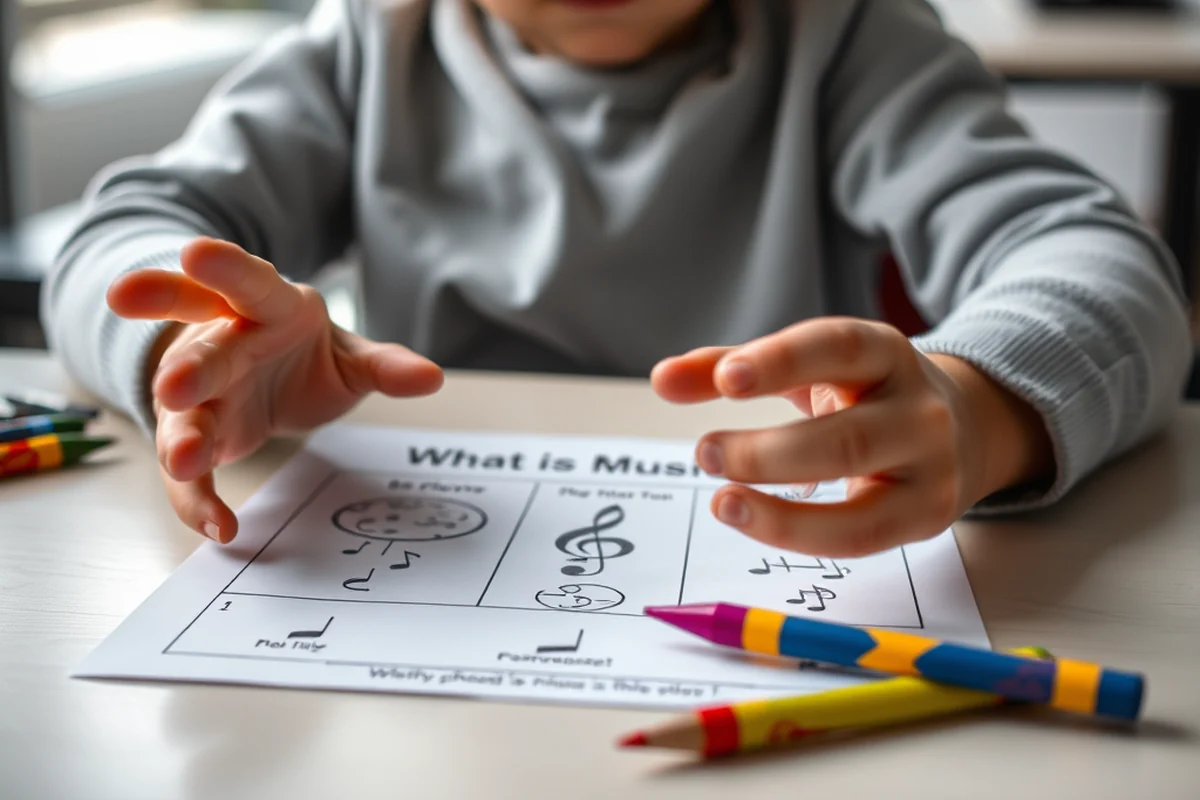
When a child is in a state of flow while listening to or playing music, their brain becomes more engaged. Studies have shown that this heightened state of focus can lead to better retention of musical concepts and even academic subjects like math and language. I’ve seen this in my own son, who can remember a song after just one listen and then apply that same memory to math problems that involve rhythm and timing.[2]
Flow also helps children develop emotional intelligence. When they are immersed in music, they're more likely to express their feelings, understand different emotions, and connect with others. This emotional engagement can be a powerful tool for learning and personal growth.
For teachers and parents, understanding how flow enhances learning is key to creating effective music-based education programs. Whether you're teaching a child to play an instrument or just encouraging them to listen to music, fostering a state of flow can make the learning process more enjoyable and more effective.
When a child is in flow, learning becomes effortless — and that's when magic happens.
Related: What is easy piano sheet music
The Science Behind Flow in Music
Scientific research has shown that when we experience flow in music, our brains release dopamine — the same chemical that is released during moments of pleasure, reward, and deep focus. This dopamine release not only makes us feel good but also helps us stay in the moment and fully engage with the music.[3]
I've read about studies that monitored brain activity in people who were deeply immersed in music. These studies showed increased activity in areas of the brain associated with memory, emotion, and creativity. This means that when a child is in flow, they are not just listening to music — they're building neural connections that can benefit them in other areas of learning.
Understanding the science behind flow can help parents and educators create environments that support deep engagement with music. By providing the right conditions — like a quiet space, a familiar piece of music, and a sense of safety — we can help children enter that state of flow more easily.
Children are more likely to experience flow with music they already know and love. Choose songs that your child is familiar with to help them enter a state of deep engagement more easily.
“I remember the first time I sat down with my son to listen to a piece of music and watched his eyes light up as…”— Teaching Music to Homeschoolers editors
Related: Justin bieber music albums
How to Help Your Child Experience Flow
Helping your child experience flow in music starts with creating the right environment. A quiet, distraction-free space can make all the difference. I’ve found that turning off the TV and removing any electronic devices from the room helps my son focus on the music more easily.
Another way to encourage flow is to let your child explore different types of music. Whether it's classical, jazz, or folk, exposing them to a variety of genres can help them find the music that resonates with them most. This exploration can lead to deeper engagement and more frequent states of flow.
It's also important to model the behavior you want to see. When I sit down with my son and listen to music together, it shows him that this is an activity we both enjoy. This shared experience can help him feel more comfortable and more likely to enter a state of flow on his own.
Related: Bad bunny songs
The Role of Repetition in Flow
Repetition is a powerful tool in music education, and it's one of the reasons why children can enter a state of flow so easily. When a child hears a familiar song or rhythm, their brain automatically starts to process the patterns, which can create a sense of predictability and comfort.
I've noticed that my son can sit and listen to the same song multiple times without getting bored. Each time, he seems to notice something new — a different instrument, a subtle change in the melody, or the way the rhythm flows. This repetition helps him build a deeper connection with the music and can lead to moments of flow.
For teachers and parents, using repetition as a teaching tool can help children achieve flow more easily. Whether it's through repetition of a song, a rhythmic pattern, or a musical phrase, this technique can help reinforce learning and encourage deeper engagement with music.
Related: Best jazz albums for beginners
Flow in Music and Creativity
When a child is in a state of flow, they're more likely to think creatively and take musical risks. This is because flow creates a sense of safety and security — the kind of environment where children feel comfortable trying new things and exploring their own ideas.
I've seen this in my own son when he's playing with a simple instrument like a xylophone. He'll start with a basic melody, then begin to add variations, change the rhythm, or even create his own song. This kind of creative exploration is only possible when he's in a state of flow.
For educators and parents, encouraging creative exploration through music is one of the best ways to help children develop their musical and cognitive skills. When children are allowed to experiment and create freely, they're more likely to experience flow and reap its many benefits.
Creativity blooms in the space between focus and freedom — and that's where flow lives.
Related: Neil diamond songs
The Long-Term Benefits of Flow in Music
Children who regularly experience flow in music are more likely to develop strong emotional regulation skills. This is because flow helps them process and understand their emotions in a safe and supportive environment. I've seen this in my son, who can now identify and express his feelings more clearly after being immersed in music.
Flow also helps improve memory and cognitive function. Studies have shown that people who experience flow in music have better memory retention and are more able to recall information. This is because the brain is more engaged and active during these moments.
In the long run, flow in music can help children develop a lifelong love of music and learning. It's not just about the immediate experience — it's about creating a foundation for continued growth and exploration.
🎵 Younger Kids (Ages 3-5)
Use simple, repetitive songs and encourage movement to help younger children experience flow through rhythm and play.
🎼 Older Kids (Ages 6-12)
Introduce more complex musical pieces and encourage creative expression through instruments or songwriting to help older children engage deeply with music.
🎙️ No-Prep Version
Use existing music from your home or playlist and create a quiet listening space for spontaneous moments of flow.
👥 Group Version
Gather a group of children to listen to music together, encouraging shared experiences and collaborative exploration of sound.
🎨 Extension Activity
Pair music with visual art, storytelling, or dance to create a multi-sensory experience that enhances the flow state.
| The mistake | Why it happens | The fix |
|---|---|---|
| Forcing a child to engage with music they don't like. | ||
| Creating a noisy or distracting environment. | ||
| Overloading a child with too many different types of music at once. | ||
| Interrupting a child when they're in a state of flow. |
What Is Flow In Music
Common Questions
How can I tell if my child is in a state of flow?
Can flow in music be taught?
What are some signs that a child is not in flow?
How can I help my child stay in a state of flow longer?
References
Cite this guide
Teaching Music to Homeschoolers (2026). What Is Flow In Music. https://melodystart.com/what-is-flow-in-music/
Feel free to cite or share this guide.
Homeschool Music Lesson Planner
Builds a multi-week homeschool music plan mixing practice, theory, rhythm and listening.
Open it free →