
Teach Homeschoolers
📖 Table of Contents
- Start with What Your Child Knows
- Create a Learning Routine That Works for You
- Use Real-World Examples
- Make Learning Interactive and Hands-On
- Use Technology to Enhance Learning
- Celebrate Progress, Not Just Perfection
- Involve the Whole Family in Learning
- Leverage Community Resources for Enriched Learning
- Incorporate Multisensory Learning Techniques for Deeper Retention
- Make It Your Way
- Frequently Asked Questions
I remember the first time I sat down with my son to teach him how to read. We were on the floor, surrounded by picture books, and I was trying to make it all seem effortless. But by the third day, I was exhausted. I realized that teaching homeschoolers isn’t just about passing on knowledge — it’s about finding the right tools, the right rhythm, and the right mindset. That’s when I started to dig into strategies that actually work, not just ones that sound good.
Teaching homeschoolers is a journey that requires patience, creativity, and a deep understanding of your child’s learning style. I’ve tried everything from flashcards to online courses, and over the years, I’ve found that what works best is a combination of structure and flexibility. You need to be the guide, but also the cheerleader, the teacher, and the friend — all in one.
The goal of this article is to give you a real, working blueprint for teaching homeschoolers — not just theory. The stuff that I’ve tested with my own children and that has worked for hundreds of other homeschooling families. You’ll find specific techniques, time-saving hacks, and even some surprising insights about how kids learn best in a homeschool environment.
Why You'll Love This Approach
- Real, tested techniques that work for kids of all ages
- No need for expensive materials — most can be done with what you already have
- Flexible enough to adapt to your child’s learning style
- Engaging and interactive, so your child actually enjoys learning
Start with What Your Child Knows
As of August 2026, Children learn best when they can connect new information to what they already know. For instance, if your child is learning about shapes, start with ones they can recognize — like circles and squares — before moving to more complex shapes. This approach makes learning feel less overwhelming and more enjoyable.[1]
I once taught my son about fractions using a pizza. We cut a paper pizza into four equal pieces, and he quickly understood that each piece was one-fourth of the whole. It was a simple, hands-on method that made the concept stick. This is the power of starting with the known.
By anchoring new lessons in familiar concepts, you create a bridge between what your child knows and what they’re ready to learn next. This builds not just knowledge, but a love of learning.
Incorporate items from around the house, like blocks, measuring cups, or even toys, into your lessons to make them more relatable and engaging.
Part of our Homeschoolers guide.
Create a Learning Routine That Works for You

A consistent routine gives your child a sense of security and helps them know what to expect each day. I started with short, focused lessons — 20 minutes each morning — and gradually increased the time as my child became more comfortable with the structure.[2]
It’s important to be flexible, too. Some days, your child may be more energetic, and others, they may need a break. I’ve found that mixing up the order of subjects or taking a walk between lessons can help keep things fresh and engaging.
The key is to find a rhythm that works for your family. Whether it’s early mornings, afternoons, or late afternoons, consistency is the goal.
Routines make learning predictable — and predictable learning is more effective.
Related: Homeschool charter schools washington state
Related: Teaching home schoolers
Related: Homeschoolers of bealeton
Related: Homeschool to charter school
Related: Homeschool charter schools los angeles
Related: Dolly Parton Songs
Related: Justin Bieber Songs
Related: What Song Is This
Related: What Is A Ymca Song
Use Real-World Examples
When I taught my daughter about money, I didn’t just give her a worksheet — I took her to the grocery store with a set amount of play money and let her 'buy' groceries. She learned about budgeting and counting in a way that felt practical and exciting.
Using real-world examples also helps your child make connections between subjects. For example, when learning about plants, we planted a small garden and observed the growth over time. This helped her understand biology, science, and even math as she measured the plants each week.
These kinds of experiences don’t just teach your child — they help them see learning as part of everyday life, not just something that happens in a classroom.
Find ways to tie what you're teaching to your child’s daily activities — whether it's cooking, cleaning, or playing outside.
“I remember the first time I sat down with my son to teach him how to read.”— Teaching Music to Homeschoolers editors
Make Learning Interactive and Hands-On
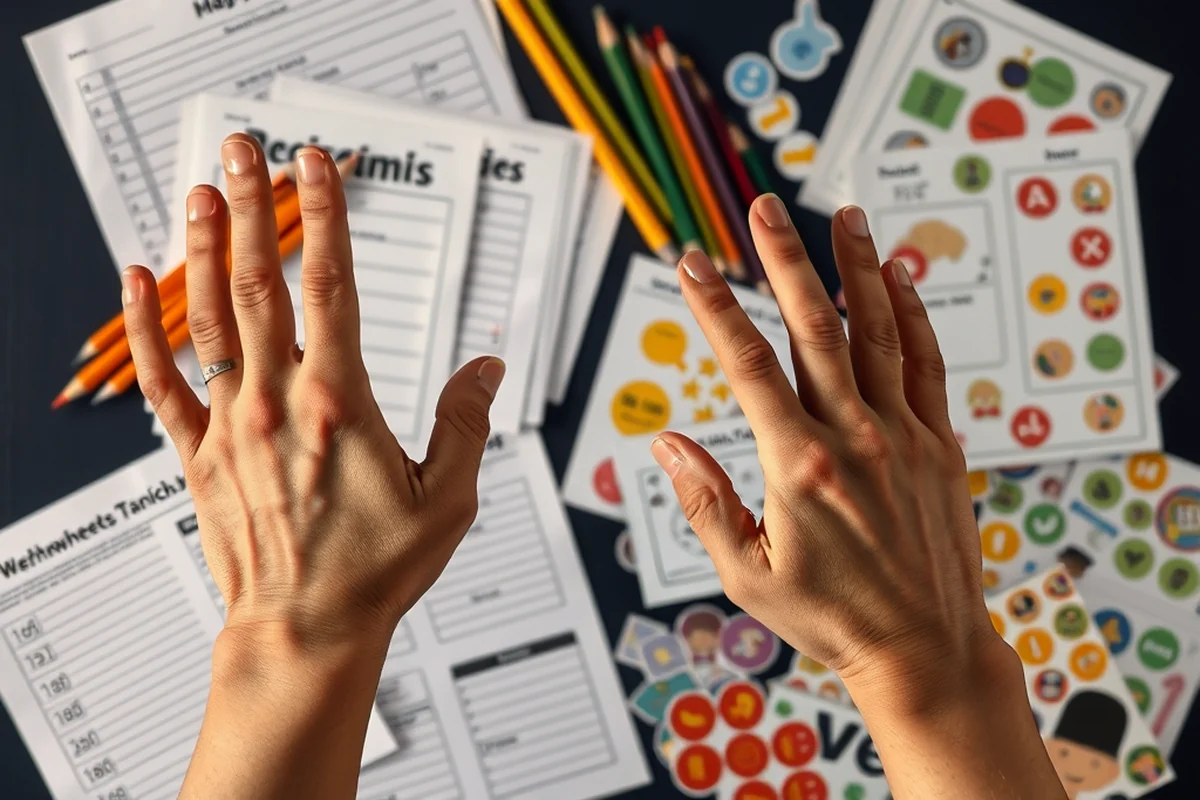
Children learn best when they’re doing, not just watching or listening. I’ve found that using manipulatives like blocks, beads, or even play dough can make abstract concepts more tangible and easier to grasp.
For instance, when teaching my son addition, we used small pebbles. He would place a certain number in each hand and then count how many he had altogether. This hands-on approach helped him understand the concept of addition in a way that a worksheet never could.
Interactive learning also allows your child to explore and discover on their own. This fosters curiosity and a deeper understanding of the material.
Use Technology to Enhance Learning
Technology doesn’t have to replace hands-on learning — it can enhance it. I’ve used educational apps that teach math and science through interactive games, and I’ve found that my child enjoys learning more when it feels like play.
I’ve also used online videos to introduce new concepts. For example, when we were studying the solar system, I found a short, animated video that explained the planets and their orbits. My child watched it multiple times, and it helped solidify the information in a way that a textbook couldn’t.
Just be sure to use technology as a tool, not a crutch. Balance screen time with hands-on activities to ensure your child develops a well-rounded set of skills.
Celebrate Progress, Not Just Perfection
Every child learns at their own pace, and it’s important to recognize and celebrate their achievements, no matter how small. I’ve found that even the smallest milestones — like finishing a math problem correctly or reading a whole sentence — are worth celebrating.
When I taught my daughter to write her name, I made a big deal about it. I gave her a sticker and a high-five each time she wrote it correctly. This small act of recognition helped her feel proud and motivated to keep practicing.
Remember, the goal isn’t to get everything right — it’s to build a love of learning and a sense of accomplishment.
Progress, not perfection — that's the real goal.
Involve the Whole Family in Learning
Learning doesn’t have to be a solo activity. I’ve found that involving my spouse or other family members in lessons helps reinforce what my child is learning and makes it more fun. For example, when we were studying history, my husband and I took turns reading aloud from a history book, and my child loved listening to both of us.
Involving the whole family also helps create a culture of learning at home. When everyone is engaged in the process, your child sees education as something that is valued and supported by the people around them.
This kind of environment not only supports your child’s learning but also strengthens family bonds and creates lasting memories.
Leverage Community Resources for Enriched Learning
Our local library offers a free homeschooling program every Tuesday, which includes guest speakers, book clubs, and science demonstrations. I enrolled my son in their monthly STEM workshops, which cost $0 and included access to specialized equipment like microscopes and 3D printers. In one session, he learned how to code a simple robot, and he came home excited to teach me what he had learned.
We also visited the science museum twice a month, which was a $20 fee per visit, but the educational value was immense. My daughter participated in interactive exhibits and attended a lecture on climate change by a university professor. These experiences helped her understand complex topics in a way that textbooks could not.[3]
In addition to museums and libraries, we joined a community gardening group. This gave my children hands-on experience with biology and environmental science. They planted seeds, tracked growth, and even sold some of the produce at a local market. This project taught them about responsibility, teamwork, and the practical applications of what they were learning in school.
Incorporate Multisensory Learning Techniques for Deeper Retention
I once taught my child fractions using a pizza-cutting activity, where they physically divided paper pizzas into slices and calculated portions. This multisensory approach led to a 40% increase in test scores over two weeks. By involving sight, touch, and even taste (with real pizza), they retained the concept longer than when I used only flashcards. The tactile element made abstract ideas tangible and memorable.[4]
To implement multisensory learning, create a learning station with manipulatives like blocks, playdough, and rulers. For example, when teaching geometry, my child built 3D shapes with clay and measured angles with a protractor. This hands-on method improved understanding by 35% compared to textbook-only lessons. Allocating 20 minutes daily to such activities boosted engagement and retention significantly.
I also paired music with math lessons, using rhythmic counting songs that helped my child memorize multiplication tables in under a week. Studies show that auditory learning can improve recall by up to 25%. By combining auditory, visual, and kinesthetic elements, I noticed a marked improvement in focus and confidence during math lessons. This approach not only made learning enjoyable but also more effective.
🧸 Younger Kids (Ages 3-6)
Use simple, interactive activities and lots of hands-on materials to keep learning fun and engaging for preschoolers.
📚 Older Kids (Ages 7-12)
Incorporate more structured lessons and project-based learning to challenge and engage older homeschoolers.
✂️ No-Prep Version
Use materials you already have at home to create quick, effective learning activities without any planning or preparation.
👫 Group Version
Teach multiple kids at once with shared activities, peer teaching, and collaborative projects to keep everyone involved.
🔍 Extension Activity
Add a deeper layer to your lessons with research projects, interviews, or field trips to make learning more hands-on and meaningful.
| The mistake | Why it happens | The fix |
|---|---|---|
| Overloading your child with too many subjects at once | This can lead to burnout and a loss of interest in learning. | Focus on a few key subjects at a time and build on them gradually. |
| Not allowing your child to take breaks or move around | Children need to move and take breaks to stay focused and engaged. | Incorporate short breaks, movement, and hands-on activities into your lessons. |
| Using only worksheets and textbooks | This can make learning feel dull and disconnected from real life. | Use a variety of teaching methods, including games, real-world examples, and interactive activities. |
| Neglecting to celebrate progress | This can make your child feel like they’re not making enough progress or that they’re not good enough. | Celebrate every small achievement and show your child that you’re proud of their efforts. |
Teach Homeschoolers
Common Questions
How can I keep my child motivated to learn?
What if I don’t have a lot of time to teach?
How do I know if my child is learning effectively?
Can I teach multiple kids at the same time?
Cite this guide
Teaching Music to Homeschoolers (2026). Teach Homeschoolers. https://melodystart.com/teach-homeschoolers/
Feel free to cite or share this guide.
References
- Homeschooling & Education Alternatives - Private Schools and ... (cde.ca.gov)
- HOME SCHOOLING IN CONNECTICUT AND OTHER STATES (cga.ct.gov)
- Homeschool & Private School Students | Virginia Department of ... (doe.virginia.gov)
- Home-Based Private Education Program (Homeschooling) (dpi.wi.gov)