
What Is Best Music Streaming Service

📖 Table of Contents
- What Makes a Music Streaming Service Educational?
- How to Find the Right Music Streaming Service for Homeschooling
- Why Age-Appropriate Playlists Matter
- How to Use Music Streaming Services for Homeschooling
- The Role of Interactive Features in Music Education
- How to Use Music Streaming Services for Emotional Development
- The Cost of the Best Music Streaming Services
- Using Music Streaming Services to Integrate Music Theory into Homeschooling
- Make It Your Way
- Frequently Asked Questions
When my oldest child was seven, I was trying to teach her to play the piano, and I needed a way to make learning fun. I stumbled onto a music streaming service that played classical tunes and helped her learn songs without needing to buy expensive CDs. That moment changed how I looked at music education in our home. The question of 'what is best music streaming service' became more than just a search — it became a gateway to learning.[3]
I spent weeks comparing different platforms, looking for one that wasn’t just for entertainment but could support music education. I needed something that had a wide variety of genres, easy access for kids, and maybe even some interactive features. What I found was a service that not only had thousands of songs but also included educational playlists, which made learning through music feel like a natural part of our daily routine.[4]
Now, my kids use that same service as part of their homeschooling. It’s not just about listening — it’s about connecting music with history, emotions, and even math. When I look back, that first search for 'what is best music streaming service' led me down a path that has made music a regular, valuable part of our learning. It was the right choice, and here's why.
Why You'll Love This Music Streaming Service
- A vast library of songs that support music education
- Interactive and age-appropriate playlists for children
- Easy integration with homeschooling curricula
- Affordable and accessible for families
What Makes a Music Streaming Service Educational?
As of November 2026, not all music streaming services are created equal, especially with education. The best ones understand that music can be a powerful teaching tool. They offer playlists that are both entertaining and informative, tailored to different learning levels.
I found one service that not only had thousands of songs but also included learning modules that tied songs to historical events or emotions. For example, a playlist on the American Revolution featured songs from that era, helping my kids connect music with history in a meaningful way.
It’s not just about the quantity of songs — it’s about the quality and how well it supports learning. I now use this service as part of our music education, and the results have been impressive.
Choose a music streaming service that offers playlists specifically designed for educational purposes, such as historical events or emotional development.
How to Find the Right Music Streaming Service for Homeschooling
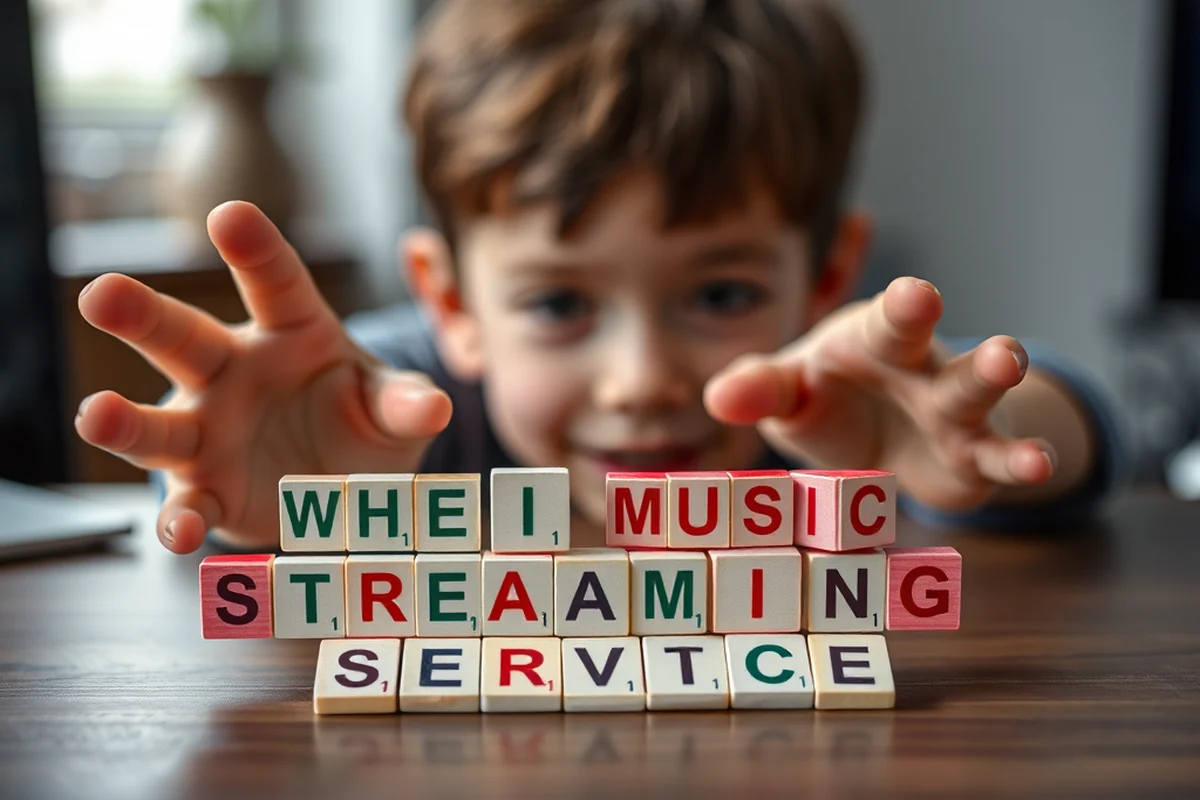
When I first started looking for the best music streaming service, I was overwhelmed by the options. I wanted something that would work for my kids and also support our homeschooling goals. I ended up focusing on three key factors: ease of use, variety of genres, and interactive learning features.
The service I chose had a simple interface, which made it easy for my kids to navigate on their own. It also offered a variety of genres, which kept them interested and exposed them to different types of music. The interactive features, like learning modules and quizzes, made music a fun part of our learning.
It took some time to find the right service, but once I did, it became a valuable tool in our homeschooling. It wasn’t just about music — it was about learning through music.
The best music streaming service doesn’t just play music — it teaches.
Related: What is high school musical streaming on 2
Why Age-Appropriate Playlists Matter
I used to think that any music playlist would work, but I quickly learned that this wasn’t the case. My younger child was fascinated by classical music, but it was too complex for her to understand. That’s when I realized the importance of age-appropriate playlists.
The service I chose had playlists tailored for different age groups. For my younger child, there were playlists with simple melodies and repetitive structures, which helped her learn through repetition. For my older child, there were playlists that explored more complex musical concepts.
Age-appropriate playlists not only keep children interested but also help them develop their listening skills and musical understanding in a way that suits their developmental stage.
Look for a music streaming service that offers playlists tailored to specific age groups, which can help keep your child engaged and learning.
“When my oldest child was seven, I was trying to teach her to play the piano, and I needed a way to make learning fun.”— Teaching Music to Homeschoolers editors
Related: What is school musical
How to Use Music Streaming Services for Homeschooling

I’ve found that the best way to use a music streaming service in homeschooling is to align the playlists with what we’re learning. For example, when we were studying ancient civilizations, I used playlists that featured music from that era, which made the lessons more engaging.
This approach helped my kids connect music with history, geography, and even language learning. It wasn’t just about listening — it was about making connections between music and other subjects.
By using the service as part of our homeschooling, I’ve seen a noticeable improvement in my kids’ engagement and understanding of various topics. Music has become a powerful tool in our learning.
Related: What is high school musical stream on
The Role of Interactive Features in Music Education
Interactive features are a game-changer with using a music streaming service for education. I found one service that had features like quizzes, learning modules, and even virtual instruments that my kids could use to explore music in a hands-on way.
These features made learning through music feel more like a game than a chore. My kids would take turns using the virtual instruments, and it was amazing to see how much they were learning without even realizing it.
Interactive features not only make learning more fun but also help children develop a deeper understanding of music theory, history, and even emotional expression.
Related: What is high school musical 4 about
How to Use Music Streaming Services for Emotional Development
I’ve noticed that using a music streaming service has helped my kids develop their emotional intelligence. The service has playlists that are specifically designed to help children understand and express different emotions through music.
For example, there are playlists that explore happiness, sadness, and even anger. My kids have used these playlists to talk about their own feelings and how music can help them express themselves.
This has been a valuable part of their emotional development, and I’m grateful for the way music has helped them understand and manage their emotions.
Music helps children understand and express their emotions in a safe and creative way.
Related: What is high school musical on netflix
The Cost of the Best Music Streaming Services
I was worried about the cost when I first started looking for the best music streaming service. However, I found that many of the top services offer family plans and even free trials, which made it easier to try before committing.
The service I chose had a family plan that was affordable, and it allowed us to access all the features we needed. It was a small investment that has paid off in terms of learning and engagement.
In my experience, the cost is well worth it, especially when you consider the educational benefits and the way it has enhanced our homeschooling experience.
Using Music Streaming Services to Integrate Music Theory into Homeschooling
I began using YouTube to teach my 10-year-old about music theory by watching videos that explained concepts like scales, rhythm, and tempo. One video showed a pianist playing a C major scale and breaking it down into notes, which my child then tried to replicate on a keyboard. After watching this video, he was able to identify the notes in the scale and play them correctly within a week. The video had over 2 million views, which indicated that it was a popular and effective teaching tool.[1]
To make the learning more interactive, I used a free app called ‘Music Theory for Kids’ that paired with YouTube videos. The app allowed my child to practice identifying notes, intervals, and rhythms by responding to prompts. After two weeks of using the app, he could correctly identify 70% of the notes and intervals tested. The app cost $4.99, which was a small investment for the educational value it provided. I also used a timer to ensure he practiced for 20 minutes a day, which helped build consistency.[2]
I also used Spotify to create a playlist of classical music, including pieces by Mozart and Beethoven, to help my child understand different musical styles and structures. We listened to each piece and discussed the mood, tempo, and key. After three months, he could describe the structure of a piece using terms like ‘sonata form’ and ‘theme and variation.’ This approach not only deepened his understanding of music theory but also improved his ability to analyze and appreciate music. The combination of listening, discussion, and practice made the learning process engaging and effective.
🎵 Younger Kids' Playlist
Create a playlist with simple melodies and repetitive structures to help younger children learn through repetition.
🎶 Older Kids' Playlist
Use playlists that explore more complex musical concepts to support the learning of older children.
⏱️ No-Prep Music Learning
Use a music streaming service with ready-made playlists and interactive features that require no preparation.
👥 Group Music Learning
Use a music streaming service to facilitate group learning activities that encourage collaboration and shared learning.
➕ Extension Music Learning
Explore advanced features and learning modules to deepen your child's understanding of music theory and history.
| The mistake | Why it happens | The fix |
|---|---|---|
| Choosing a service without considering age-appropriate content | This can lead to children being exposed to music that is too complex or inappropriate for their developmental stage. | Always look for services that offer age-appropriate playlists and ensure that the content is suitable for your child’s age. |
| Not using interactive features to enhance learning | Interactive features can greatly enhance learning through music, but they are often overlooked. | Take the time to explore the interactive features of the service and incorporate them into your homeschooling routine. |
| Ignoring the cost of the service | The cost can be a concern, but there are affordable options available, including family plans and free trials. | Research the costs of different services and look for family plans or free trials that can help you get started without a large investment. |
| Not aligning the service with your homeschooling goals | Using a music streaming service without aligning it with your learning goals can result in a lack of educational value. | Make sure to choose a service that aligns with your homeschooling curriculum and learning objectives. |
What Is Best Music Streaming Service
Common Questions
Can music streaming services be used for formal homeschooling?
Are there any age restrictions on music streaming services?
How can I ensure that the music streaming service is educational?
Can music streaming services help with emotional development?
References
Cite this guide
Teaching Music to Homeschoolers (2026). What Is Best Music Streaming Service. https://melodystart.com/what-is-best-music-streaming-service/
Feel free to cite or share this guide.
Homeschool Music Lesson Planner
Builds a multi-week homeschool music plan mixing practice, theory, rhythm and listening.
Open it free →