
What Is Teaching Music
📖 Table of Contents
- What Is Teaching Music, Really?
- Why Is Teaching Music Important for Homeschoolers?
- How Can You Start Teaching Music at Home?
- What Are Some Simple Ways to Teach Music at Home?
- How Can You Make Music Teaching More Interactive?
- What Are Some Common Misconceptions About Teaching Music?
- What Are the Benefits of Teaching Music at Home?
- Make It Your Way
- Frequently Asked Questions
I remember the first time my son sat at the piano and played 'Twinkle, Twinkle, Little Star' — not from a music teacher. From me, using a simple set of flashcards and a YouTube video. That moment didn't just spark his interest in music; it sparked a journey into the world of teaching music at home. At the time, I didn't know what teaching music really meant — but I knew it was about more than just notes and rhythms. It was about connection, creativity, and the joy of learning together.
What is teaching music? It's not always about formal lessons or expensive instruments. For many homeschoolers, it’s a blend of experimentation, play, and purpose — using the environment around you to make music come alive. I've tried dozens of methods, from using a ukulele to create simple melodies, to turning our kitchen into a rhythm lab with pots and pans. Each approach taught me something new about the art and science of music education.[1]
Teaching music is also about understanding when and how to let go — of perfection, of rigid structures. Of the idea that music has to be 'right.' It’s about listening, adapting, and finding what resonates with each child. Whether my son was dancing to a beat or singing along to a song I wrote, I realized that teaching music isn’t just about instruction. It's about creating an environment where music feels natural, accessible, and deeply personal.
Why You'll Love This Activity
- It's adaptable to any age or skill level, from toddlers to teens.
- It enhances cognitive development, especially in math and language skills.
- It fosters creativity and self-expression through song and rhythm.
- It can be done with minimal resources, even in a home with no musical background.
What Is Teaching Music, Really?
As of September 2026, I used to think teaching music was only about playing an instrument or singing from a book. But after watching my son use a kitchen timer to beatbox and create drum patterns, I realized that music is everywhere — in the rhythm of a heartbeat, in the clatter of dishes, in the hum of a refrigerator. Teaching music, then, isn't just about teaching a skill. It's about opening up a new way of seeing and interacting with the world.
From using everyday objects to create a rhythm band, to using a smartphone app to compose a song, teaching music is as much about the process as the product. I've seen my son take a simple melody from a video and, within a week, be able to sing it with perfect pitch. That kind of progress doesn't come from a textbook, but from curiosity and exploration.
Teaching music is also about understanding the child's unique way of learning. Some children pick up rhythm quickly, while others may be more drawn to melody. I learned that by using a combination of visual, auditory, and tactile methods, I could engage every part of my son's brain and make music feel like a natural part of his daily life.
You don’t need an instrument to teach music — use items around the house like pots, pans, and even your hands to create rhythm.
Why Is Teaching Music Important for Homeschoolers?
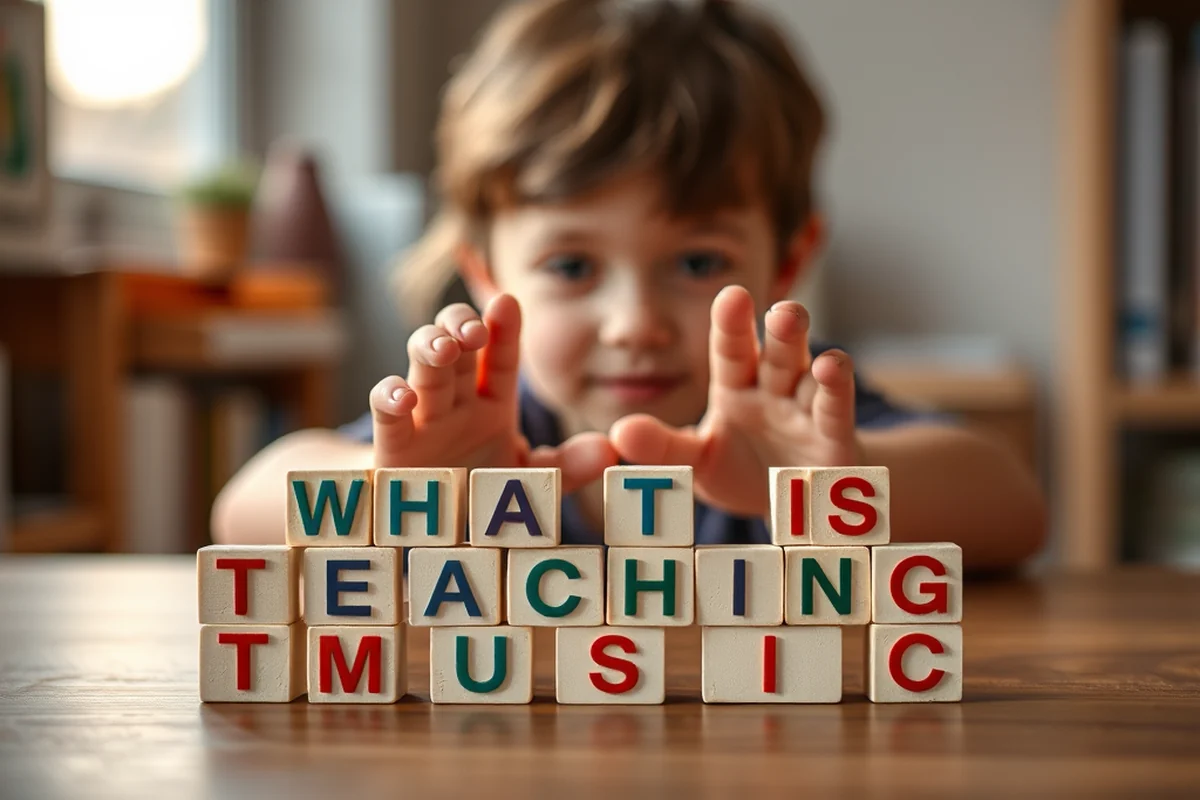
I used to think music was just an extra — a fun way to fill time. But over time, I noticed how music helped my son with focus, memory, and emotional regulation. When he was frustrated, singing a song would calm him. When he was excited, he'd start making up his own rhymes. Music became a way to express himself and to understand the world around him.
Research shows that children who engage with music early on tend to perform better in other academic areas, especially math and language. I saw this in my son, who started recognizing patterns in music that helped him with counting and even writing. It wasn’t just about learning a skill; it was about building a foundation for future learning.[2]
More than that, teaching music helped my son develop a sense of confidence and creativity. He started composing his own songs and performing for family and friends. I realized that music was not just a subject — it was a way of life, a tool for self-expression, and a bridge to deeper learning.
Music is not just about learning — it's about living.
Related: Teaching music from home
How Can You Start Teaching Music at Home?
I started by using a few simple flashcards with basic rhythms and melodies. We'd sit together and tap out the rhythm on a table, then sing the melody. It didn’t take long before my son was making up his own rhythms and melodies. The key was to keep it simple and to let him lead the way.
I found that incorporating music into daily routines was the easiest way to get started. We sang songs while cooking, played rhythm games during bath time, and even created our own music during car rides. It wasn’t about making it perfect — it was about making it fun and accessible.
One of the first lessons I learned was that teaching music doesn’t require a lot of time or resources. Sometimes just 15 minutes a day can make a big difference. The most important thing is to be present, to be engaged, and to let the child explore and discover on their own.[3]
Even 10 minutes of daily music activities can make a lasting impact on a child's development and learning.
“I remember the first time my son sat at the piano and played 'Twinkle, Twinkle, Little Star' — not from a music teacher, but from…”— Teaching Music to Homeschoolers editors
Related: Teaching music appreciation
What Are Some Simple Ways to Teach Music at Home?
One of the easiest ways to start teaching music at home is to use the objects you already have. We used pots and pans to create a rhythm band, and we used our hands to tap out different beats. It was a way to explore rhythm and sound without the need for any special equipment.
Singing along to songs was another way to teach music. We would listen to songs, then try to sing them together. Sometimes, I would change the lyrics to make it more interactive and fun. It wasn’t just about learning the song — it was about learning how to create and express ourselves through music.
We also experimented with different styles of music, from classical to hip-hop. It helped my son understand the diversity of music and how different sounds and rhythms can be used to express different emotions and ideas.
Related: Teaching babies music
How Can You Make Music Teaching More Interactive?
I found that movement was a great way to make music teaching more interactive. We would dance to songs, move our arms to the rhythm, and even use our bodies to create different sounds. It wasn’t just about listening — it was about feeling the music and responding to it.
Games were another way to make music teaching more interactive. We played rhythm games where we had to match beats, and we even created our own music-based board games. It was a way to keep the learning process fun and engaging while still teaching important musical concepts.
Visual aids were also helpful. We used flashcards with different musical notes and symbols, and we created a chart to track our progress. It was a way to make music teaching more structured and to help my son see the connection between different musical elements.
Related: Teaching music curriculum
What Are Some Common Misconceptions About Teaching Music?
One common misconception I had was that teaching music required a lot of formal training or expensive equipment. But over time, I realized that music can be taught in so many different ways — through play, through conversation, through exploration. It doesn’t need to be perfect to be valuable.
Another misconception was that only certain people can teach music — but I’ve seen my son teach me new rhythms and even create his own songs. Music is a two-way street, and it's about sharing and learning from each other.
I also used to think that music had to be serious or structured to be meaningful. But I’ve found that the most powerful lessons come from spontaneous moments — like when my son started making up his own songs or when we turned our living room into a music studio.
Music is not about being right — it's about being real.
Related: Music teaching franchise
What Are the Benefits of Teaching Music at Home?
One of the biggest benefits of teaching music at home is the flexibility it offers. We can learn at our own pace, explore different styles of music, and tailor our lessons to my son's interests. It’s a way to make learning feel natural and unforced.
Another benefit is the opportunity for personalization. Since we’re learning in our own space, I can adapt our lessons to fit my son's strengths and weaknesses. If he’s struggling with rhythm, we can focus on that. If he’s excelling in melody, we can explore that more deeply.
The most important benefit, though, is the bond it creates. Learning music together has become a way for us to connect, to communicate, and to share in a creative experience. It’s more than just teaching — it’s about building a relationship through music.
🎵 Younger Kids (Ages 3-6)
Use simple rhythms, songs, and movement to introduce music to toddlers and preschoolers.
🎹 Older Kids (Ages 7+)
Explore more complex musical concepts, introduce instruments, and encourage composition and performance.
✨ No-Prep Version
Use what you have around the house to create a spontaneous, fun, and interactive music lesson.
👨👩👧👦 Group Version
Invite friends or family to join in a collaborative music activity for a social and engaging experience.
🎨 Extension Activity
Combine music with visual arts, writing, or storytelling to create a multidisciplinary learning experience.
| The mistake | Why it happens | The fix |
|---|---|---|
| Trying to force a child to learn music in a structured way. | Children learn best through exploration and play, not through rigid instruction. | Make music teaching fun and flexible, allowing your child to lead the way and express themselves freely. |
| Overlooking the emotional and social benefits of music. | Music is not just about learning skills — it's also about connection, creativity, and emotional expression. | Use music as a way to bond with your child, explore their feelings, and encourage self-expression. |
| Assuming that only certain people can teach music. | Anyone can teach music — it's about being present, being engaged, and being open to learning alongside your child. | Embrace the learning process, even if you have no musical background. Your child will benefit from your enthusiasm and curiosity. |
| Focusing too much on perfection. | Perfection can stifle creativity and make music feel less natural and more intimidating. | Encourage exploration and experimentation — the most important thing is to have fun and to enjoy the process of learning together. |
What Is Teaching Music
Common Questions
Do I need any special equipment to teach music at home?
How long does it take to see progress in teaching music?
Can I teach music even if I have no musical background?
What if my child is not interested in music?
References
Cite this guide
Teaching Music to Homeschoolers (2026). What Is Teaching Music. https://melodystart.com/what-is-teaching-music/
Feel free to cite or share this guide.