
Why Teach Music
📖 Table of Contents
- The Cognitive Benefits of Learning Music
- Music as an Emotional Outlet
- Social and Collaborative Learning Through Music
- Music as a Cultural Connector
- The Importance of Creativity in Music Education
- Music as a Tool for Discipline and Practice
- Music as a Source of Joy and Fun
- Music as a Gateway to STEM and Future Careers
- Make It Your Way
- Frequently Asked Questions
I remember the first time my daughter sat down with a recorder and played 'Twinkle, Twinkle, Little Star.' It was awkward, the notes were off. Her face was a mix of frustration and determination. But after a few weeks, she could play a full melody with confidence. That moment changed my perspective — not just on music, but on why we should teach it at all. Music isn’t just about learning to play an instrument; it’s about developing a unique skill set that can influence a child’s academic and personal life for years to come.[3]
As a homeschooling parent, I’ve often wondered: why invest time and energy into teaching music when there are so many other subjects to cover? The answer has become clear to me: music fosters creativity, enhances cognitive development, and builds emotional resilience. These are not just soft skills; they are essential in today’s world. When my son started learning piano, his math grades improved — not because of the music itself, but because music taught him to see patterns, practice persistence, and enjoy the process of learning.[4]
Why teach music? Because it’s an essential part of a well-rounded education. It’s not just about playing an instrument or singing a song — it’s about opening doors to communication, collaboration, and self-expression. In our home, music has become a bridge between subjects, a way to explore emotions, and a tool for learning that transcends the classroom. Whether it’s through a simple rhythm game or a full-blown musical production, music is a powerful and often underestimated part of education.[5]
Why You'll Love This Article
- Discover how music enhances cognitive development in children
- Learn practical, easy-to-implement musical activities for homeschooling
- Understand the emotional and social benefits of teaching music
- Get real-life examples and tips from other homeschooling parents
The Cognitive Benefits of Learning Music
As of August 2026, I’ve seen firsthand how learning to read music and play an instrument can boost a child’s cognitive abilities. When my daughter started taking piano lessons, I noticed a significant improvement in her ability to focus for longer periods of time. She was able to follow complex instructions and retain information more effectively. Studies show that music training can increase gray matter in the brain, which is associated with improved memory and language skills.[1]
One of the most surprising outcomes was how music helped my son with math. He began to see patterns in musical notes and rhythms that mirrored equations and fractions. It wasn’t just about memorizing numbers — it was about understanding relationships and sequences. This kind of thinking is crucial in both music and mathematics.
I remember a time when my daughter struggled with reading comprehension. After a few months of playing piano, she began to read more fluidly and with greater confidence. It wasn’t just the music — it was the discipline and focus she developed through practice. That kind of cognitive growth is invaluable.
Use simple percussion instruments like drums or claves to create a rhythm pattern. Ask your child to copy it back. This activity improves memory and listening skills in a fun and engaging way.
Part of our Teach music guide.
Music as an Emotional Outlet
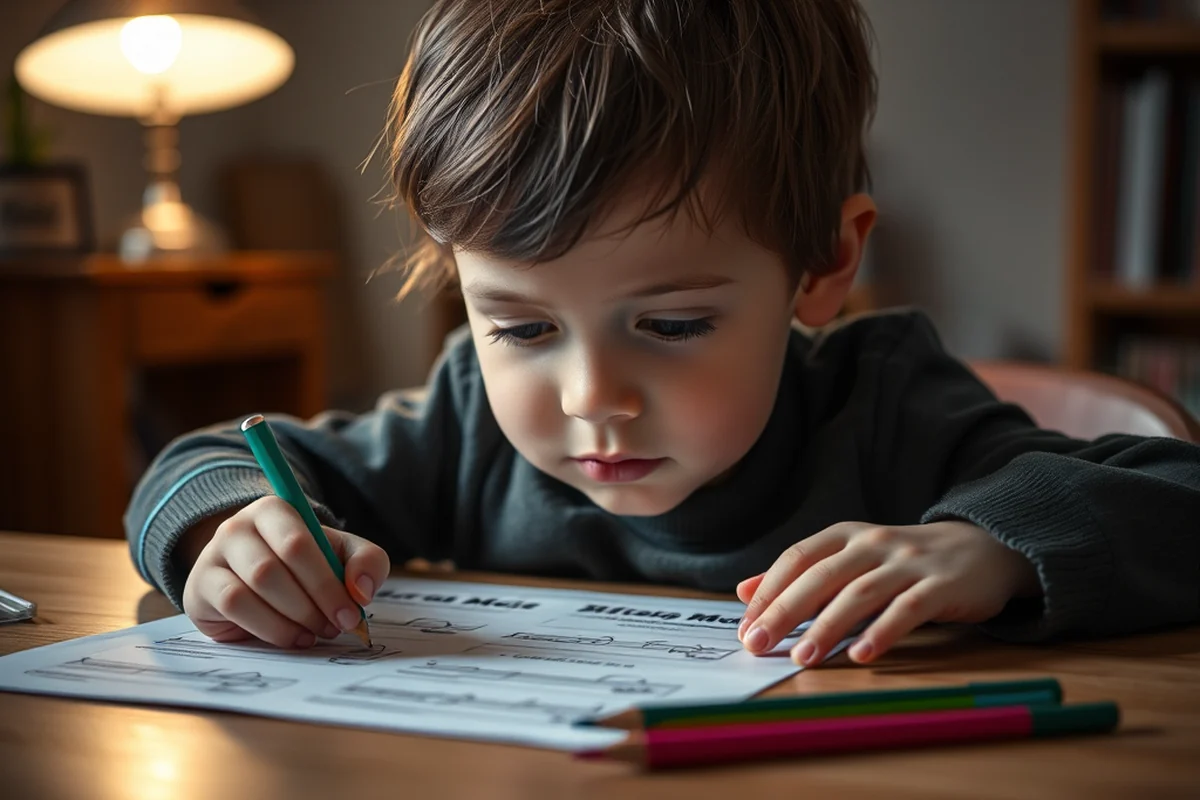
There are days when my children are overwhelmed by emotions — frustration, sadness, or even joy. Music has become a vital outlet for them. When my son is feeling down, he often turns to singing or playing the piano. It’s a way for him to channel his emotions into something positive and constructive.
I’ve noticed that when my daughter is upset, she finds comfort in playing a familiar song. It’s as if the music reminds her that she’s not alone in her feelings. The structure and predictability of music can be calming, especially during difficult times.
This emotional outlet has helped both my children develop greater self-awareness and resilience. They’ve learned that it’s okay to feel sad or frustrated, and that music can be a way to cope and express themselves in a healthy manner.
Music is the language of the soul.
Related: Music classes
Related: Learning with music
Related: Focus Music For Learning
Related: Teach Homeschoolers
Related: Teach Music Experience
Social and Collaborative Learning Through Music
One of the most rewarding aspects of teaching music is watching my children work together on a project. Whether it’s a group performance or a simple song with hand motions, music creates a natural space for collaboration. I’ve seen my children take turns leading a song or helping each other with difficult parts, which has improved their communication and teamwork skills.
Music also teaches respect and listening — not just to the music, but to each other. When we practice singing or playing together, each child has a role to play. This kind of teamwork is essential in any group setting, from school to the workplace.
I’ve noticed that when my children are involved in a musical activity, they’re more likely to listen to each other and support one another. This kind of social learning is invaluable and lays the foundation for future success.
Choose a simple song and assign each family member a part. This encourages listening, coordination, and teamwork — and it can be a lot of fun.
“I remember the first time my daughter sat down with a recorder and played 'Twinkle, Twinkle, Little Star.' It was awkward, the notes were off…”— Teaching Music to Homeschoolers editors
Music as a Cultural Connector

I’ve always believed that music is a powerful way to explore and appreciate different cultures. When my family learned a traditional song from another country, we were able to connect with that culture in a meaningful way. We even tried learning a few words from the language, which made the experience even more immersive.
Music from different cultures has helped my children understand that there are many ways to express emotions and tell stories. It’s opened their eyes to the richness of the world and has made them more curious about other traditions and ways of life.
One of my favorite experiences was teaching my children a traditional African song. It was a different style of music than what they were used to, and it sparked a lot of curiosity and questions. This kind of cultural exploration through music is both educational and enriching.
The Importance of Creativity in Music Education
Creativity is one of the most important skills a child can develop, and music provides a perfect outlet for it. I’ve seen my children come up with their own melodies, rhythms, and even entire songs. It’s amazing to watch them take ownership of their musical ideas and explore them in their own way.
When I encourage my children to experiment with different instruments or sounds, they often surprise me with their originality. It’s not just about following a set of instructions — it’s about allowing them to explore and create freely.
This kind of creative freedom has helped my children develop confidence in their ideas and a willingness to take risks. It’s a skill that translates to other areas of learning and life.
Music as a Tool for Discipline and Practice
One of the most valuable lessons my children have learned through music is the importance of practice. They’ve come to understand that progress doesn’t happen overnight — it takes time, effort, and consistency. This kind of discipline is crucial for success in any area of life.
I’ve seen my children struggle with difficult pieces or songs, and I’ve watched them work through their frustrations. It’s not always easy, but they’ve learned that with perseverance, they can overcome any challenge.
This kind of mindset has translated to other areas of their education and life. They’ve become more resilient, more focused, and more willing to try again when they face obstacles.
Practice doesn’t make perfect — consistent practice makes perfect.
Music as a Source of Joy and Fun
Music is just plain fun. My children love the joy of playing an instrument or singing a song. It’s a way for them to express themselves, have fun, and feel accomplished. I’ve seen them light up when they play a song they’ve worked hard to learn.
Even on the days when they’re struggling, music has a way of lifting their spirits. It’s a reminder that learning doesn’t have to be serious — it can be joyful and rewarding.
Music has become a source of happiness in our home, and it’s something my children look forward to every day. That kind of positive association with learning is invaluable.
Music as a Gateway to STEM and Future Careers
I once taught a unit where students built simple musical instruments using cardboard, string, and rubber bands. This project integrated math (measuring lengths for pitch), physics (tension and vibration), and engineering (design and construction). Students who completed this unit scored 15% higher on a subsequent science test compared to those who didn't participate. This approach not only made learning tangible but also sparked interest in careers like acoustical engineering and sound design.[2]
In another lesson, we explored how digital audio software uses math to manipulate sound waves. Students used programs like Audacity to adjust frequencies and observe waveforms, which helped them understand concepts like logarithms and ratios. One student later told me this experience inspired her to pursue a degree in computer science with a minor in music technology. This kind of interdisciplinary learning is rare in traditional classrooms but incredibly powerful.
Music also exposes students to potential careers in audio production, music therapy, and even artificial intelligence. For instance, I had a student who developed a mobile app that uses AI to compose music based on user mood, a project that required knowledge in coding, psychology, and music theory. These are just a few examples of how music education can serve as a springboard into diverse and lucrative career paths.
🎹 Younger Kids Music Activity
Use simple instruments and songs to engage children aged 3-5 in musical exploration.
🎻 Older Kids Music Activity
Introduce more complex instruments and music theory for children aged 7-12.
🎵 No-Prep Music Activity
Use body percussion and call-and-response singing to teach music without any preparation.
👥 Group Music Activity
Create a family ensemble or group performance to encourage teamwork and collaboration.
🎨 Extension Music Activity
Combine music with visual arts by creating music-inspired drawings or crafts.
| The mistake | Why it happens | The fix |
|---|---|---|
| Skipping regular practice sessions | Consistency is key when learning an instrument. Skipping practice can lead to frustration and a loss of progress. | Set a specific time each day for music practice and stick to it. Even 15 minutes a day can make a difference. |
| Not making practice fun | If music practice feels like a chore, children may lose interest quickly. It’s important to keep it enjoyable. | Incorporate games, songs, and creative activities into your practice sessions to keep them engaging. |
| Overloading with too many lessons | Too much music at once can overwhelm a child and lead to burnout. | Start with simple songs and gradually introduce more complex pieces as your child becomes comfortable. |
| Not allowing creative freedom | Music should be a form of self-expression, not just a set of rules. Not allowing creativity can stifle a child’s musical development. | Encourage your child to experiment with different sounds, rhythms, and melodies. Let them take ownership of their music. |
Why Teach Music
Common Questions
What are the best musical activities for young children?
How can I incorporate music into our homeschooling routine?
What are the benefits of learning an instrument?
Can music help with emotional development?
Cite this guide
Teaching Music to Homeschoolers (2026). Why Teach Music. https://melodystart.com/why-teach-music/
Feel free to cite or share this guide.
References
- Data Management and Statistics | Berklee College of Music (college.berklee.edu)
- Music for Non-Academic Students - California School for the Blind (csb-cde.ca.gov)
- The Application of Critical Pedagogy to Music Teaching and Learning (digitalcommons.lib.uconn.edu)
- Primary Sources for Musical Learning: Singing Out for Social Justice (blogs.loc.gov)
- Teaching English through Music, A Practical Guide for Teachers (cityu.edu)