What Is A Bar In Music
📖 Table of Contents
- What Exactly Is a Bar in Music?
- How Bars Help in Reading Sheet Music
- The Role of Time Signatures in Defining Bars
- How Bars Affect Performance and Composition
- Bars and the Development of Rhythm Skills
- Bars and the Structure of Different Musical Genres
- Using Bars to Improve Musical Memory
- Make It Your Way
- Frequently Asked Questions
I remember the first time my 6-year-old daughter asked me, 'What is a bar in music?' It was during a piano lesson. She was looking at the sheet music with a furrowed brow. I hadn't realized how much she'd picked up from our weekly music time, and that question was the beginning of a deeper exploration into the world of musical structure. A bar is more than just a line on a staff — it's a building block of rhythm and melody.[1]
As a homeschooling parent, I've learned that music education is not just about playing an instrument or singing a song. It's about understanding the very foundation of music itself — and that starts with the concept of a bar. A bar is a way to organize the flow of music, making it easier to read, perform, and teach. Understanding bars helps children grasp timing, tempo, and the way music moves forward in a structured yet expressive way.[2]
Over the years, I've noticed that children who understand the concept of a bar early on are more confident when learning to read music. They can follow along with sheet music more easily, and they begin to see patterns in the way music is written. This is not just a technical detail — it's a key part of musical literacy. Whether you're teaching your child to play the piano, the violin, or even just to sing, the idea of a bar is essential.[3]
Why You'll Love This Activity
- It gives your child a strong foundation in music reading.
- It makes learning to play an instrument more intuitive.
- It fosters a deeper appreciation for the structure of music.
- It can be adapted for various age groups and learning styles.
What Exactly Is a Bar in Music?
As of October 2026, a bar is like a musical container — it holds a set number of beats, and that number is dictated by the time signature at the beginning of the sheet music. For example, if the time signature is 4/4, that means there are four beats in each bar, and each beat is a quarter note.[4]
The time signature tells you how many beats are in a bar and what note value gets one beat. This structure is essential for both performers and composers. When a child understands that every bar has a set number of beats, they can more easily follow the rhythm and timing of a piece.
In my experience, teaching children to count the beats in a bar helps them develop a strong sense of rhythm. I've noticed that once they understand this concept, they are more confident when playing or singing.
A metronome is a great tool for helping children hear and feel the beats in each bar. Set it to a slow tempo and have them tap along to each beat as they count.
How Bars Help in Reading Sheet Music
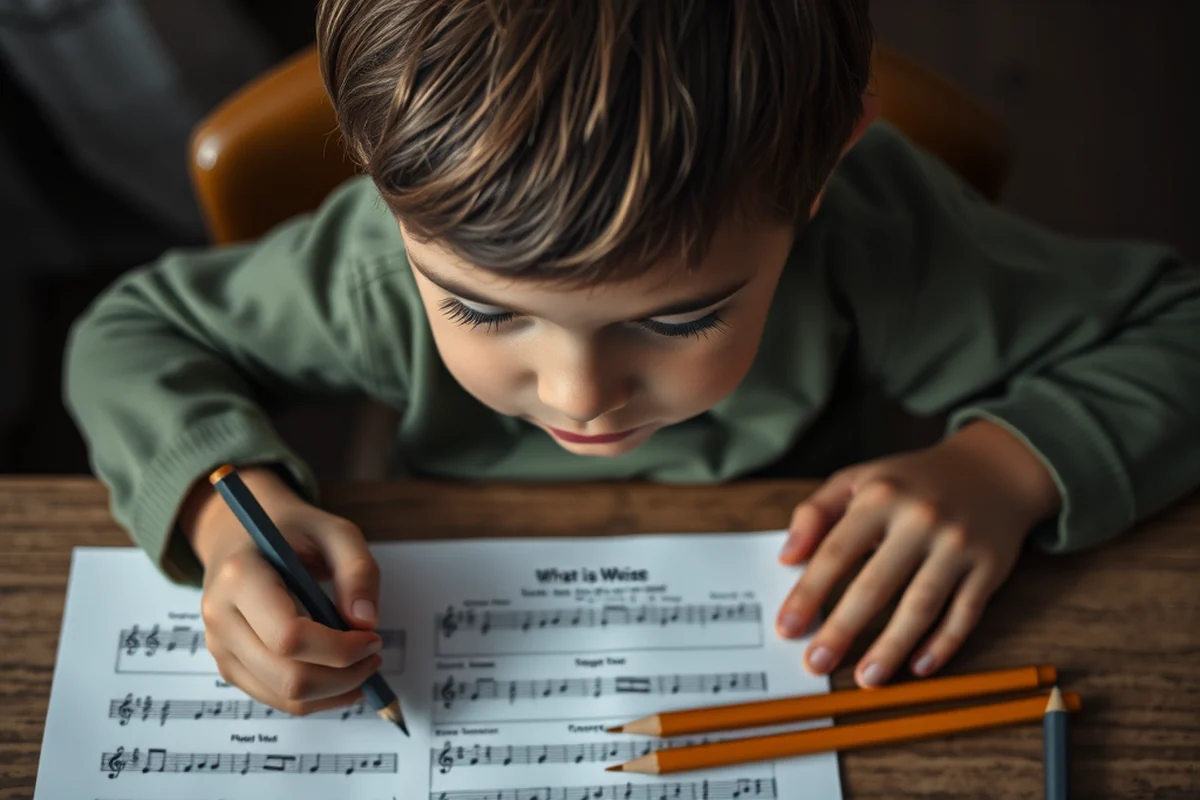
Sheet music can be overwhelming for beginners, especially when they're faced with a long, unbroken line of notes. Breaking the music into bars makes it easier to read and process. Each bar becomes a small musical puzzle that the child can solve.
I've found that when my daughter was learning to read music, she would often get lost in the middle of a piece. But once I started showing her how each bar was a separate section, she was able to focus on one part at a time and build her confidence.
The visual structure of bars also helps children see where the music begins and ends. This is especially helpful when learning to play a piece from memory or when they're composing their own music.
Bars turn chaos into clarity — one small section at a time.
Related: Music teaching diploma
The Role of Time Signatures in Defining Bars
The time signature is the first thing you see on sheet music, and it's crucial for understanding how bars are structured. Common time signatures include 4/4, 3/4, and 6/8. Each of these tells you how many beats are in a bar and what note value gets one beat.
For example, in 4/4 time, there are four beats per bar, and a quarter note gets one beat. In 3/4 time, there are three beats per bar, and a quarter note still gets one beat. This means that the same note played in 4/4 and 3/4 time will feel different because of the change in rhythm.
I've noticed that teaching children how time signatures work helps them understand the mood and feel of different musical pieces. A 3/4 time signature, for instance, often gives a waltz-like feel, while 4/4 time is more common in pop and rock music.
Create or print rhythm cards with different time signatures and have your child match them to the correct number of beats in a bar. This is a fun and interactive way to reinforce the concept.
“I remember the first time my 6-year-old daughter asked me, 'What is a bar in music?' It was during a piano lesson, and she was…”— Teaching Music to Homeschoolers editors
Related: Teaching gadget music
How Bars Affect Performance and Composition
When you're performing music, bars help you keep track of where you are in the piece. They also help with phrasing — how you start and end each section of the music. This is especially important for musicians who are learning to play from sheet music without a teacher.
In composition, bars are essential for organizing ideas. Composers use bars to structure their music in a way that makes it easier to perform and listen to. For children who are interested in creating their own music, understanding bars helps them organize their thoughts and ideas into a coherent piece.
I've seen my daughter use bars as a tool for composing simple songs. She divides the music into bars and fills each one with notes that fit the time signature. It's a great way for her to develop her own musical voice.
Related: Music teaching bursary
Bars and the Development of Rhythm Skills
Rhythm is the backbone of music, and bars are the foundation of rhythm. When a child learns to count the beats in a bar, they begin to develop a strong sense of timing. This is essential for playing an instrument, singing in tune, and even dancing.
I've noticed that children who understand bars are more likely to stay in time when playing or singing. They can hear when they're speeding up or slowing down and make adjustments. This is a skill that transfers across many musical activities.
In our home, we've used clapping and counting exercises to help my daughter develop her rhythm skills. We count the beats in each bar and clap them out. This has helped her internalize the rhythm and apply it when she plays the piano or sings.
Related: Teaching electronic music
Bars and the Structure of Different Musical Genres
Different genres of music have different time signatures and bar structures. For example, classical music often uses 4/4 time, while jazz may use more complex time signatures like 7/8 or 9/8. Each of these changes the way the music feels and moves.
In our home, we've explored different genres to help my daughter understand how bars work in different types of music. We listened to a waltz, which is in 3/4 time, and compared it to a pop song in 4/4 time. This helped her see how the time signature affects the rhythm and feel of the music.
By exposing children to different genres, you're helping them develop a more well-rounded understanding of music. They learn to hear the differences in rhythm, structure, and phrasing across different styles of music.
Bars aren't just for classical music — they're the heartbeat of every genre.
Related: Music composition teaching
Using Bars to Improve Musical Memory
One of the challenges of learning a piece of music is memorizing it. Bars make this process easier by dividing the music into smaller sections. Each bar can be memorized individually before being put together with the others.
I've found that when my daughter learns a new piece, she focuses on one bar at a time. Once she's confident with that bar, she moves on to the next. This method helps her build her memory gradually and confidently.
This approach works well for both instrumentalists and singers. It helps them break down complex pieces into simple parts that are easier to remember and perform.
🎹 Younger Kids: Rhythm Clapping
Use clapping and counting to introduce bars in a fun and interactive way.
🎼 Older Kids: Sheet Music Reading
Teach older children how to read sheet music and understand the structure of bars.
🎧 No-Prep: Music Listening Activity
Listen to different types of music and identify how bars are used in each genre.
👥 Group Version: Rhythm Games
Play group rhythm games that help children understand the structure of bars and time signatures.
🎵 Extension: Composition Project
Encourage children to compose their own music using bars as a framework.
| The mistake | Why it happens | The fix |
|---|---|---|
| Ignoring the time signature when teaching bars. | The time signature is crucial for understanding how bars are structured. Without it, your child may not grasp the concept of beats and how they fit into a bar. | Always start by explaining the time signature and how it affects the number of beats in each bar. |
| Not using hands-on activities to teach bars. | Children learn best through experience. If you only explain the concept without engaging them in hands-on activities, they may not fully understand the idea of a bar. | Use clapping, counting, and rhythm games to help your child experience the structure of bars in a fun and interactive way. |
| Trying to teach bars without a strong foundation in rhythm. | Bars are closely tied to rhythm. If your child hasn't developed a good sense of rhythm first, they may struggle to understand how bars work. | Start with rhythm exercises before introducing the concept of bars. This will help your child build a strong foundation in timing and feel. |
| Overlooking the importance of visual structure in bars. | Bars provide a visual structure that helps musicians and composers organize their music. If you skip this step, your child may miss out on a valuable tool for learning and creating music. | Use sheet music, rhythm cards, and visual aids to help your child see how bars are used in different types of music. |
What Is A Bar In Music
Common Questions
How do I teach my child about bars in music?
What is a time signature, and how does it relate to bars?
How can I help my child develop a better sense of rhythm using bars?
What are some activities I can do with my child to explore different musical genres?
References
- Why Lead Sheets? - Berklee College of Music (berklee.edu)
- Bar & Measure | Music Copyright Infringement Resource - Blogs GWU (blogs.law.gwu.edu)
- Jazz Glossary: B Archives (ccnmtl.columbia.edu)
- Basic Elements: Music Notation (content.dodea.edu)
Cite this guide
Teaching Music to Homeschoolers (2026). What Is A Bar In Music. https://melodystart.com/what-is-a-bar-in-music/
Feel free to cite or share this guide.