
Clover By The Park

📖 Table of Contents
- What Is 'Clover By The Park' and How Does It Work?
- Why Use Clover as a Teaching Tool?
- How to Make the Most of This Activity
- Extending the Learning Beyond the Park
- Making the Most of the Learning Environment
- Creating a Routine for Learning
- Connecting with Nature and the Environment
- Make It Your Way
- Frequently Asked Questions
I remember the first time I took my daughter to the park and noticed a patch of clover growing right at the edge of the path. We stopped. She asked, 'What is this?' I knelt down, gently plucked a leaf, and began to explain how clover can teach us so much — about nature, counting, and even a little bit of science. That simple moment became the inspiration for 'Clover By The Park,' a lesson that's now one of my favorite ways to blend education with the outdoors.[1]
The park is not just a place for swings and slides — it's also a living classroom. I've spent countless hours there, watching my children and other kids learn through observation, exploration, and play. The patch of clover that caught my attention that day became the starting point for a lesson that's both fun and educational, one that I've used with my own children and with students in homeschooling groups.[2]
'Clover By The Park' is more than just a lesson — it's an invitation to slow down, get curious, and see the world through the eyes of a child. Whether you're a homeschooling parent, an educator looking for a hands-on activity, or simply someone who loves learning through play, this approach has something to offer. The next time you're at the park, take a look at the clover — it might just be the beginning of a new learning adventure.[3]
Why You'll Love This Learning Adventure
- It combines outdoor exploration with hands-on learning.
- It's simple enough for young learners but can be extended for older students.
- It requires minimal materials — just a few supplies you likely already have.
- It's free and accessible — no cost, no special equipment needed.
What Is 'Clover By The Park' and How Does It Work?
As of October 2026, when I first noticed the clover, I had no idea how much learning could come from it. I picked a few leaves and started counting the lobes, explaining to my daughter that each leaf has three parts — a fact that surprised her. This simple observation became a lesson in counting, shapes, and even botany.
I've since developed a routine where we take a walk in the park, find a patch of clover, and use it as a starting point for learning. Whether we're counting the leaves, discussing where the clover grows, or talking about why some plants thrive in certain places, it's all part of the 'Clover By The Park' experience.
This activity is not only educational but also a great way to connect with nature. It's a reminder that learning doesn't have to happen in a classroom — it can take place in the park, on a walk, or even in your own backyard.
Take a walk in the park, find a patch of clover, and use it as a starting point for learning. Start with simple observations and build from there.
Part of our Music elementary guide.
Why Use Clover as a Teaching Tool?
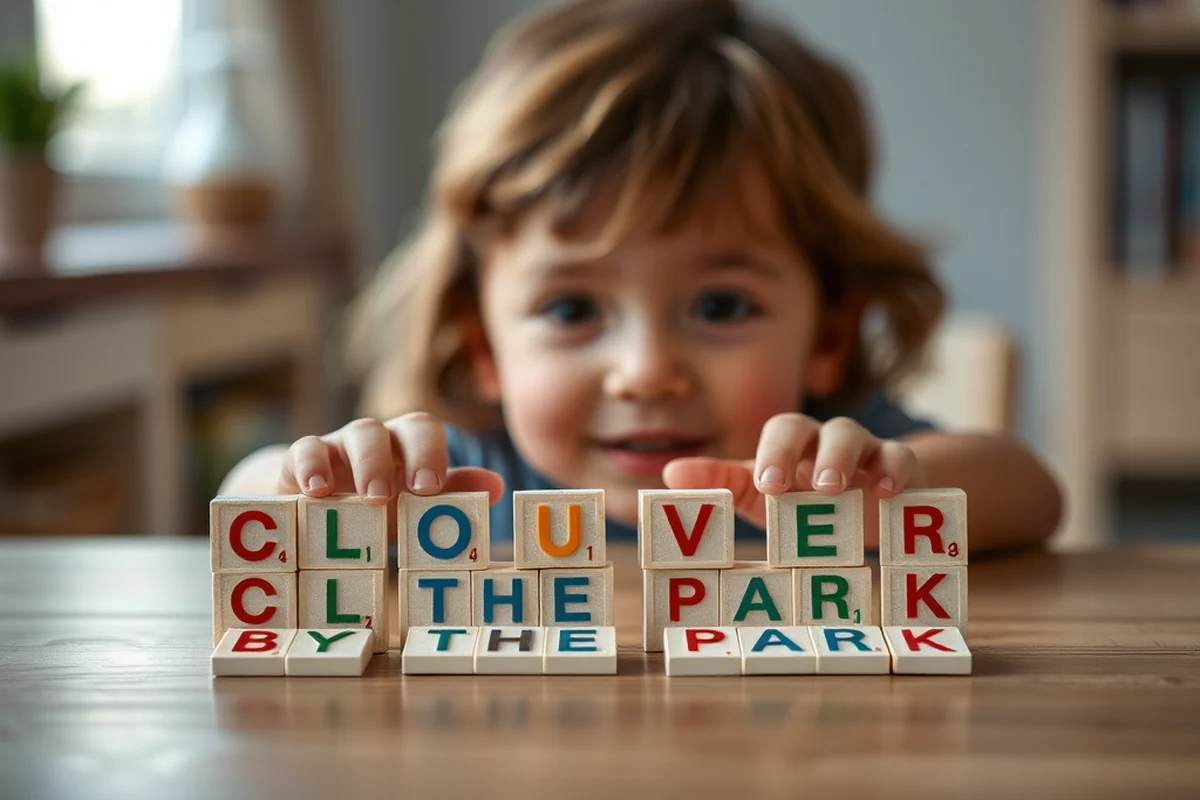
Clover is one of the most common plants found in parks, making it an excellent teaching tool. It's easy to find, and its distinct three-lobed leaves are perfect for counting and shape recognition.
I've used this activity with children as young as three and as old as ten, and it's always been a hit. Younger children enjoy counting the leaves, while older ones can explore the plant's life cycle or even research why clover grows in certain places.[4]
Clover is also a great way to spark curiosity. When my daughter asked, 'Why does this plant have three parts?' it led to a deeper discussion about plant biology — one that I never would have had if I hadn't been paying attention to the clover.
Clover is a small plant with big learning potential.
Related: Music teaching aids
How to Make the Most of This Activity
I've found that the most successful sessions with 'Clover By The Park' happen when I take my time to observe the clover and ask my children open-ended questions. Instead of just telling them what I know, I let them explore and discover.
One of the best parts of this activity is the way it encourages curiosity. When I asked my daughter, 'What do you think happens to this clover if it doesn't get enough water?' she thought about it for a moment and then guessed that it would die. That was a valuable lesson in plant biology and a great starting point for a deeper discussion.
I also encourage my children to draw the clover and describe what they see. This not only reinforces what they've learned but also gives them a way to express their thoughts creatively.
Ask open-ended questions and let your child explore the clover. This encourages deeper thinking and a love for learning.
“I remember the first time I took my daughter to the park and noticed a patch of clover growing right at the edge of the…”— Teaching Music to Homeschoolers editors
Related: What course is for music
Extending the Learning Beyond the Park

One of the things I love about 'Clover By The Park' is that it's a great starting point for a variety of other learning activities. After our walks, I often use the clover as a topic for writing prompts, science experiments, or even art projects.
For example, I've used the clover to teach my children about the water cycle by discussing how the plant gets its water from the ground. This led to a fun experiment where we used plastic bottles to simulate a plant's roots and leaves, showing how water moves through the plant.
Another time, we used the clover as a springboard for a lesson on shapes and symmetry. We drew the leaves and then used them to create patterns, which helped reinforce the concept of symmetry in a fun and interactive way.
Related: Teaching music in
Making the Most of the Learning Environment
I've always believed that the park is one of the best places for learning. It's not just a place for play — it's a living classroom where children can explore, observe, and ask questions. The 'Clover By The Park' activity is just one example of how to use the park as a learning space.
When we're at the park, I make a point to take time to observe everything around us. We've learned about birds, trees, insects, and even the wind by simply stopping and looking. The clover was just the beginning.
One of the best things about the park is that it's constantly changing. Seasons bring new plants, animals, and weather patterns — all of which provide opportunities for learning. I've used the park to teach about the changes in the environment throughout the year, and it's always been a rewarding experience.
Related: Best music making software
Creating a Routine for Learning
I've found that having a routine for learning activities, like 'Clover By The Park,' helps children stay engaged and look forward to the lessons. It also makes it easier for parents and educators to incorporate these activities into their daily schedules.
I often plan our walks in the park on a regular basis, using them as a way to reinforce what we've learned in the classroom. This not only helps with retention but also makes learning more enjoyable.
Another benefit of having a routine is that it helps children develop a sense of consistency and structure. They know when to expect the activity, and it becomes a part of their daily life — one that they look forward to and enjoy.
Routine helps turn learning into a daily habit.
Related: Michael jackson invincible vinyl
Connecting with Nature and the Environment
One of the most important lessons I've learned through this activity is that connecting with nature is essential for a child's development. Spending time in the park, observing plants like clover, and learning about the environment helps children develop a sense of wonder and curiosity.
I've noticed that my children are more engaged in learning when they can connect it to the natural world. The clover activity has given them a way to see the relevance of what they're learning in the classroom — and it's made the lessons more meaningful.
By taking the time to explore the park and observe the plants, my children have developed a deeper appreciation for the environment. They're more likely to take care of it and understand the importance of conservation, which is a lesson that will stay with them for a lifetime.
🌿 Younger Kids (Ages 3-6)
Focus on counting, shape recognition, and simple observations. Use the clover as a hands-on tool for learning.
🔍 Older Kids (Ages 7-12)
Explore the life cycle of plants, plant biology, and environmental science. Use the clover as a starting point for deeper learning.
🍃 No-Prep Version
Just take a walk in the park and use the clover as a learning tool. No supplies or preparation needed.
👨👩👧👦 Group Activity
Use the clover activity as a group learning experience, encouraging collaboration and discussion among multiple children.
📚 Extension Activity
Combine the clover activity with a lesson on shapes, symmetry, or even a science experiment to extend the learning.
| The mistake | Why it happens | The fix |
|---|---|---|
| Assuming the activity is only for young children. | While 'Clover By The Park' is great for young children, it can also be adapted for older students with more complex questions and discussions. | Use the activity as a starting point for more advanced topics, such as plant biology or environmental science. |
| Not allowing time for exploration and curiosity. | Learning is most effective when it's based on exploration and curiosity. Rushing through the activity can limit the child's engagement and understanding. | Take time to let the child explore the clover, ask questions, and make observations. This helps reinforce the learning and makes it more meaningful. |
| Using the activity as a one-time event. | Repetition and consistency are key to reinforcing learning. Using the activity only once may not give the child a chance to fully grasp the concepts being taught. | Make 'Clover By The Park' a regular activity, especially during the spring and summer months when clover is more common. |
| Not connecting the activity to the child's interests. | When learning is connected to the child's interests, it becomes more engaging and meaningful. Failing to make that connection can lead to disinterest and lack of engagement. | Use the clover activity to explore topics that interest the child, such as counting, drawing, or even storytelling. |
Clover By The Park
Common Questions
What age is 'Clover By The Park' best for?
Do I need any special supplies for this activity?
Can I do this activity with a group of children?
How long does the activity usually take?
References
- Robbins, Lynn S., Ed. Let's Try Doing something Else Kind of - ERIC (files.eric.ed.gov)
- sa parks system plan - City of San Antonio (sanantonio.gov)
- SCAP REVISION PLANNING - Washington State Government (app.leg.wa.gov)
- Science and Our Food Supply - FDA (fda.gov)
Cite this guide
Teaching Music to Homeschoolers (2026). Clover By The Park. https://melodystart.com/clover-by-the-park/
Feel free to cite or share this guide.
Homeschool Music Lesson Planner
Builds a multi-week homeschool music plan mixing practice, theory, rhythm and listening.
Open it free →