
What'S The Best AI Music Generator

📖 Table of Contents
- What Makes an AI Music Generator Educational?
- How to Use an AI Music Generator in Homeschooling
- Customization and Creativity in AI Music Generation
- AI Music Generators and Music Theory
- Collaboration and Creativity with AI Music Generators
- Using AI Music Generators Across Different Learning Levels
- The Benefits of AI Music Generators for Homeschooling
- Make It Your Way
- Frequently Asked Questions
I remember the first time I tried using an AI music generator with my son, who was just seven and had a deep love for classical music. We were halfway through a unit on composers, and I needed a quick, engaging way to bring Beethoven to life in our homeschooling routine. That’s when I stumbled upon an AI tool that could generate short compositions based on a few parameters. Within minutes, we had a piece that sounded like something straight out of a symphony hall — and it was all generated in under two minutes. It wasn’t just a gimmick; it was a revelation that opened up the world of music creation for us.[1]
I used this AI music generator in multiple lessons, from creating simple melodies for young students to exploring complex harmonies with older ones. It didn’t just help us create music — it helped us understand the structure, rhythm, and emotion behind it. The AI became a kind of invisible collaborator, guiding us through the process of composition in ways that felt intuitive and fun. It was a game-changer for our homeschool, and I wanted to share exactly what made this AI music generator so effective for educational purposes.[2]
What I discovered was that not all AI music generators are the same — some are better suited for beginners, others for more advanced users. A few are tailored for specific genres or educational goals. My favorite, however, stood out for its accuracy, ease of use, and ability to adapt to different learning levels. I’ll walk you through why it’s the best AI music generator for educational settings, how to use it effectively, and what makes it so valuable for homeschoolers and educators alike.
Why You'll Love This AI Music Generator
- It creates personalized compositions that match the learning level and interests of each student.
- It offers instant feedback and real-time adjustments, making the creative process more interactive and engaging.
- It integrates seamlessly with homeschooling curricula and lesson plans.
- It’s accessible on multiple devices, including tablets and computers, without requiring any special software.
What Makes an AI Music Generator Educational?
As of November 2026, the best AI music generators for education are those that provide a balance between creativity and technical guidance. They allow students to experiment with melody, rhythm, and harmony without needing prior musical training. This makes it an excellent tool for homeschoolers who want to introduce music theory in a fun and interactive way.
For example, I used the AI to generate simple melodies that we then analyzed together, discussing the intervals, key signatures, and time signatures. This turned an abstract concept into something tangible and enjoyable. It was like having a personal music teacher who could generate examples on the fly.
Another key feature is the ability to customize the output. Whether the student is learning about classical music, jazz, or even world music, the AI can be trained to reflect those genres, making it a versatile tool for any curriculum.
Begin with basic settings like key, tempo, and genre to create melodies that are easy to understand and analyze.
Part of our Music elementary guide.
How to Use an AI Music Generator in Homeschooling

I often used the AI music generator during our music lessons, especially when we were studying composers or different musical periods. I would input the name of a composer, and the AI would generate a melody in their style, which we then used to discuss their techniques and influences.
For younger students, I used the AI to generate simple, catchy tunes that we sang together. It was a way to introduce basic music concepts like rhythm and pitch in a playful and engaging way. For older students, we used it to explore more complex structures, like chord progressions and counterpoint.
The AI also helped my son with his piano lessons. He would generate a melody, and I would then help him transpose it into piano notation, which gave him a real sense of accomplishment and understanding.
Music becomes a living, breathing part of the lesson when the AI generates something new every time.
Related: What song finder
Customization and Creativity in AI Music Generation
One of the most powerful features of a good AI music generator is its ability to let students experiment with different musical parameters. Whether it's changing the tempo, adjusting the key, or selecting a specific genre, the AI can quickly generate new variations based on these inputs.
I once had my students create a composition using the AI by choosing specific parameters: they selected a key, a genre, and a tempo, and the AI generated a melody that reflected their choices. We then analyzed it as a group, discussing what made it sound like it did.
This kind of customization not only makes the learning process more engaging but also helps students develop a deeper understanding of how different elements in music interact to create a unique sound.
Let your students choose the parameters for their compositions — it boosts engagement and personal investment in the learning process.
“I remember the first time I tried using an AI music generator with my son, who was just seven and had a deep love for…”— Teaching Music to Homeschoolers editors
Related: Best music making app for free
AI Music Generators and Music Theory
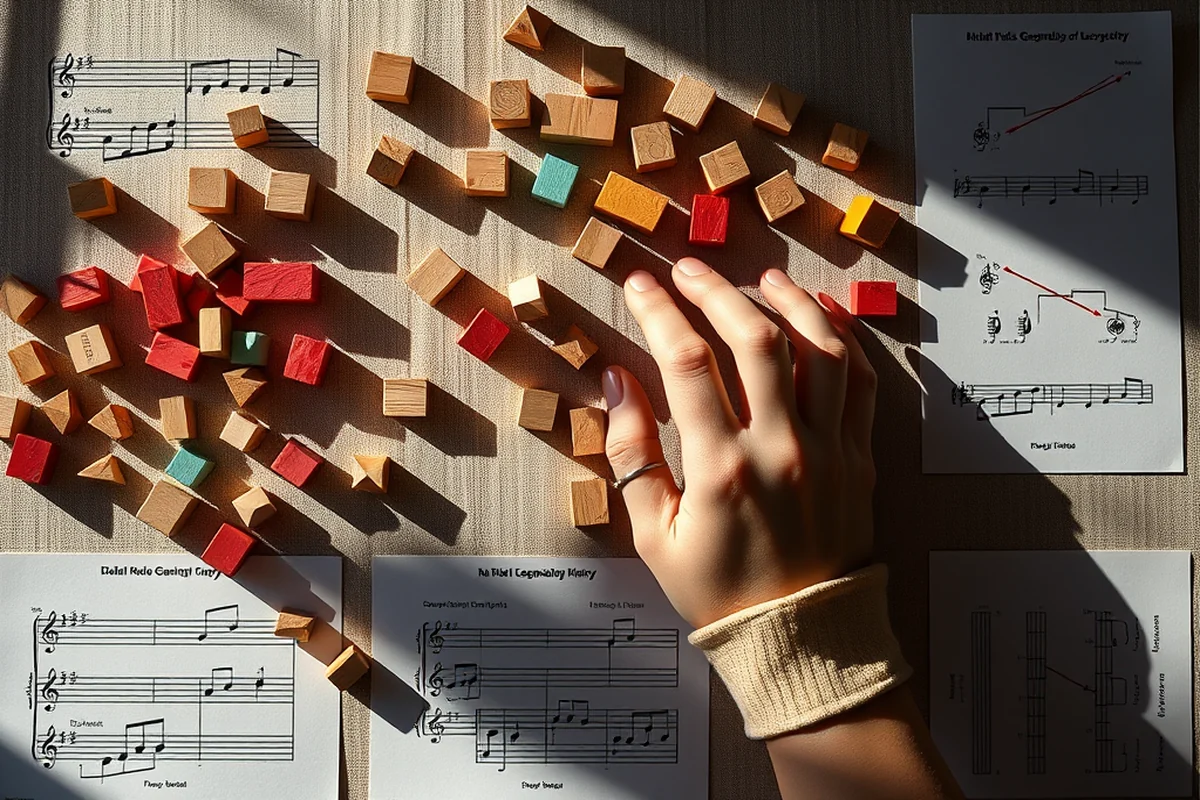
I discovered that my students were better able to grasp concepts like key signatures, time signatures, and rhythm when they saw them in action. The AI-generated music became a visual and auditory tool that helped them understand how theory translates into actual music.
For example, when we studied the key of C major, I had the AI generate a melody in that key, and we analyzed the notes, intervals, and chord progressions together. This made the theory more tangible and easier to remember.
The AI can also be used to demonstrate how different scales or modes affect the sound of a melody. By simply changing the scale, students could hear the difference between major and minor keys, or between the Aeolian and Dorian modes.
Related: Cloud on tilt remix
Collaboration and Creativity with AI Music Generators
I often used the AI to generate a melody, and then had my students work in small groups to add their own variations or harmonies. This was a great way to teach them about composition and ensemble work, and it made the lessons more dynamic and engaging.
Each group would take turns adding their own layer to the composition, and we would listen to the final result together. This not only taught them about collaboration but also gave them a real sense of ownership over their creations.
In this way, the AI became a tool that not only helped them learn music theory but also encouraged them to think creatively and work together as a team.
Related: What ai music generator
Using AI Music Generators Across Different Learning Levels
I found that the best AI music generators for education can be used with students of all ages and abilities. For younger children, I used the AI to generate simple, catchy tunes that we could sing together. For older students, I used it to explore more complex structures and techniques.
For students who were just beginning to learn about music, the AI provided a safe and non-judgmental way to experiment with composition. They could try different ideas without worrying about making mistakes, which helped build their confidence and creativity.
For advanced students, the AI was a tool for exploration and refinement. They could use it to generate complex compositions and then analyze them, learning about harmony, counterpoint, and orchestration in a real-world context.
The AI music generator is like a musical playground — no matter the age or ability, everyone can find something to explore and enjoy.
Related: What is the happy song about
The Benefits of AI Music Generators for Homeschooling
One of the biggest benefits of using an AI music generator in a homeschool setting is its flexibility. It can be used to support a wide range of music lessons, from basic rhythm and melody to advanced composition and theory.
I found that the AI helped my son develop a love for music that he had never shown before. It made the process of learning more enjoyable and gave him a sense of accomplishment that traditional methods couldn’t provide.
Another benefit is that it allows students to explore music at their own pace and in their own way. Whether they’re working on a simple melody or a complex orchestral composition, the AI provides a safe and supportive environment for creativity and learning.
🎵 Younger Kids: Simple Melody Generator
A simplified AI generator for children aged 3-6 that creates short, rhythmic tunes they can sing and dance to.
🎼 Older Kids: Composition Explorer
An AI music generator for students aged 7-12 that allows them to explore melody, harmony, and rhythm in more depth.
✨ No-Prep Music Creation
A quick and easy AI music generator that requires no preparation or setup — just click and create.
🤝 Group Music Collaboration
An AI music generator that supports group projects and collaborative music creation, perfect for classroom or homeschool settings.
🧮 Music Theory Explorer
An AI music generator that helps students explore and understand music theory through interactive composition and analysis.
| The mistake | Why it happens | The fix |
|---|---|---|
| Using the AI without incorporating music theory concepts. | This can result in students creating music without understanding the underlying principles, which limits their ability to develop deeper musical knowledge. | Pair AI-generated compositions with discussions and analysis of music theory to reinforce learning and understanding. |
| Focusing only on the AI-generated output without allowing for student input. | This can make the learning process passive and reduce student engagement, as they may not feel invested in the creative process. | Encourage students to contribute their own ideas and parameters, making the process more interactive and engaging. |
| Not adapting the AI to the student's learning level. | Using a complex AI tool without considering the student's ability level can be overwhelming and discourage them from using it effectively. | Choose an AI music generator that offers settings and features suitable for the student's learning level and abilities. |
| Ignoring the importance of collaboration and group work. | Focusing solely on individual composition can miss the opportunity to teach collaboration, teamwork, and ensemble skills. | Use the AI to facilitate group projects and collaborative music creation, reinforcing the value of working together. |
What'S The Best AI Music Generator
Common Questions
Can I use an AI music generator with no prior music knowledge?
How does the AI music generator support music education?
Are the compositions generated by the AI music generator suitable for classroom use?
Can I customize the music generated by the AI?
References
- The AI Classroom - ERIC - Department of Education (files.eric.ed.gov)
- AIWEBTOOLS.AI 900+ AI TOOLS WITH DESCRIPTIONS/LINKS (cga.ct.gov)
Cite this guide
Teaching Music to Homeschoolers (2026). What'S The Best Ai Music Generator. https://melodystart.com/what-s-the-best-ai-music-generator/
Feel free to cite or share this guide.
Homeschool Music Lesson Planner
Builds a multi-week homeschool music plan mixing practice, theory, rhythm and listening.
Open it free →