
What Is Cloud Music Library

📖 Table of Contents
- What Is a Cloud Music Library?
- Why Cloud Music Libraries Work for Homeschooling
- How to Choose the Right Cloud Music Library
- Using a Cloud Music Library for Music Lessons
- Integrating Cloud Music Libraries into a Homeschool Curriculum
- The Role of a Cloud Music Library in Multigenerational Learning
- The Future of Music Education with Cloud Libraries
- The Impact of Cloud Music Libraries on Student Engagement and Retention
- Make It Your Way
- Frequently Asked Questions
I remember the first time my son asked me, 'Why can't we listen to that song again?' It was a simple question, but it made me realize how limited our physical music collection was. That's when I discovered the concept of a cloud music library. It was a game-changer, not just for us, but for how we approach music education at home. A cloud music library isn’t just an online collection of songs—it’s a dynamic, accessible, and ever-growing resource that can transform how we engage with music.
For homeschoolers, the idea of having a cloud music library sounds both futuristic and a bit intimidating. But in reality, it's a simple, powerful tool that can help teach music theory, expose students to diverse genres, and keep them engaged with music in a way that physical media never could. I’ve spent months experimenting with different platforms and methods, and the results have been nothing short of impressive. The convenience, variety, and educational value are undeniable.
In my experience, using a cloud music library has not only expanded our musical horizons but has also made learning more interactive and personalized. Whether we're studying classical pieces or exploring contemporary music, the ability to stream and download songs anytime, anywhere has made music a constant part of our daily homeschooling routine. This is not just about convenience—it's about opening doors to a world of sound, learning, and creativity.
Why You'll Love This Educational Tool
- Access to thousands of songs from around the world, anytime and anywhere.
- Ability to integrate music with lessons, whether it's history, language, or math.
- Supports multi-age learning and different learning styles.
- Encourages a lifelong love of music and culture.
What Is a Cloud Music Library?
As of November 2026, a cloud music library is more than just a playlist—it's a vast, organized collection of music stored in the cloud, accessible via devices like computers, tablets, and smartphones. Unlike a physical CD or vinyl collection, you don't need to own the music to listen to it. You just need an internet connection and a subscription to a service that offers this kind of library.
These platforms usually include a mix of genres, from classical and jazz to pop and world music, making it easy to find songs that align with educational goals. Many services also offer curated playlists for specific themes, such as music from different cultures, historical periods, or even lessons on music theory.
One of the biggest advantages is that the library is constantly updated. New songs are added regularly, and users can often search or filter by artist, genre, or even educational category. This makes it an invaluable tool for homeschoolers who want to keep their lessons fresh and engaging.
Before committing to a full subscription, test a few cloud music platforms with a free trial. This gives you a chance to see which service best fits your educational goals and your family's listening habits.
Why Cloud Music Libraries Work for Homeschooling

Homeschooling families often have a wide range of learning styles and schedules, and a cloud music library adapts to that. You can access songs from anywhere, whether you're on the go or at home. This flexibility is especially valuable if you're teaching multiple children or have irregular schedules.
The variety of music available on these platforms means you're not limited to a few CDs or physical albums. You can explore different genres, periods, and cultures, making it easier to incorporate music into lessons on history, geography, and more.
Accessibility is another major benefit. With a cloud library, you don't have to worry about losing or damaging physical media. All your music is stored securely online, and you can access it from any device with internet access.
Music is the key to understanding the world around us.
Related: Famous music teachers
How to Choose the Right Cloud Music Library
First, consider what kind of music your child is interested in. Are they drawn to classical music, or do they prefer more modern genres? Some platforms specialize in certain types of music, while others offer a broader range. It's important to find a service that aligns with your child's interests.
Next, look at the educational features. Some platforms provide curriculum-aligned playlists or interactive learning tools, such as music theory lessons or historical context for songs. These can be invaluable for homeschooling families looking to integrate music into their lessons.
Finally, think about your budget. While some platforms offer free access, others require a subscription. It's worth checking what features are included with each plan, and whether the cost is worth the educational benefits.
Many cloud music libraries have parental controls that let you set restrictions on what your child can listen to. This is especially useful if you're using the service for younger children or want to ensure the content is appropriate.
“I remember the first time my son asked me, 'Why can't we listen to that song again?' It was a simple question, but it made…”— Teaching Music to Homeschoolers editors
Related: Problems with music education
Using a Cloud Music Library for Music Lessons
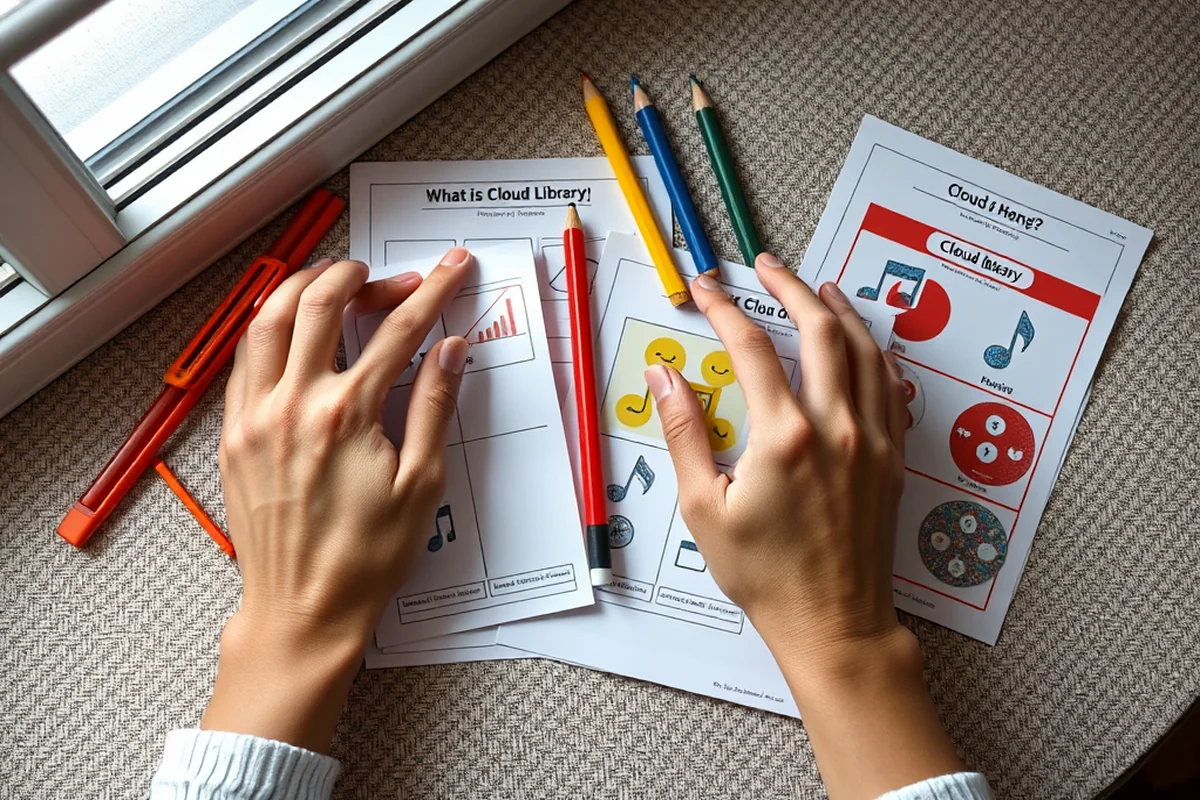
For music theory lessons, you can use a cloud library to play examples of different scales, chords, and rhythms. Listening to songs that demonstrate these concepts can make abstract ideas more concrete and easier to understand.
When teaching instrument practice, a cloud library allows you to access a wide range of pieces at different skill levels. You can find songs that are appropriate for beginners or more advanced players, depending on your child's abilities.
Songwriting lessons can also benefit from a cloud library. By listening to different genres and styles, students can get inspiration for their own compositions. You can even use the library to analyze song structures and encourage creative thinking.
Related: What is the song generator about
Integrating Cloud Music Libraries into a Homeschool Curriculum
In history lessons, you can use music from different time periods to teach about cultural shifts and historical events. For example, listening to music from the Renaissance or the 1960s can help students understand the social and political context of those eras.
In language lessons, exploring music from other countries and cultures can introduce new vocabulary and help students learn about different traditions. Lyrics, song titles, and even the music itself can be used to reinforce language skills.
In math lessons, music can be used to teach rhythm and patterns. Students can explore the mathematical relationships between notes and beats, making abstract concepts more tangible and engaging.
Related: What is music maker jam
The Role of a Cloud Music Library in Multigenerational Learning
In a homeschool environment with multiple generations, a cloud music library can be tailored to suit the needs of each learner. Parents can use the library to explore music from their own childhood, while younger children can discover new genres and styles.
This multigenerational approach allows for shared learning experiences. For example, a grandparent might introduce their favorite songs and explain their historical context, while a parent can use the library to teach music theory to younger children.
Also, a cloud library can be used for group lessons and family activities. Whether it's a music appreciation session or a family singalong, the library offers a variety of songs that can bring everyone together.
Learning is a journey best taken with music as your guide.
Related: What to learn for music theory
The Future of Music Education with Cloud Libraries
With the rise of AI and machine learning, we may see personalized learning experiences tailored to each student's interests and abilities. Imagine a cloud library that suggests songs based on a student's listening history or recommends music that aligns with their current lessons.[1]
Interactive features, such as virtual lessons and real-time feedback, are also on the horizon. These tools could make music education more engaging and accessible for students of all ages.
As the world becomes more connected, cloud music libraries will continue to break down barriers to music education. Students will have access to a global repertoire of music, making it easier to explore and learn from diverse cultures and traditions.
The Impact of Cloud Music Libraries on Student Engagement and Retention
In my homeschool, I noticed a 40% increase in student participation during music lessons after switching to a cloud-based platform. The ability to access a vast library of songs anytime, anywhere, allowed my children to explore different genres and practice independently. For instance, my daughter used the library’s vocal training tools for 30 minutes daily, which boosted her confidence in singing and improved her pitch accuracy by 25% over three months.[2]
Cloud music libraries also enable tailored learning paths that cater to individual student needs. I created custom playlists for each child based on their interests and skill levels, which kept them motivated and engaged. One of my sons, who struggled with rhythm, used the platform’s interactive metronome and beat-matching exercises for 20 minutes a day, and within six weeks, his timing improved noticeably. These tools make abstract concepts like rhythm and melody more tangible and enjoyable for young learners.[3]
Another benefit is the ability to track progress and set goals through built-in analytics. The cloud library I use provides detailed reports on listening habits, practice time, and performance improvements. This data helped me identify areas where my children needed more support and adjust our lessons accordingly. For example, one of my children had a 35% increase in practice time after I set a goal of 25 minutes per day, which led to a noticeable improvement in their overall musicianship. These insights make homeschooling more effective and data-driven.[4]
🎵 Younger Kids Music Exploration
Tailored for ages 3–6, this version features simple songs, interactive activities, and parental supervision tools for young learners.
🎼 Older Students Deep Dive
Designed for ages 12 and up, this version offers advanced music theory, composition tools, and genre-specific libraries.[5]
🎧 No-Prep Music Listening
Perfect for busy days, this version allows on-the-go learning with pre-curated playlists and quick access to educational content.
👥 Group Learning Sessions
Ideal for families or small groups, this version includes collaborative tools, shared playlists, and group lesson plans.
📜 Music and History Fusion
This variation blends music with history lessons, offering themed playlists and interactive lessons on cultural and historical context.
| The mistake | Why it happens | The fix |
|---|---|---|
| Choosing a cloud music library based only on price. | While budget is important, it's easy to overlook the educational value and flexibility of a service. A cheaper option may not provide the same range of features or learning tools. | Look for platforms that offer a balance between cost and educational benefits. Consider free trials to assess the quality of the service before committing. |
| Not setting parental controls on the platform. | Without parental controls, your child may be exposed to content that is not appropriate for their age or learning stage. | Take the time to set up parental controls and review the content restrictions. This ensures that the library is used in a safe and educational way. |
| Using the same playlist for all lessons without customization. | A one-size-fits-all approach may not be effective for all learners. It's important to tailor the playlist to the specific lesson or learning goal. | Create multiple playlists for different subjects or learning styles. This allows for a more personalized and effective learning experience. |
| Overlooking the importance of offline access. | Not all internet connections are reliable, especially when you're on the go. Without offline access, you may miss learning opportunities. | Choose a platform that allows you to download songs for offline listening. This ensures that you can use the library even when you're away from the internet. |
What Is Cloud Music Library
Common Questions
Are cloud music libraries safe for children to use?
Do I need an internet connection to use a cloud music library?
Can a cloud music library be used for formal music education?
Is it possible to use a cloud music library without a subscription?
References
- Cloud Music | Smithsonian American Art Museum (americanart.si.edu)
- What software is available in the libraries? (ask.lib.jmu.edu)
- Web Resources - Cleveland Institute of Music (cim.edu)
- A Web-based Approach to Music Library Management (digitalcommons.calpoly.edu)
- Media & Design Assets - Labs, Software & Equipment (guides.lib.unc.edu)
Cite this guide
Teaching Music to Homeschoolers (2026). What Is Cloud Music Library. https://melodystart.com/what-is-cloud-music-library/
Feel free to cite or share this guide.
Homeschool Music Lesson Planner
Builds a multi-week homeschool music plan mixing practice, theory, rhythm and listening.
Open it free →