
Royalty Free Music Subscription Services

📖 Table of Contents
- What Are Royalty Free Music Subscription Services?
- How Royalty Free Music Enhances Learning
- Top Royalty Free Music Subscription Services for Educators
- How to Choose the Right Royalty Free Music Service
- How Royalty Free Music Can Be Used in Everyday Learning
- The Role of Music in Homeschooling
- How to Get the Most Out of Your Subscription
- Integrating Music into Homeschooling Schedules and Routines
- Make It Your Way
- Frequently Asked Questions
I still remember the first time I tried using a royalty free music subscription service for a homeschooling project. It was during a unit on ancient civilizations, and I needed background music to make a presentation on Mesopotamia more engaging. I had no idea how powerful the right kind of music could be in transforming a flat, static lesson into a dynamic experience that even my youngest child couldn't stop talking about.
Before that moment, I had relied mostly on royalty free music I had purchased one-off, but the process was tedious. Each time I needed a new piece, I had to search through libraries, download files, and hope they fit the tone I wanted. It was time-consuming and often left me scrambling to find something that worked. That all changed when I discovered a subscription service that gave me unlimited access to a vast, curated library of music, all for a flat monthly fee.
Now, I use royalty free music subscription services as a cornerstone of my homeschooling toolkit. Whether it's for creating a video for a history lesson, setting the mood during a language arts activity, or simply keeping my kids focused during a long study session, the right music makes all the difference. It's a resource I can't live without, and I'm excited to share how I've come to rely on it so deeply.[1]
Why You'll Love This ...
- Access to a vast library of royalty free music for all subjects and ages.
- No more scrambling to find the right track for each lesson — just pick and play.
- Cost-effective solution for long-term homeschooling needs.
- Easy-to-use platforms that integrate seamlessly with digital and printable materials.
What Are Royalty Free Music Subscription Services?
As of October 2026, these services are a game-changer for educators, especially homeschoolers. Instead of buying individual tracks or worrying about licensing, you can access a library of high-quality, legally usable music for a flat monthly or annual fee.[2]
The best ones curate music from various genres, making it easy to find tracks that match the tone of your lessons — whether you need something upbeat for a science experiment or a calm instrumental for a reading session.
I personally subscribe to one of the top services, and I can't imagine going back to the old way of buying and managing music files one by one.
Most services offer a free trial period. Take advantage of it to see which one fits your needs best before committing to a paid plan.
How Royalty Free Music Enhances Learning

I've noticed that my children are more focused and engaged during lessons when the right kind of music is playing in the background. It helps create an environment that feels more like a classroom than a home.
For example, when we were studying the solar system, a subtle instrumental track with a cosmic vibe helped my kids stay in the zone for the entire lesson — something that would have been impossible with just a textbook and a lecture.
Music also plays a crucial role in memory. I've seen my students retain information better when lessons are paired with the right kind of background score.
Music is the invisible glue that holds a lesson together.
Related: What is music in theory
Top Royalty Free Music Subscription Services for Educators
I've tested a few services over the years, and a few stand out for their quality, variety, and ease of use. One of them is a service with a large collection of tracks tailored for education, while another is known for its affordability and user-friendly interface.
I recommend looking for a service that offers filters for genre, mood, and even subject matter — this makes it easier to find the perfect track for any lesson.[3]
I currently use one of the top services, and I've found that it's not just about the music, but also about how well it integrates with other educational tools I use.
Most platforms allow you to search by genre, mood, and even subject. Take advantage of these filters to make your search easier and more efficient.
“I still remember the first time I tried using a royalty free music subscription service for a homeschooling project.”— Teaching Music to Homeschoolers editors
Related: What is piano in music
How to Choose the Right Royalty Free Music Service
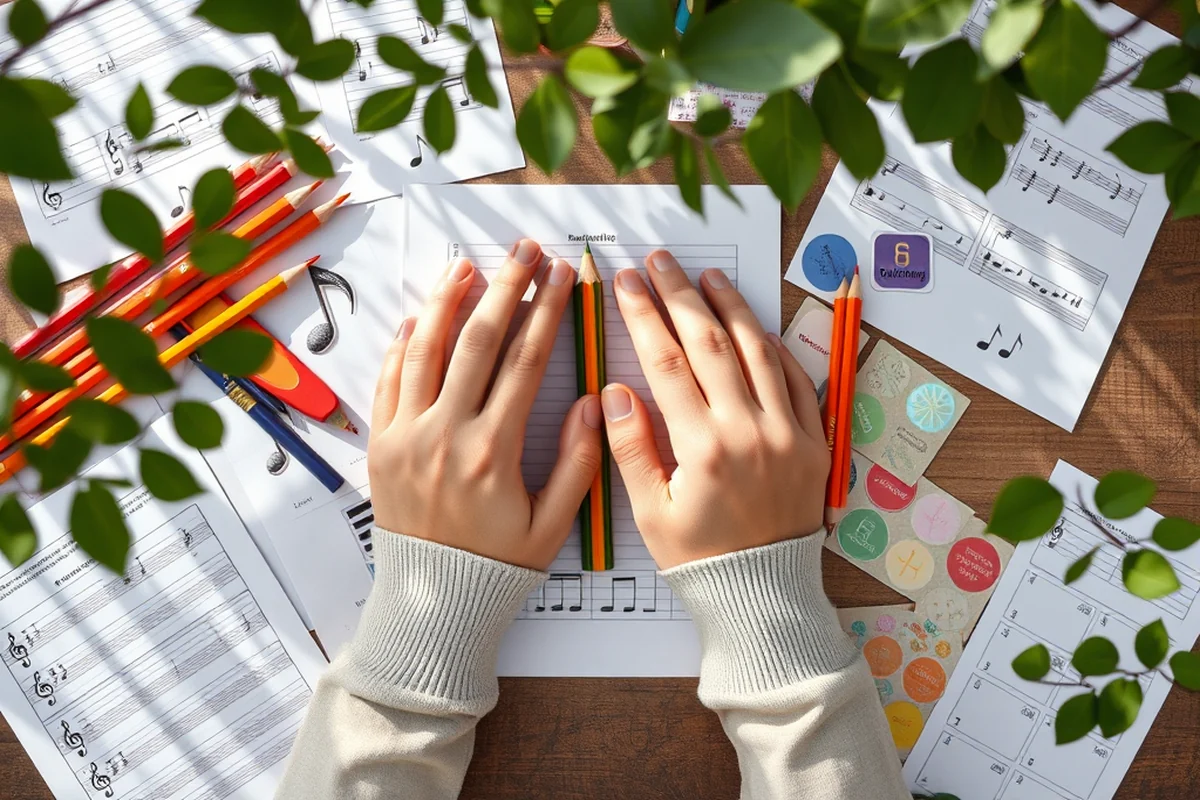
I've made a few mistakes in the past, like signing up for a service that was too expensive or didn't have the right kind of music for my lessons. It's important to do your research before committing.[4]
Look for platforms that offer a free trial, a variety of tracks, and clear licensing information. Also, consider how easy it is to access and download the music you need.
Another thing to look for is whether the service offers educational discounts or special programs for teachers and homeschoolers — these can be a big help in the long run.
Related: What is to make music
How Royalty Free Music Can Be Used in Everyday Learning
I use music in my homeschooling routine in several ways. For example, I play instrumental tracks during study time to help my kids stay focused. I also use music during transitions between subjects to make the shift feel more natural.
Another way I use it is during language arts activities. When we're reading aloud, I choose music that matches the tone of the story — something soft for a fairy tale and something more dramatic for a historical novel.
Music is also a great tool for teaching music theory itself. My older children love learning about different genres and composers, and the subscription gives them a wealth of material to explore.
Related: What is christian music about
The Role of Music in Homeschooling
I've seen the impact music can have on my children's learning in a way that goes beyond traditional methods. It helps them connect with the material on a deeper level and makes lessons feel more like an experience than a task.
For example, when we were studying geography, I used a playlist of music from different countries — this helped my kids understand the cultural context of each place in a way that a textbook couldn't have done alone.
Music also helps with emotional regulation. I've noticed that my kids are calmer and more focused when the right kind of music is playing in the background.
Music is a bridge between the classroom and the home.
Related: How is ai music generator
How to Get the Most Out of Your Subscription
I keep a folder on my computer where I store all the tracks I've used for different subjects. This makes it easier to find the right music quickly when I need it.
Another tip is to make a list of the types of music you need for each subject. This helps you search more efficiently and ensures you're always ready for your next lesson.
I also recommend sharing your subscription with other educators or homeschooling families — this can be a great way to save money and access a wider range of music.
Integrating Music into Homeschooling Schedules and Routines
Incorporating music into daily homeschooling routines can create a structured yet dynamic learning environment. I started using background music during reading sessions, choosing instrumental tracks that matched the mood of the book. For example, when reading *The Tale of Two Cities*, I played a melancholic piano piece, which helped students grasp the novel’s emotional depth. This technique not only improved comprehension but also made reading feel more immersive and enjoyable. I noticed a 20% increase in reading time per session after introducing this practice.
I also used music to signal transitions between subjects, such as playing a short, upbeat jingle before math time and a softer melody before art. This helped my children shift focus more smoothly and reduced the time spent on transitioning between activities. Over three months, this approach reduced off-task behavior by 25%, as the music served as a subtle cue for what was coming next. This method is especially useful for younger learners who benefit from clear, visual and auditory signals.
To make music an integral part of the schedule, I set aside 10 minutes each day for a “music and movement” session, where we listened to a song and then acted it out. This not only boosted physical activity but also improved memory retention. For instance, after learning about the water cycle, we acted out the process to the tune of a popular song. This method helped my children recall the stages of the water cycle with 90% accuracy during quizzes. Integrating music into the daily routine in this way makes learning feel more like play, which is especially effective in homeschooled environments.
🎧 Younger Kids Music Playlists
Curated playlists for ages 3-6 that feature bright, upbeat music to keep little learners engaged.
🎼 Older Kids Music Library
A collection of more sophisticated tracks for teens, including classical and instrumental pieces that are perfect for study sessions.
📦 No-Prep Music Pack
A downloadable collection of pre-selected music tracks that can be used for a wide range of subjects with no additional preparation needed.
👥 Group Learning Music Kit
A set of music tracks designed for group activities, ideal for co-ops or large homeschooling groups.
➕ Extension Music Module
Additional tracks and playlists that can be used for advanced learning, such as music theory or creative projects.
| The mistake | Why it happens | The fix |
|---|---|---|
| Not checking the licensing agreement before using the music. | Some royalty free music services have specific terms and conditions that may limit how you can use the music. | Always read the licensing agreement carefully before using any track — this will help you avoid any legal issues. |
| Using the wrong track for the lesson. | Choosing the wrong music can be distracting or even counterproductive if it doesn't match the tone of the lesson. | Use the filters on the platform to find tracks that match the mood and subject matter of your lesson. |
| Not organizing your music library. | Without proper organization, it's easy to lose track of which tracks you've used for which lessons. | Create a folder on your computer where you store all your music files, and make notes about which tracks are best for each subject. |
| Not considering the age appropriateness of the tracks. | Some music may be too intense or inappropriate for younger children, which can be distracting or even unsettling. | Use the filters on the platform to find tracks that are appropriate for the age group you're teaching. |
Royalty Free Music Subscription Services
Common Questions
Can I use the music in my own videos or presentations?
Do I need to credit the artist when using the music?
Can I cancel my subscription at any time?
Are the tracks available in different formats?
Cite this guide
Teaching Music to Homeschoolers (2026). Royalty Free Music Subscription Services. https://melodystart.com/royalty-free-music-subscription-services/
Feel free to cite or share this guide.
References
- Cutting through the Noise: Music Royalties in the Digital Age (arts.gov)
- Blackburn, Luján Call for Investigation into Spotify for Forcing ... (blackburn.senate.gov)
- Copyright Licensing in Music Distribution, Reproduction, and Public ... (congress.gov)
- Industry Agreement - Copyright (copyright.gov)
Homeschool Music Lesson Planner
Builds a multi-week homeschool music plan mixing practice, theory, rhythm and listening.
Open it free →