
What Is Music Recognition

📖 Table of Contents
- What Is Music Recognition, Exactly?
- The Benefits of Music Recognition in Education
- How to Start Teaching Music Recognition at Home
- Why Music Recognition Is Important for Young Learners
- How to Use Music Recognition for Homeschooling
- How Music Recognition Helps with Emotional Intelligence
- How to Make Music Recognition Fun for Kids
- Make It Your Way
- Frequently Asked Questions
As a homeschooling parent, I used to think music recognition was just a fancy term for being able to hum along to a tune. That changed when my son, who was four at the time, was asked to identify a song from a video during his first day of preschool. He couldn't. It hit me: this wasn't just about knowing the lyrics. It was about understanding the structure, rhythm, and even the emotional tone of music. I realized that what I'd been calling music recognition was more complex than I'd ever imagined, and I needed to learn more.[1]
I spent weeks researching and testing different methods with my kids. I discovered that music recognition is not only about identifying songs but also about understanding how music is constructed and how it communicates. We began incorporating music into our daily routines, from counting beats while we baked to singing along to classical pieces during our math lessons. It wasn't long before I saw changes in my children's focus, memory, and even their emotional regulation. The benefits were tangible, and I knew I had to share what I'd learned.
Music recognition is a powerful tool that goes beyond entertainment—it's a cornerstone of cognitive, linguistic, and emotional development. Through this journey, I've learned that it's not about memorizing every song or being able to replicate a melody perfectly. It's about developing an ear for music, understanding its patterns, and using that understanding to enhance learning in other areas. Whether you're a new homeschooling parent or an experienced educator, music recognition is a skill that can be nurtured with intention and creativity.[2]
Why You'll Love This Activity
- Improves auditory processing and memory skills
- Enhances language development through lyrical repetition
- Boosts emotional intelligence by recognizing musical moods
- Provides a fun, engaging way to integrate music into daily learning
What Is Music Recognition, Exactly?
As of November 2026, to me, music recognition is like having a built-in map of the musical world. It's the ability to recognize a song by its melody or rhythm, even if you've never heard it before. My daughter once heard a piece of Beethoven's Fifth Symphony in the background of a movie and immediately said, 'That's the one with the loud, fast part!' It was a moment that made me realize how deeply music recognition can be ingrained in a child's brain, even at a young age.[3]
I've noticed that this skill is not only about identifying songs but also about understanding how music communicates. When we listened to a classical piece one afternoon, my son asked, 'Why does this music sound sad?' I was surprised by his awareness. That's the power of music recognition—it helps children make emotional and cognitive connections to the world around them.
Through simple, daily activities, we've built a foundation for music recognition that's both fun and educational. Whether we're singing along to a lullaby or identifying the beat of a song while we dance, we're helping our children develop an ear for music that will serve them in many areas of life.
Incorporate music recognition into your daily routine—sing, dance, or listen to music together regularly to build familiarity and confidence.
The Benefits of Music Recognition in Education
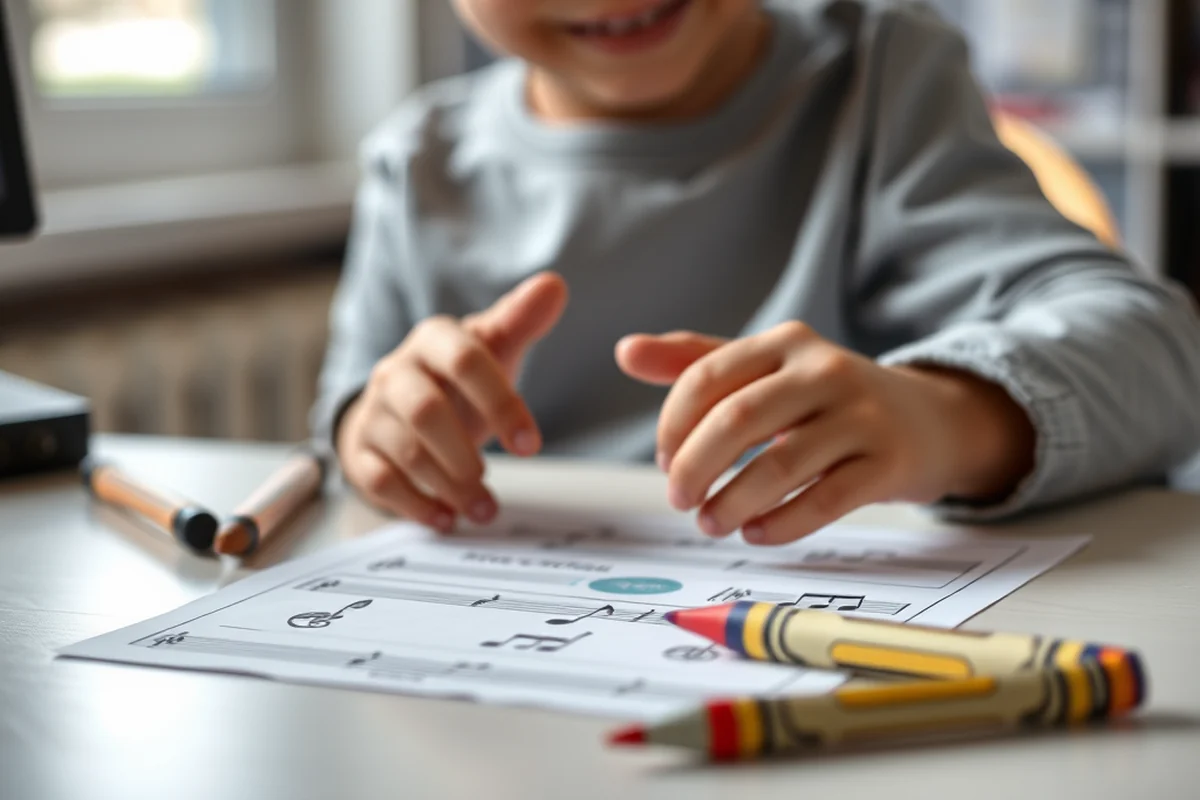
I've seen firsthand how music recognition can transform a child's learning experience. When my son was learning to read, he struggled with recognizing patterns in words. But when I introduced him to music with clear, repeating rhythms, his ability to identify patterns in language improved dramatically. It was a revelation that music and literacy are more connected than I'd ever realized.
Another unexpected benefit was in his emotional development. When we listened to music that conveyed joy or sadness, he began to describe his own feelings with more accuracy and depth. It was like he was learning to read the emotional language of music, which helped him better understand and express his own emotions.
I've also noticed that music recognition helps children stay focused and engaged during learning. When we use music as part of our lessons, it keeps their attention and makes difficult concepts more approachable. It's like a bridge between fun and learning, and it's one of the most powerful tools I've found in homeschooling.
Music recognition is the bridge between fun and learning.
Related: What is music producer
How to Start Teaching Music Recognition at Home
I started by introducing our children to a wide variety of music styles, from classical to pop. I made sure to play music with distinct rhythms and melodies so they could identify the differences. One of our favorite activities was to play a song and then ask them to guess the title or artist based on what they heard. It was surprising how accurate their guesses became after a few weeks.
We also created our own musical scavenger hunt. We would play a short clip of a song and then ask the kids to find an object or picture that matched the mood of the music. This helped them connect music to real-world experiences and made learning more interactive.
I found that consistency was key. We made it a daily habit to listen to music together and talk about it. Whether it was identifying the beat or discussing the emotions conveyed by the music, these small moments helped build a strong foundation for music recognition in our home.
Link music to real-life experiences by using music to describe emotions, objects, or events. This helps children make deeper connections with what they're hearing.
“As a homeschooling parent, I used to think music recognition was just a fancy term for being able to hum along to a tune.”— Teaching Music to Homeschoolers editors
Related: Is spotify a free music
Why Music Recognition Is Important for Young Learners
I've noticed that music recognition plays a crucial role in how young children learn to communicate. When we sing songs with repeated lyrics, my children begin to recognize patterns in language. This helps them with phonics and reading readiness. It's amazing to see how a simple nursery rhyme can be the foundation for more complex language skills.
Another benefit I've observed is the improvement in my children's memory. When we listen to a song and then ask them to recall the lyrics or rhythm, they get better at remembering information. It's like their brains are training themselves to hold onto details more effectively.
I've also seen how music recognition helps children with emotional regulation. When they hear a song that matches their current mood, it helps them identify and express their feelings. It's a powerful tool for emotional development that goes beyond just learning to sing along.
Related: Good for karaoke songs
How to Use Music Recognition for Homeschooling
I've found that using music recognition as part of our homeschooling lessons has been incredibly beneficial. For example, when teaching math, we used songs with counting rhythms to help my children understand numbers and patterns. It made learning more engaging and less stressful.
In our language lessons, we've used songs with clear, repeated structures to help my kids develop phonics and reading skills. When they hear a song and can recognize the structure, they begin to see how words and sentences are formed, which makes reading easier for them.
I've also used music recognition to teach history. We listened to songs from different time periods and discussed how the music reflected the culture and events of that era. It helped my children make connections between music, history, and emotions in a way that was both fun and educational.
Related: Royalty free music subscription services
How Music Recognition Helps with Emotional Intelligence
One of the most unexpected benefits of music recognition has been its impact on my children's emotional intelligence. When we listen to music that conveys sadness, happiness, or excitement, they begin to recognize and describe these emotions more accurately. It's like they're learning to read the emotional language of music.
I've noticed that this helps them understand their own emotions better. When they're feeling upset, they often turn to music that matches their mood. It helps them express their feelings in a healthy way and find comfort in the music.
I've also seen how this skill helps them understand the emotions of others. When we listen to a song together, we discuss how the music makes us feel and what it might mean to someone else who hears it. It's a powerful way to build empathy and emotional awareness.
Music is the language of emotions.
Related: What is music production software
How to Make Music Recognition Fun for Kids
I've found that the key to making music recognition fun is to treat it like a game. We've created our own musical scavenger hunts, where we play a song and then ask the kids to find an object or picture that matches the mood of the music. It's a great way to keep them engaged and excited about learning.
We also use songs with clear, repeating structures to help them understand patterns. When they can recognize the rhythm or melody, they start to see how music works, which makes it more approachable and fun.
I've also noticed that incorporating music into daily routines makes it more enjoyable. Whether it's singing along to a lullaby before bedtime or dancing to a song during our math lessons, music becomes a natural part of our learning process.
🎵 Younger Kids (Ages 2-4)
Use simple, repetitive songs and interactive games to help younger children develop basic music recognition skills.
🎼 Older Kids (Ages 5-8)
Incorporate more complex musical elements and challenge kids to identify different instruments, rhythms, and melodies.
⏰ No-Prep Version
Use free online resources and streaming services to access a wide variety of music that can be used for spontaneous learning sessions.
👥 Group Version
Create a musical activity that can be done with a group of children, such as a scavenger hunt or a musical relay race.
📚 Extension Activity
Integrate music recognition into other subjects by using songs to teach math, language, or history lessons.
| The mistake | Why it happens | The fix |
|---|---|---|
| Not making it a daily habit | Music recognition skills develop best with consistent exposure and practice. | Incorporate music into your daily routine by listening to songs, singing together, or using music-based learning activities regularly. |
| Focusing only on memorization | Music recognition is about understanding, not just memorizing, the elements of music. | Encourage your child to explore different types of music and discuss how they make them feel or what they hear in the music. |
| Ignoring the emotional aspect of music | Music is a powerful emotional tool, and ignoring it can limit the benefits of music recognition. | Use music to help children identify and express their emotions, and discuss how music can convey different moods. |
| Not using real-world connections | Linking music to real-life experiences helps children make deeper connections with what they're hearing. | Use music to describe objects, events, or emotions in the real world to help children understand how music relates to their lives. |
What Is Music Recognition
Common Questions
Can music recognition help with learning to read?
How can I introduce music recognition to a toddler?
What are some music recognition activities that can be done at home?
Does music recognition help with emotional development?
References
- The Effects of Online Homeschooling on Children, Parents, and ... (pmc.ncbi.nlm.nih.gov)
- Copyright and Artificial Intelligence, Part 3: Generative AI Training ... (copyright.gov)
- Recent Advances in Instruction in Music: Bureau of Education ... (govinfo.gov)
Cite this guide
Teaching Music to Homeschoolers (2026). What Is Music Recognition. https://melodystart.com/what-is-music-recognition/
Feel free to cite or share this guide.
Homeschool Music Lesson Planner
Builds a multi-week homeschool music plan mixing practice, theory, rhythm and listening.
Open it free →