
Home Music Studio Equipment

📖 Table of Contents
- The Essential Equipment for a Home Music Studio
- How to Choose the Right DAW for Your Home Studio
- The Role of Headphones in a Home Studio
- Budget-Friendly Home Studio Equipment for Kids
- Setting Up Your Home Studio Space
- Tips for Teaching with Home Music Studio Equipment
- The Benefits of a Home Music Studio for Homeschooling Families
- Make It Your Way
- Frequently Asked Questions
A few years ago, I sat at my kitchen table with my son, a six-year-old with a fascination for drums and a voice that could shatter glass. We were trying to record a song for his school talent show, but all we had was a cheap microphone and a phone. The sound was muffled, the timing off, and the experience felt frustrating. That moment sparked a journey into setting up a home music studio with real equipment — one that felt like a real recording space, not just a collection of clutter. It wasn’t about buying the most expensive gear, but about creating a space that inspired creativity and learning, and that is the heart of home music studio equipment.[4]
Setting up a home music studio is more than a hobby for most families — it’s an educational adventure. I’ve watched my son go from struggling to hold a note to composing entire songs on a keyboard with the help of software I installed on our laptop. The right home music studio equipment can make all the difference in the learning process. Whether you're a parent who wants to teach their child to play an instrument or a homeschooling family looking to integrate music into your curriculum, the tools you choose matter.
I’ve spent hours researching, shopping, and experimenting with different setups. Some things worked, others didn’t. The key was finding a balance between quality and affordability, and making sure the gear fit our space and our goals. In this article, I’ll walk you through everything we learned — from essential equipment to budget-friendly options — so you can create a space that turns musical curiosity into real skill.
Why You'll Love This Home Music Studio Setup
- Affordable and high-quality gear that fits most family budgets
- Easy-to-use tools that help kids learn music theory and composition
- A creative space that encourages practice and experimentation
- Flexible setup options for different learning styles and ages
The Essential Equipment for a Home Music Studio
As of October 2026, when I first started setting up our home music studio, I underestimated the importance of a quality microphone. A basic phone microphone was just not cutting it — the sound was too distorted and lacked clarity. After some research, I found a USB microphone for around $100 that made a world of difference. The difference was immediately clear when my son recorded his first song — the voice was crisp, and the track was usable.[1]
Next, a MIDI keyboard was on my list. It was a bit of an investment, but it allowed my son to experiment with melodies and rhythms in ways a basic keyboard wouldn’t have let him. I found a 49-key model that fits on our countertop and has been a game-changer for learning scales and chords.[2]
Headphones are also a must for avoiding sound bleed and for learning to listen carefully. I chose a pair that were comfortable for long sessions, and they’ve been a hit with both my son and me. Finally, there’s the software — we’ve been using free versions of Digital Audio Workstations (DAWs), and they’ve been surprisingly effective for learning basic music production.
Even a mid-range USB microphone can significantly improve the quality of your recordings. Invest in one that has good noise cancellation and a clear frequency range.
How to Choose the Right DAW for Your Home Studio
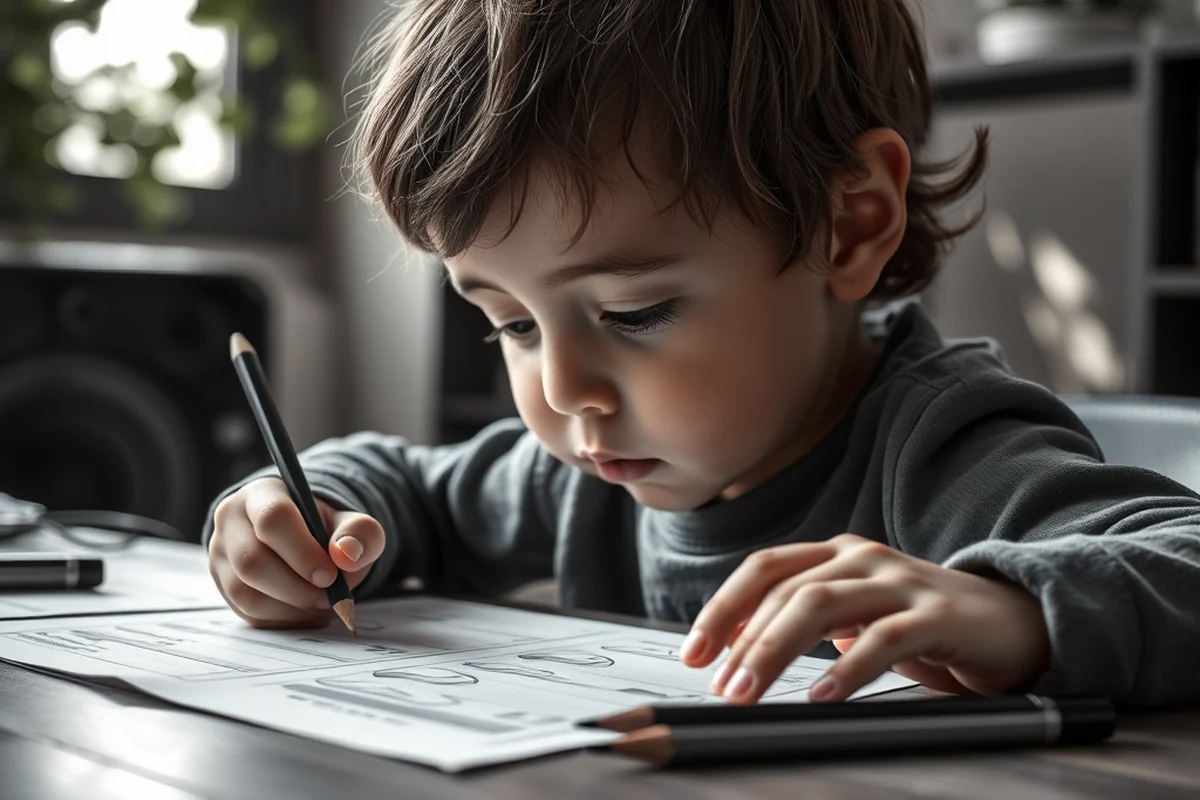
DAWs are the backbone of any home music studio. They allow you to record, edit, and mix music. When I started looking for one, I compared free options like GarageBand and Reaper with paid ones like Ableton Live and FL Studio. We went with Reaper because it was affordable and had the features we needed for learning.
I found that free DAWs are surprisingly powerful. They include all the tools needed for basic recording and editing. For example, GarageBand has a built-in library of virtual instruments and loops that make it easy for kids to start creating music without needing to learn everything from scratch.
Paid DAWs, on the other hand, offer more advanced features, such as higher-quality plugins and more flexible mixing options. However, they can be costly. I found that Reaper was a great middle ground — it’s not free. It’s much cheaper than Ableton or FL Studio, and it still has all the tools needed for learning and growing.
A great DAW makes learning music production accessible and fun.
Related: Music training
The Role of Headphones in a Home Studio
I was surprised by how much a good pair of headphones changed our recording experience. At first, I used the ones that came with the laptop, but they didn’t have enough bass or clarity. After switching to a pair with better sound quality, both my son and I could hear every note and every detail in the music we were creating.
I chose a pair that had a closed-back design to prevent sound from leaking into the room. This was important because we were recording in a small apartment and didn’t want to disturb the rest of the house. The headphones also had a comfortable fit, which made them ideal for long practice sessions.
I’ve found that investing in a good pair of headphones is one of the best ways to improve the learning experience. They help the user hear every nuance in their recordings, which is essential for developing listening skills and mastering technique.
Headphones that are comfortable for long use and have good sound quality are crucial for a productive home studio experience.
“A few years ago, I sat at my kitchen table with my son, a six-year-old with a fascination for drums and a voice that could…”— Teaching Music to Homeschoolers editors
Related: Teaching music
Budget-Friendly Home Studio Equipment for Kids
I’ve learned that you don’t need to spend a fortune to create a great home music studio. When I started, I focused on the essentials: a good microphone, a MIDI keyboard, and a DAW. These three items made a huge difference in the quality of our recordings and the learning experience.
I found that many of the best home music studio equipment options are available at a fraction of the cost of professional-grade gear. For example, a decent USB microphone can be found for around $50 to $100, and it can dramatically improve the sound quality of your recordings.[3]
I’ve also found that some of the best home music studio gear is built with kids in mind. There are microphones designed for kids, with soft padding and easy-to-use interfaces. These are a great investment if you’re working with younger children who are just starting out with music.
Related: What is formal music training
Setting Up Your Home Studio Space
I found that the way I set up our home music studio had a big impact on how we used it. We started in a small corner of the living room, but it was too noisy and not ideal for recording. After moving the setup to a quiet room, we saw a big improvement in the sound quality of our recordings.
I made sure to place the microphone and keyboard in a spot where there was no background noise. We also used soft materials like blankets and curtains to absorb sound and reduce echoes. These simple steps made a noticeable difference in the clarity of the recordings.
I also found that having a dedicated space for the home music studio helped my son focus better. He now has a small table and chair set up in the corner of our living room where he can practice and record. It’s a space that feels like it belongs to him, and that makes all the difference.
Related: Guitar learning course for beginners
Tips for Teaching with Home Music Studio Equipment
I’ve found that teaching with home music studio equipment is a great way to make learning music more interactive and fun. For example, I use the microphone to record my son singing, then we play it back and talk about the notes and the rhythm. This helps him understand the basics of music theory in a practical way.
I also use the MIDI keyboard to teach him about scales and chords. He can press the keys and hear the notes, which makes learning more engaging. We even use the DAW to create simple compositions together, which helps him see how different musical elements work together.
I’ve found that the right home music studio equipment can turn abstract concepts into something tangible. It helps students see the connection between theory and practice, and it makes learning more enjoyable and effective.
Teaching with home music studio equipment brings music to life in a way that books can’t.
Related: Music theory learning resources
The Benefits of a Home Music Studio for Homeschooling Families
I’ve seen firsthand how a home music studio can be a great learning tool for homeschooling families. It allows kids to explore music theory, composition, and performance in a way that’s both educational and fun. My son has been learning about rhythm, melody, and harmony through hands-on experience with the equipment we have.
I’ve also found that a home music studio can be a great way to develop skills like listening, creativity, and problem-solving. Kids can experiment with different sounds, create their own music, and learn how to use technology to produce high-quality recordings.
In addition to the musical benefits, a home music studio can also help kids develop discipline and a sense of accomplishment. When they see their music come to life on a DAW, it’s a powerful motivation to keep practicing and learning.
🎹 Beginner Setup
A simple setup with a microphone, keyboard, and free DAW for starting out.
🎧 Intermediate Setup
Adds a MIDI controller, better headphones, and a mix of free and paid DAWs.
💻 Advanced Setup
Includes a full digital audio workstation, studio monitors, and professional-grade headphones.
👨👩👧👦 Group Setup
Multiple stations for group lessons, including microphones, keyboards, and shared DAWs.
✨ No-Prep Setup
Use a smartphone and free apps for quick and easy music creation and recording.
| The mistake | Why it happens | The fix |
|---|---|---|
| Not investing in a good microphone | A low-quality microphone can lead to poor recordings and frustration for both the user and the listener. | Invest in a mid-range USB microphone that has good noise cancellation and clear frequency response. |
| Choosing the wrong DAW for your needs | Selecting a DAW that is too advanced or not user-friendly can make the learning process difficult. | Choose a DAW that matches your skill level and the type of music you want to create. |
| Ignoring the importance of a dedicated space | A lack of a dedicated space can lead to noise interference and a less focused learning environment. | Designate a quiet, well-insulated area for your home music studio to ensure better sound quality and focus. |
| Overlooking the importance of headphones | Poor-quality headphones can make it difficult to hear your recordings accurately, which is essential for learning. | Invest in closed-back, comfortable headphones with good sound quality to improve your listening experience. |
Home Music Studio Equipment
Common Questions
What are the most important pieces of home music studio equipment for kids?
Can I set up a home music studio on a budget?
What are some good DAWs for beginners?
How do I choose the right headphones for a home music studio?
References
- How to Build an In-Home Music Studio | Home Recording Studio Tips (aimm.edu)
- Building a Home Recording Studio? Here's What You Need. | Berklee (berklee.edu)
- Albuquerque Community Media (cabq.gov)
- Sound Lab | Campbell County, WY - Official Website (campbellcountywy.gov)
Cite this guide
Teaching Music to Homeschoolers (2026). Home Music Studio Equipment. https://melodystart.com/home-music-studio-equipment/
Feel free to cite or share this guide.
Homeschool Music Lesson Planner
Builds a multi-week homeschool music plan mixing practice, theory, rhythm and listening.
Open it free →