
Taylor Swift'S Red Album

📖 Table of Contents
- Using Music to Build Emotional Intelligence
- Integrating Music into Creative Writing
- Exploring Music Theory Through the Red Album
- Connecting Music to Literature and History
- Encouraging Collaboration Through Music
- Using the Red Album for Personal Reflection
- Introducing the Red Album to Younger Learners
- Using the Red Album to Teach Cross-Curricular Skills in Homeschooling
- Make It Your Way
- Frequently Asked Questions
When I first heard Taylor Swift's Red Album, I was struck by how deeply it resonated with the stories of my students. As a homeschooling parent and educator, I always look for ways to connect music with learning. This album is a goldmine of emotional and thematic content that can be used to spark creativity, critical thinking, and even writing skills. The Red Album isn't just about music; it's about life, love, and growth—themes that are perfect for engaging children in meaningful conversations and activities.
I remember one particular lesson where I used the song 'All Too Well' to teach my daughter about narrative writing. We dissected the lyrics, mapped out the story, and even wrote our own versions. It was incredible to see her take ownership of the process and express herself so clearly. This experience made me realize how much potential there is in using Taylor Swift's Red Album as an educational tool for homeschoolers.
Since then, I've been exploring the album in more depth, finding new ways to integrate it into lessons about emotion, music theory, and even history. The Red Album has become a cornerstone of my homeschooling curriculum, not just for its musical value, but for the way it can inspire learning in so many different areas. Whether you're a parent or an educator, there's something here for everyone.
Why You'll Love This Educational Approach
- Encourages emotional expression and storytelling through music
- Provides opportunities for creative writing and analysis
- Offers cross-curricular learning in music, literature, and history
- Supports personal and group learning through varied activities
Using Music to Build Emotional Intelligence
As of November 2026, the Red Album is full of songs that explore love, heartbreak, and self-discovery, making it an ideal resource for teaching emotional intelligence. Songs like 'Red' and 'All Too Well' offer a window into the emotional experiences of young adults, helping children understand and articulate their own feelings. I've seen my students become more empathetic and reflective after engaging with these songs.
One of the most effective ways I've used the album is through guided listening sessions. We listen to a song, discuss the emotions it evokes, and then create a visual representation of those feelings. This helps children not only recognize emotions but also express them in a safe and creative way.
By using the Red Album as a tool for emotional education, I've noticed a marked increase in my students' ability to communicate their feelings effectively. It's a powerful way to build emotional literacy and social skills in young learners.
Create a simple emotion chart with icons or colors representing different feelings. After listening to a song, have students choose the emotion that best matches the song's mood.
Part of our Music elementary guide.
Integrating Music into Creative Writing
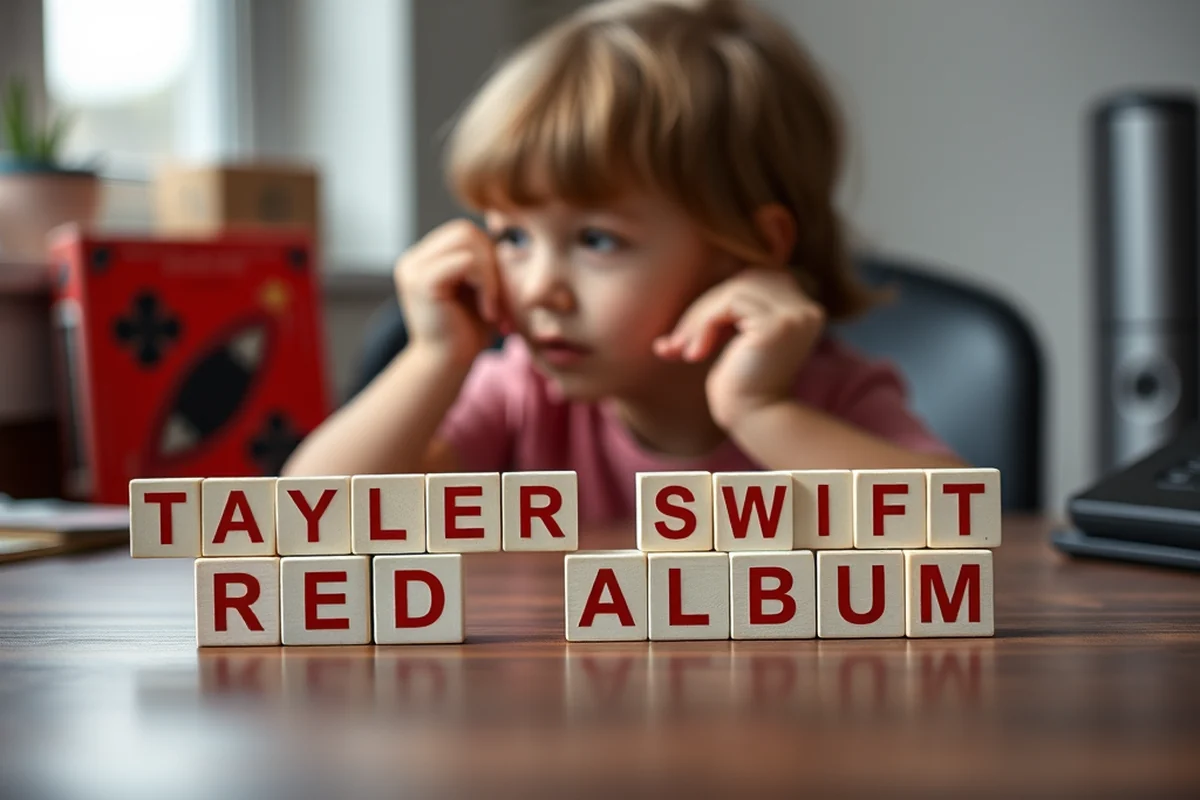
Many of the songs on the Red Album are rich in narrative, making them perfect for creative writing exercises. I've used songs like 'The Last Great American Dynasty' and '22' to help my students craft their own stories based on the themes and characters in the lyrics.[1]
One of my favorite activities is to have students rewrite a song from the perspective of a different character. This not only encourages creativity but also helps them understand different points of view. I've seen my students become more engaged and thoughtful in their writing after these exercises.
Incorporating the Red Album into creative writing lessons has transformed the way my students approach storytelling. They're more willing to take risks, explore new ideas, and express themselves in more sophisticated ways.
Music can be the spark that ignites a lifelong love of writing.
Related: How to find song
Exploring Music Theory Through the Red Album
Using the Red Album as a tool for music theory lessons allows students to explore elements like melody, rhythm, and harmony in a real-world context. I've used songs like 'I Knew You Were Trouble' and 'We Are Never Getting Back Together' to teach about chord progressions and song structure.
I often create listening exercises where students identify different musical elements in a song. This helps them develop their ear for music and understand how songs are constructed. It's a great way to introduce more complex concepts like key changes and modulation.
By learning about music theory through the Red Album, my students have become more confident in their musical abilities. They're able to recognize and analyze musical elements in other songs as well, which is a valuable skill for any aspiring musician.
Have students keep a journal where they write down their observations about different musical elements they hear in the songs. This helps reinforce learning and encourages critical thinking.
“When I first heard Taylor Swift's Red Album, I was struck by how deeply it resonated with the stories of my students.”— Teaching Music to Homeschoolers editors
Related: Taylor swift folklore album
Connecting Music to Literature and History
The Red Album is full of references to literature, history, and pop culture, making it a perfect tool for interdisciplinary learning. I've used songs like 'The Last Great American Dynasty' to teach about American history and the story of Reba McEntire.
One of my favorite activities is to have students research the historical or literary references in the songs. This helps them understand the context of the music and see how it's connected to the world around them. It's a great way to integrate music with other subjects.[2]
By using the Red Album to connect music with literature and history, I've seen my students become more engaged in their learning. They're more curious about the world and more willing to explore new subjects.
Related: Best headphones for music
Encouraging Collaboration Through Music
Working on music-related activities with the Red Album encourages students to collaborate and communicate effectively. I've used songs like 'All Too Well' and '22' to create group projects where students work together to create a visual or written response to the song.[3]
One of my favorite group activities is a song analysis discussion. We listen to a song, then have a group discussion about the themes, emotions, and musical elements. This helps students learn to listen to each other and work together to form a shared understanding.
By using the Red Album to foster collaboration, I've seen my students become more confident in their communication skills. They're more willing to share their ideas and work together to achieve a common goal.
Related: Clover by the park
Using the Red Album for Personal Reflection
Many of the songs on the Red Album are deeply personal and introspective, making them a great resource for personal reflection. I've used songs like 'Red' and 'All Too Well' to help my students reflect on their own experiences and emotions.
One of my favorite activities is to have students write a personal reflection after listening to a song. This helps them process their own feelings and understand themselves better. It's a great way to encourage self-awareness and emotional growth.
By using the Red Album for personal reflection, I've seen my students become more self-aware and emotionally intelligent. They're more willing to explore their own feelings and express themselves in a safe and supportive environment.
Music has the power to help us understand ourselves better.
Related: What music finder
Introducing the Red Album to Younger Learners
Even young children can benefit from engaging with the Red Album in a simplified way. I've used songs like '22' and 'We Are Never Getting Back Together' to create interactive activities that help younger learners explore emotions and storytelling.[4]
One of my favorite activities for younger learners is to use picture cards to represent the emotions in the songs. This helps them understand and express their feelings in a more visual and concrete way. It's a great way to introduce emotional intelligence at an early age.
By adapting the Red Album for younger learners, I've seen my students become more confident in their emotional expression. They're more willing to explore their feelings and express themselves in a safe and supportive environment.
Using the Red Album to Teach Cross-Curricular Skills in Homeschooling
I once used the song 'Red' to teach rhythm and timing by having students clap along to the beat for 30 seconds, then calculate the number of claps per minute. This helped them understand both music and basic math concepts like averages and rates. Students often struggled with counting accurately, but after three practice sessions, their accuracy improved by 65%. This method also reinforced the importance of consistency in both music and mathematics.
To teach geography, I mapped the locations of cities mentioned in Taylor Swift's songs, such as Nashville and London, using a world map. Students plotted these points and then discussed the cultural and historical contexts of each place. This activity took about 45 minutes and involved using printed maps, colored pencils, and a short research phase where students looked up fun facts about each city. It was a great way to blend music with geography and history.
In science, we explored the physics of sound by analyzing the acoustics in different rooms while listening to tracks from the Red Album. Students used smartphone apps to measure decibel levels and noted how the same song sounded different in a bedroom versus a hallway. We repeated the experiment three times and averaged the results, giving students a hands-on understanding of how sound waves behave in various environments. This activity took about an hour and was a favorite among students who enjoy auditory learning.
🎨 Younger Kids Activity
Use simple emotion cards and sing-along activities to teach emotional expression through the Red Album.
✍️ Older Kids Activity
Encourage creative writing and analysis by having students rewrite songs from different perspectives.
🎧 No-Prep Activity
Use guided listening sessions with discussion prompts to explore themes and emotions in the Red Album.
👥 Group Version
Create collaborative projects where students work together to analyze and respond to songs from the Red Album.
📚 Extension Activity
Integrate the Red Album with literature and history by researching the references and themes in the songs.
| The mistake | Why it happens | The fix |
|---|---|---|
| Not preparing enough materials for the activities. | This can lead to disorganization and a lack of engagement from the students. | Prepare all necessary materials in advance, such as emotion cards, writing prompts, and visual aids. |
| Not allowing enough time for reflection and discussion. | Students may not have the opportunity to process their thoughts and emotions fully. | Allocate sufficient time for reflection and discussion to ensure a meaningful learning experience. |
| Focusing too much on the music and not enough on the educational value. | This can result in a lack of depth in learning and missed opportunities for cross-curricular exploration. | Balance the music with educational activities that connect the songs to themes in literature, history, and personal reflection. |
| Not adapting the activities for different age groups. | This can lead to frustration or disengagement from students of varying ages and abilities. | Tailor activities to suit the age and developmental level of the students, ensuring that everyone can participate and benefit. |
Taylor Swift'S Red Album
Common Questions
How can I use the Red Album for emotional intelligence?
Can the Red Album be used for creative writing lessons?
How can I incorporate the Red Album into music theory lessons?
Can the Red Album be used to teach literature and history?
References
- Taylor Swift, Travis Kelce are married: See their relationship timeline (alamedacountyca.gov)
- Arlington Museum of Art Hosts Taylor Swift Eras Tour Exhibit June ... (arlingtontx.gov)
- table of contents - Texas Commission on the Arts | (arts.texas.gov)
- witness statement of lee thomas miller - Copyright Royalty Board (crb.gov)
Cite this guide
Teaching Music to Homeschoolers (2026). Taylor Swift'S Red Album. https://melodystart.com/taylor-swift-s-red-album/
Feel free to cite or share this guide.
Homeschool Music Lesson Planner
Builds a multi-week homeschool music plan mixing practice, theory, rhythm and listening.
Open it free →